
Foot Orthotic Insoles Market Size, Trends and Insights By Material (Thermoplastics, Composite Carbon Fiber, Others), By Type (Pre-fabricated, Custom-made), By Distribution Channel (Hospitals & Clinics, Drug Stores, Others), and By Region - Global Industry Overview, Statistical Data, Competitive Analysis, Share, Outlook, and Forecast 2026 – 2035
Report Snapshot
CAGR: 7.8%
| Study Period: | 2026-2035 |
| Fastest Growing Market: | Asia Pacific |
| Largest Market: | North America |
Major Players
- Euroleathers
- Scholl’s
- Aetrex Worldwide Inc.
- Amfit Inc.
- Others
Reports Description
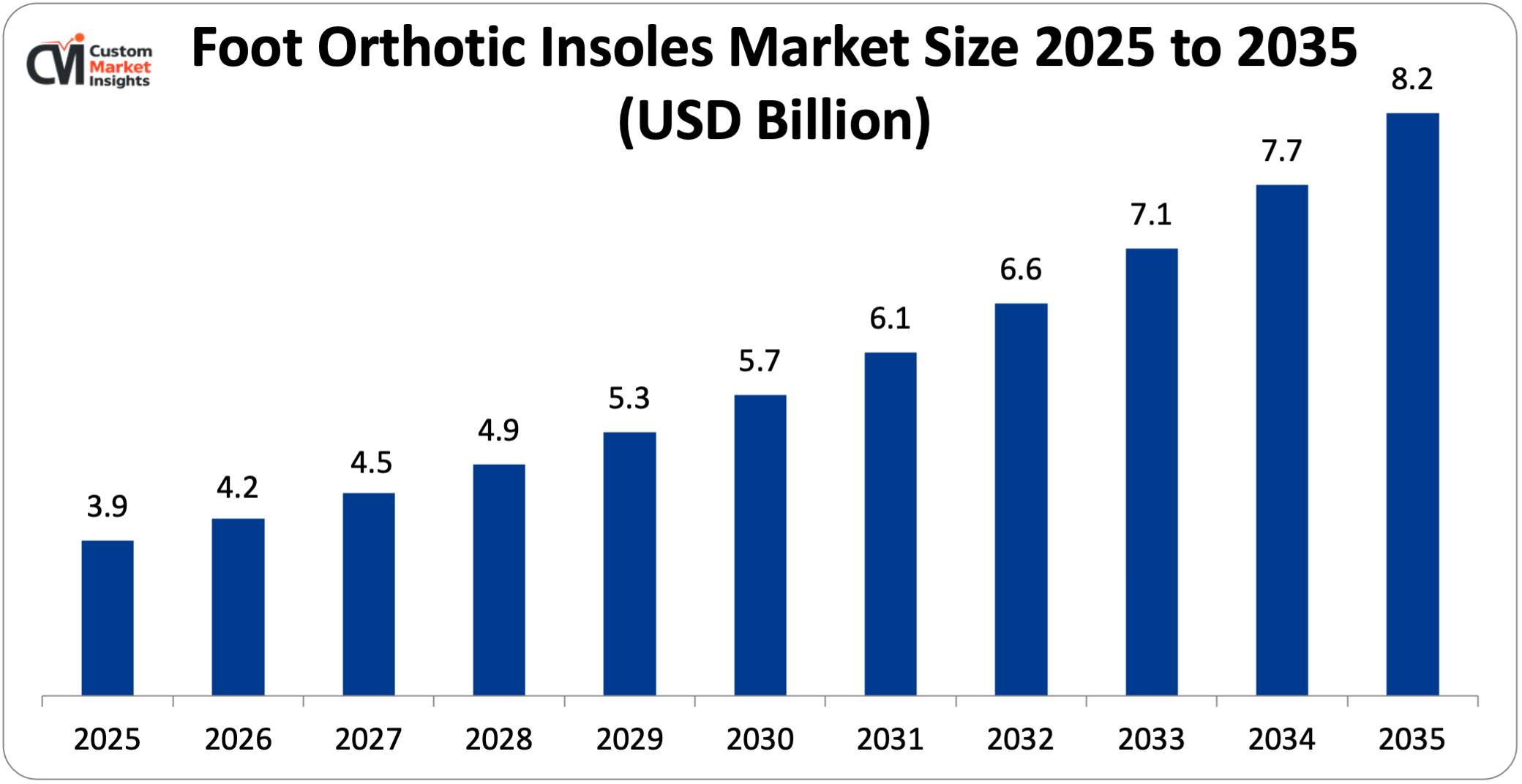
The market size of global foot orthotic insoles will be estimated at USD 3.9 billion in 2025 and is expected to grow to between USD 4.2 billion in 2026 and about USD 8.2 billion by 2035, with a current CAGR (compound annual growth rate) of 7.8% during the period of 2026 to 2035. Foot orthotic insoles are artificially designed high-density inserts that fit into the shoes to provide support, align, and optimize the function of the foot. The orthotic insole reduces force over pressure points, distributes weight evenly over the surface of the sole of the foot, and corrects abnormal biomechanics of the foot.
The orthotic insole can be used for and prevent foot problems such as plantar fasciitis, flat feet, high arches, heel pain, and diabetic foot disorders. The foot orthotics are either prefabricated (over-the-counter shoes) or custom-made (according to the person‘s foot structure and the medical needs). Orthotic insoles cushion and support the arch and improve shock absorption as well as promote comfort, thereby altering efficient posture and motions.
Market Highlight
- In 2025, North America will dominate the global market with an estimated market share of 44%. The increasing prevalence of diabetes drives the market growth.
- The Asia Pacific is growing at the highest CAGR over the analysis period. The increasing investment in orthotic insoles drives the market growth.
- By material, the thermoplastics segment dominated the market in 2025 with a revenue share of 55%.
- By type, the custom-made orthotic insoles segment captures the largest market share in 2025 of 54%.
- By distribution channel, the hospitals and clinics segment captures the largest market share in 2025 of over 35%.
Significant Growth Factors
The foot orthotic insoles market trends present significant growth opportunities due to several factors:
- Increasing Prevalence of Foot Disorders: Foot health issues and disorders being among the most common medical concerns today are also one of the key factors propelling the growth of the foot orthotic insoles market, where thousands of people worldwide are seeking relief and treatment for numerous foot health problems, including heel pain, plantar fasciitis, diabetic foot ulcers, and flat feet. Data from various health authorities and government agencies points to a sharp rise in foot health problems now being among the most common conditions that afflict aging populations, with an increasingly sedentary population and a rise in other chronic health issues such as diabetes, among others. For example, studies suggest that between 9% and 30% of the world‘s population suffers from some sort of foot pain, which makes it one of the most common musculoskeletal complaints requiring some sort of shoe support or orthotics, which have been found effective in a large number of cases. In addition, government health reports cite statistics on the linkages between diabetic foot health issues and a rise in serious complications and their effects. Based on data from health authorities such as the US Centers for Disease Control and Prevention or many other clinical studies, it is estimated that at least 50% of people with diabetes will develop some form of nerve damage (neuropathy), which may be localized in their feet. In addition, studies have found that diabetic foot ulcers are a complication of diabetes in around 18.6 million people worldwide, while foot ulcers are the precursor of 80% of all lower leg amputations in diabetics more generally. Globally, between 15% and 25% of diabetics are believed to be at risk for developing a foot ulcer. Growing cases of foot complaints and problems are hence a major contributor to the increasing demand for orthotics. Football experts recommend orthotic insoles to offload pressure from the feet, support their arches, and correct their alignment and thereby prevent complications to the maximum.
- Increasing Participation in Sports and Fitness: The increased participation in sports and physical activities is a major factor driving the growth of the foot orthotic insoles market, as more physically active individuals require greater foot support, enhanced shock absorption, and increased injury prevention. Running, walking, gym work, and practicing any sports or other activities such as tennis, golf, and basketball all cause exertion to the feet, which is why conditions such as heel pain, achilles tendinitis, arch pain, arch strain, and plantar fasciitis can occur. Foot orthotic insoles help to evenly distribute the weight, realign the foot, and offer extra support cushioning, which means that they are commonly used by athletes and people who exercise for fun. Growing participation in sports and physical activity is evidenced by government and international health department statistics. Among the 1.4 billion adults in the world who are physically inactive, the WHO recommends that nations encourage their populations to engage in regular exercise and sports activities in order to improve health. That is why participation in organized sport, running, and leisure physical activity has skyrocketed. Other statistics show that more than 60 million of the US population participated in playing sports or doing sports or exercise daily in recent years. With people expanding time with sports and physical activity, the demand for comfort and injury prevention products has grown. The use of foot orthotic insoles in sports shoes has increased for arch support, shock absorption, and sports performance enhancement. Therefore, the growth of worldwide participation in sports and physical activities has contributed to an increased adoption of orthotic insoles in both the sports and fitness markets.
What are the Major Advances Changing the Foot Orthotic Insoles Market Today?
- 3D Printing and Advanced Manufacturing: 3D Printing and advanced manufacturing are the biggest breakthroughs in the foot orthotic insole industry, as they provide a very high degree of customization and precision. More traditional orthotic insoles are still made from manual molding or preset templates that may not fit the perfect shape of the foot. 3D printing technology uses a digital scan of a foot and a computer-aided draft to develop an insole customized to the shape, pressure, and biomechanical needs of the individual. This provides far more accuracy, comfort, and effective treatment while at the same time speeds up the manufacturing process very effectively. Similarly, the advanced manufacturing allows the use of very lightweight and durable materials such as thermoplastic polyurethane or carbon fiber-based composites for the manufacture of the insoles, thus allowing better impact absorption and durability over the long term. 3D printing and Advanced manufacturing are thus revolutionizing the orthotics industry.
- Integration with Digital Health and AI: The combination of digital health and AI is the biggest change affecting the foot orthotic insole market, making it easier to monitor and analyze data in real-time and create personalized healthcare solutions. Today most smart orthotic insoles have built-in sensors, including pressure sensors, accelerometers, and gyroscopes, transmitting the data to a smartphone or cloud-based platform, whose AI algorithms analyze the data to highlight abnormalities, monitor rehabilitation progress, and/or provide personalized feedback for all stakeholders, including clinicians. In this way, orthotic insoles no longer have the role of further supporting the foot but rather are digital health-monitoring devices for sports analytics, injury prevention, and chronic disease management. Digitsole has developed the first smart insole platform with a tool called PODOSmart for gait analysis and mobility monitoring. This product comprises a combination of sensors and digital analytics that measure walking patterns and other movement parameters, allowing clinicians and physios to record patient improvement and predict gait disruptions. Similarly, eSteps Health has developed a connected smart insole system based on embedded sensors and an artificial intelligence digital twin platform that monitors gait, balance, and foot pressure distribution in real time; digitally analyzes movement data; and provides insights to the mobile device and has applications for rehabilitation, injury prevention, and sports performance. Orpyx Medical Technologies has brought to market sensory insoles for remote patient monitoring of diabetic foot ulceration and complications, predicting early patient deterioration and ensuring early intervention by alerting the patient and clinicians about abnormal pressure and overload before ulceration occurs. Therefore, the convergence between digital health and the commercialization of AI-powered sensors and insole-enabled digital twin platforms is the most promising technological platform enabling these devices to evolve to be fully serving digital health monitoring tools.
Category Wise Insights
By Material
Why Thermoplastics Hold a Prominent Position in the Market?
The thermoplastics segment dominated the market in 2025 with a revenue share of 55%. The advantages of the thermoplastics are their high comfort and durability. These thermoplastics are heat-formed materials that are attractive to both foot enthusiasts and rehabilitated patients. Rigid thermoplastics are ineffective in the walk of the elderly patient with high physiological reserve or in the rigid-foot patient. Semi-rigid thermoplastics allow higher pain tolerances in the elderly patient and are suitable for the biomechanically painful foot.
The composite carbon fibers segment is growing at the highest CAGR over the analysis period. This is because of the rising demand for composite carbon fiber in the worldwide market. Composite carbon fiber is supposed to show high performance and strong reinforcement polymer; the most significant feature is considered to be driving the growth pace. In addition to that, the segmental growth also has been spurred by rising company expenditure in research and development activity in the composite carbon fiber sector during the forecast period.
By Type
Why Custom-made Orthotic Insoles Capture the Highest Market Share the Foot Orthotic Insoles Market?
The custom-made orthotic insoles segment captures the largest market share in 2025 of 54%. The demand for custom-made orthotic foot insoles is increasing, and customers are looking for more targeted, efficient, and durable footwear solutions to pain and discomfort. A custom orthotic is designed for the user’s foot shape, gait, and condition, for example, flat foot, plantar fasciitis, over-pronation, or sensitive spots. The increased profile of preventative foot care, the increase in active lifestyles, the development of technology such as 3D foot scanners, CAD, and CAM modeling; and the general heightened awareness of these new and targeted options have.
The pre-fabricated segment is growing rapidly over the projected period. Prefabricated orthotic foot insoles are becoming increasingly popular as consumers seek a quick, cost-effective, globally available, and relatively pain-free way of alleviating foot pain in addition to seeking support during daily life. Ready-made insoles can be used to replace expensive orthotics to provide enough cushioning and arch support as well as take pressure off the feet at a relatively low price and without the delay of missed appointments. Also contributing to growth is the rising public awareness of foot problems and conditions, such as flat feet and plantar fasciitis, as well as the continued pursuit of comfort in the face of long working hours and physical activity.
By Distribution Channel
Does the Hospitals and Clinics Dominates the Foot Orthotic Insoles Market?
The hospitals and clinics segment captures the largest market share in 2025 of over 35%. This is largely due to the substantial proportion of the consumers being patients and their specific preferences. The patients have strong preferences towards the hospitals and clinics, which are the distribution channels from which they acquire the foot orthotic insoles. Hospitals and clinics have extensive staff and proper infrastructure and are the most trustworthy sales channel.
The drug stores segment is growing at the highest CAGR over the projected period. The major contributor to this growth is the increase in the number of medical and drug stores across the world, primarily in the emerging economies. The number of these stores offering foot orthotic insoles is also rising. Increased credibility and consumer preferences of the drugstore as a channel would lead to the segment‘s growth.
Report Scope
| Feature of the Report | Details |
| Market Size in 2026 | USD 4.2 billion |
| Projected Market Size in 2035 | USD 8.2 billion |
| Market Size in 2025 | USD 3.9 billion |
| CAGR Growth Rate | 7.8% CAGR |
| Base Year | 2025 |
| Forecast Period | 2026-2035 |
| Key Segment | By Material, Type, Distribution Channel and Region |
| Report Coverage | Revenue Estimation and Forecast, Company Profile, Competitive Landscape, Growth Factors and Recent Trends |
| Regional Scope | North America, Europe, Asia Pacific, Middle East & Africa, and South & Central America |
| Buying Options | Request tailored purchasing options to fulfil your requirements for research. |
Regional Analysis
How Big is North America Foot Orthotic Insoles Market Size?
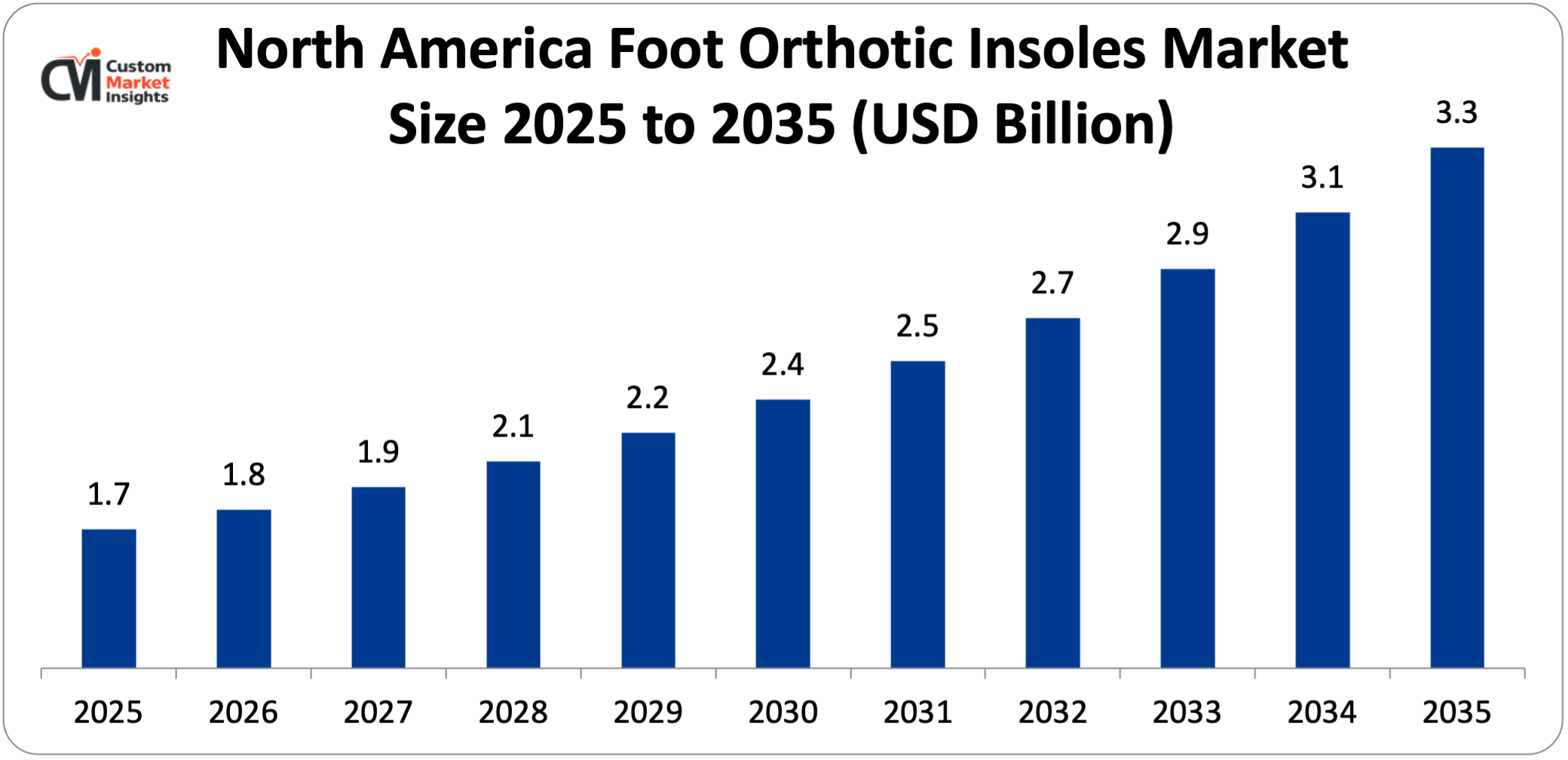
Its market size, in terms of North America Foot Orthotic Insoles, is projected to be USD 1.7 billion in 2025 with a growth of about USD 3.3 billion in 2035 with a CAGR of 6.6% between 2026 and 2035.
Why did North America Dominate the Foot Orthotic Insoles Market in 2025?
In 2025, North America will dominate the global market with an estimated market share of 44%. In terms of revenue, the region will gain from product innovations launched by key players in the market. For instance, Aetrex Worldwide Inc. and Superfeet Worldwide Inc. And Foot Levelers, Inc. has been working on digital foot scanning and pressure mapping equipment as well as 3D-printed orthotics to offer the most custom-fit insoles. This will help clinicians and retail chains to view foot anatomy and gait patterns accurately as well as offer custom-fit orthotics with a fit to boost mobility and comfort factors while alleviating injuries.
US Foot Orthotic Insoles Market Trends
In the North America region, the US leads the industry expansion over the projected period. Diabetes itself plays a significant role in the U.S. foot orthotic insole industry, as the disease is most likely to result in serious foot complications that require arch pressure management and protective shoes. The Center for Disease Control and Prevention (CDC) estimates that over 38 million people in the United States are living with diabetes, and millions of those people have nerve damage called Diabetic Neuropathy which most frequently affects the foot. Patients with neuropathy lose sensation in their feet and are less aware of injuries, pressure points, or formation of ulcers.
For this reason, orthotic insoles are routinely recommended to distribute pressure across the foot, reduce friction, and allow healing. Another major application segment is Diabetic Foot Ulcers which are frequent in diabetics and caused by excess pressure and diminished flow of blood to the tissue. The National Institute of Diabetes and Digestive and Kidney Diseases observes that between 15 and 25 percent of patients with diabetes will form a foot ulcer during their lifetime, and they are the most common reason for lower-limb amputations. Orthotic insoles work to minimize plantar pressure and distribute weight more evenly to mitigate the risk and treat existing conditions. Therefore, the prevalence of diabetes in the United States presents a major market driver for foot orthotic insoles.
Why is Europe Experiencing a Significant Growth in the Foot Orthotic Insole Market?
Europe holds a significant market share in 2025. Demand for foot orthotic insoles in Europe is increasing gradually as Europeans increasingly associate correct foot support with mobility, stability, posture, and long-term osteomuscular health. As the European population ages, diabetes and obesity are also on the rise, and issues such as plantar fasciitis and flat feet become more prevalent; demand for preventive and corrective insoles will continue to grow. At the same time, foot comfort-focused shoes are a booming industry among Europeans who want high-quality shoes for daily work, business, or sports; many are searching for customizable or semi-custom orthotics as they seek to absorb shocks and receive orthotic-optimized support.
UK Foot Orthotic Insoles Market Trends
The UK held the dominant position in the market in 2025. Innovation coming out of the large companies is also helping to propel the UK market growth. Bauerfeind AG, Superfeet Worldwide Inc., FootBalance System Ltd., Sidas, and ENERTOR are creating new products like lightweight carbon-fiber insoles, support systems for better movement, and orthotics that improve shock absorption, foot impacts, and alignment. For example, the Aetrex company is using advanced digital foot-scanning technologies to analyze foot structure and pressure points and offer a highly customized orthotic insole.
Why is the Asia Pacific Growing at a Rapid Rate in the Foot Orthotic Insoles Market?
The Asia Pacific is expected to grow at a high CAGR of 8.5% over the projected period. The demand for foot orthotics in the Asia Pacific region is growing at an accelerated rate owing to a rise in general awareness of foot care, problems associated with diabetes and obesity, and an increased involvement in sports and fitness activities within the population in China, India, Japan, South Korea, and Australia. The traditional urban and long-working-hours lifestyles, in addition to the increasing amount of time spent by consumers either standing, walking, or on their feet, have resulted in a higher demand for comfort-oriented, supportive, corrective insoles on a daily basis. In addition, the region has seen a growth in the number of older consumers who are turning to orthotics to relieve pain associated with plantar fasciitis, flatfoot, and compromised mobility.
India Foot Orthotic Insoles Market Trends
India is growing at a significant rate in the market. This is a fast-emerging sector with new domestic as well as foreign companies investing heavily in the expansion of manufacturing, research and development, and distribution channels in India. The manufacturers of footwear and orthopedic devices are investing in the creation of customized orthotic products with digital scanning of the foot and lightweight composite materials for enhanced comfort and performance. Increasing urbanization along with the growing sports and fitness industry and increasing healthcare expenditure has induced entrepreneurs and existing medical device companies to invest in orthotic product development and retail chains across all metros.
Why is the Middle East & Africa Region is growing rapidly in the Foot Orthotic Insoles?
The MEA region is growing at a steady rate over the projected period. The demand for Middle East & Africa (MEA) rose due to lifestyle diseases, the broadening healthcare infrastructure in the region, and increasing knowledge of foot health, which has accelerated the demand for the foot orthotic insole market in the Middle East & Africa (MEA). The leading impetus for the growth is the high levels of obesity and diabetes in the region. Countries like Saudi Arabia, the United Arab Emirates, and Kuwait have some of the highest prevalence rates of these diseases in the world.
Longer duration of diabetes causes diabetic complications like Diabetic Neuropathy and Diabetic Foot Ulcers that lead to increased Plantar Pressure and instability in the foot. The increase in these factors leads to the requirement of orthotic insoles for these patients to provide support to the foot, reduce plantar pressure, improve balance, and reduce the chances of infection and early amputation. This requirement is being seen on the rise in hospitals and specialized clinics.
UAE Foot Orthotic Insoles Market Trends
The UAE is growing at the highest CAGR during the forecast period. The increasing prevalence of diabetes and obesity is the main factor driving the market growth.
Top Players in the Foot Orthotic Insoles Market and Their Offerings
- Euroleathers
- Scholl’s
- Aetrex Worldwide Inc.
- Amfit Inc.
- Bauerfeind AG
- Birkenstock Digital GmbH
- Blatchford Group Ltd.
- ComfortFit Orthotic Labs Inc.
- Digital Orthotics Laboratories Australia Pty Ltd.
- Algeo Limited
- DJO Global Inc.
- Acor Orthopedic Inc.
- Footbalance Systems Ltd.
- Sidas SAS
- Implus Footcare LLC
- OttoBock SE & Co. KGaA
- PowerStep (Stable Step LLC)
- Hanger Inc.
- Others
Key Developments
Foot orthotic insole market has experienced considerable changes in the last two years as the market players are trying to diversify their technological aspects and develop product portfolios using strategic approaches.
- In March 2026, AIRfeet, a leading innovator in foot comfort solutions, officially launched its groundbreaking Active Motion Insoles, designed to alleviate foot pain and provide unmatched comfort. These new insoles stand out in the marketplace with their ultra-thin design and dynamic technology that naturally improves foot circulation, offering immediate relief without the need for medical intervention. Developed from years of research in aerospace materials and construction, AIRfeet’s design is engineered for individuals who spend long hours on their feet and for those managing specific ailments such as plantar fasciitis, flat feet, neuropathy, and foot-related pain. (https://www.barchart.com/story/news/747347/airfeet-announces-launch-of-revolutionary-active-motion-insoles-to-relieve-foot-pain)
- In May 2025, PowerStep, a leading foot health company, announced a partnership with the American Podiatric Medical Student Association (APMSA) to support podiatric students through educational sponsorships, clinical resources, and exclusive product access, aiming to advance podiatric education and patient care. (https://powerstep.com/blogs/news/powerstep-announces-partnership-with-the-apmsa?srsltid=AfmBOornz2wmpXfzNrN1LWcA46EF8SGokORaeC62hpt7wOgGOO6IT1F-)
These strategic measures have enabled the companies to reinforce their competitive positions, increase the product line, boost their technological competencies, and also seize growth opportunities in the fast-growing foot orthotic insoles market.
The Foot Orthotic Insoles Market is segmented as follows:
By Material
- Thermoplastics
- Composite Carbon Fiber
- Others
By Type
- Pre-fabricated
- Custom-made
By Distribution Channel
- Hospitals & Clinics
- Drug Stores
- Others
Regional Coverage:
North America
- U.S.
- Canada
- Mexico
- Rest of North America
Europe
- Germany
- France
- U.K.
- Russia
- Italy
- Spain
- Netherlands
- Rest of Europe
Asia Pacific
- China
- Japan
- India
- New Zealand
- Australia
- South Korea
- Taiwan
- Rest of Asia Pacific
The Middle East & Africa
- Saudi Arabia
- UAE
- Egypt
- Kuwait
- South Africa
- Rest of the Middle East & Africa
Latin America
- Brazil
- Argentina
- Rest of Latin America
Table of Contents
- Chapter 1. Report Introduction
- 1.1. Report Description
- 1.1.1. Purpose of the Report
- 1.1.2. USP & Key Offerings
- 1.2. Key Benefits For Stakeholders
- 1.3. Target Audience
- 1.4. Report Scope
- 1.1. Report Description
- Chapter 2. Market Overview
- 2.1. Report Scope (Segments And Key Players)
- 2.1.1. Foot Orthotic Insoles by Segments
- 2.1.2. Foot Orthotic Insoles by Region
- 2.2. Executive Summary
- 2.2.1. Market Size & Forecast
- 2.2.2. Foot Orthotic Insoles Market Attractiveness Analysis, By Material
- 2.2.3. Foot Orthotic Insoles Market Attractiveness Analysis, By Type
- 2.2.4. Foot Orthotic Insoles Market Attractiveness Analysis, By Distribution Channel
- 2.1. Report Scope (Segments And Key Players)
- Chapter 3. Market Dynamics (DRO)
- 3.1. Market Drivers
- 3.1.1. Increasing Prevalence of Foot Disorders
- 3.1.2. Increasing Participation in Sports and Fitness
- 3.2. Market Restraints
- 3.3. Market Opportunities
- 3.5. Pestle Analysis
- 3.6. Porter Forces Analysis
- 3.7. Technology Roadmap
- 3.8. Value Chain Analysis
- 3.9. Government Policy Impact Analysis
- 3.10. Pricing Analysis
- 3.1. Market Drivers
- Chapter 4. Foot Orthotic Insoles Market – By Material
- 4.1. Material Market Overview, By Material Segment
- 4.1.1. Foot Orthotic Insoles Market Revenue Share, By Material, 2025 & 2035
- 4.1.2. Thermoplastics
- 4.1.3. Foot Orthotic Insoles Share Forecast, By Region (USD Billion)
- 4.1.4. Comparative Revenue Analysis, By Country, 2025 & 2035
- 4.1.5. Key Market Trends, Growth Factors, & Opportunities
- 4.1.6. Composite Carbon Fiber
- 4.1.7. Foot Orthotic Insoles Share Forecast, By Region (USD Billion)
- 4.1.8. Comparative Revenue Analysis, By Country, 2025 & 2035
- 4.1.9. Key Market Trends, Growth Factors, & Opportunities
- 4.1.10. Others
- 4.1.11. Foot Orthotic Insoles Share Forecast, By Region (USD Billion)
- 4.1.12. Comparative Revenue Analysis, By Country, 2025 & 2035
- 4.1.13. Key Market Trends, Growth Factors, & Opportunities
- 4.1. Material Market Overview, By Material Segment
- Chapter 5. Foot Orthotic Insoles Market – By Type
- 5.1. Type Market Overview, By Type Segment
- 5.1.1. Foot Orthotic Insoles Market Revenue Share, By Type, 2025 & 2035
- 5.1.2. Pre-fabricated
- 5.1.3. Foot Orthotic Insoles Share Forecast, By Region (USD Billion)
- 5.1.4. Comparative Revenue Analysis, By Country, 2025 & 2035
- 5.1.5. Key Market Trends, Growth Factors, & Opportunities
- 5.1.6. Custom-made
- 5.1.7. Foot Orthotic Insoles Share Forecast, By Region (USD Billion)
- 5.1.8. Comparative Revenue Analysis, By Country, 2025 & 2035
- 5.1.9. Key Market Trends, Growth Factors, & Opportunities
- 5.1. Type Market Overview, By Type Segment
- Chapter 6. Foot Orthotic Insoles Market – By Distribution Channel
- 6.1. Distribution Channel Market Overview, By Distribution Channel Segment
- 6.1.1. Foot Orthotic Insoles Market Revenue Share, By Distribution Channel, 2025 & 2035
- 6.1.2. Hospitals & Clinics
- 6.1.3. Foot Orthotic Insoles Share Forecast, By Region (USD Billion)
- 6.1.4. Comparative Revenue Analysis, By Country, 2025 & 2035
- 6.1.5. Key Market Trends, Growth Factors, & Opportunities
- 6.1.6. Drug Stores
- 6.1.7. Foot Orthotic Insoles Share Forecast, By Region (USD Billion)
- 6.1.8. Comparative Revenue Analysis, By Country, 2025 & 2035
- 6.1.9. Key Market Trends, Growth Factors, & Opportunities
- 6.1.10. Others
- 6.1.11. Foot Orthotic Insoles Share Forecast, By Region (USD Billion)
- 6.1.12. Comparative Revenue Analysis, By Country, 2025 & 2035
- 6.1.13. Key Market Trends, Growth Factors, & Opportunities
- 6.1. Distribution Channel Market Overview, By Distribution Channel Segment
- Chapter 7. Foot Orthotic Insoles Market – Regional Analysis
- 7.1. Foot Orthotic Insoles Market Overview, By Region Segment
- 7.1.1. Global Foot Orthotic Insoles Market Revenue Share, By Region, 2025 & 2035
- 7.1.2. Global Foot Orthotic Insoles Market Revenue, By Region, 2026 – 2035 (USD Billion)
- 7.1.3. Global Foot Orthotic Insoles Market Revenue, By Material, 2026 – 2035
- 7.1.4. Global Foot Orthotic Insoles Market Revenue, By Type, 2026 – 2035
- 7.1.5. Global Foot Orthotic Insoles Market Revenue, By Distribution Channel, 2026 – 2035
- 7.2. North America
- 7.2.1. North America Foot Orthotic Insoles Market Revenue, By Country, 2026 – 2035 (USD Billion)
- 7.2.2. North America Foot Orthotic Insoles Market Revenue, By Material, 2026 – 2035
- 7.2.3. North America Foot Orthotic Insoles Market Revenue, By Type, 2026 – 2035
- 7.2.4. North America Foot Orthotic Insoles Market Revenue, By Distribution Channel, 2026 – 2035
- 7.2.5. U.S. Foot Orthotic Insoles Market Revenue, 2026 – 2035 (USD Billion)
- 7.2.6. Canada Foot Orthotic Insoles Market Revenue, 2026 – 2035 (USD Billion)
- 7.2.7. Mexico Foot Orthotic Insoles Market Revenue, 2026 – 2035 (USD Billion)
- 7.2.8. Rest of North America Foot Orthotic Insoles Market Revenue, 2026 – 2035 (USD Billion)
- 7.3. Europe
- 7.3.1. Europe Foot Orthotic Insoles Market Revenue, By Country, 2026 – 2035 (USD Billion)
- 7.3.2. Europe Foot Orthotic Insoles Market Revenue, By Material, 2026 – 2035
- 7.3.3. Europe Foot Orthotic Insoles Market Revenue, By Type, 2026 – 2035
- 7.3.4. Europe Foot Orthotic Insoles Market Revenue, By Distribution Channel, 2026 – 2035
- 7.3.5. Germany Foot Orthotic Insoles Market Revenue, 2026 – 2035 (USD Billion)
- 7.3.6. France Foot Orthotic Insoles Market Revenue, 2026 – 2035 (USD Billion)
- 7.3.7. U.K. Foot Orthotic Insoles Market Revenue, 2026 – 2035 (USD Billion)
- 7.3.8. Russia Foot Orthotic Insoles Market Revenue, 2026 – 2035 (USD Billion)
- 7.3.9. Italy Foot Orthotic Insoles Market Revenue, 2026 – 2035 (USD Billion)
- 7.3.10. Spain Foot Orthotic Insoles Market Revenue, 2026 – 2035 (USD Billion)
- 7.3.11. Netherlands Foot Orthotic Insoles Market Revenue, 2026 – 2035 (USD Billion)
- 7.3.12. Rest of Europe Foot Orthotic Insoles Market Revenue, 2026 – 2035 (USD Billion)
- 7.4. Asia Pacific
- 7.4.1. Asia Pacific Foot Orthotic Insoles Market Revenue, By Country, 2026 – 2035 (USD Billion)
- 7.4.2. Asia Pacific Foot Orthotic Insoles Market Revenue, By Material, 2026 – 2035
- 7.4.3. Asia Pacific Foot Orthotic Insoles Market Revenue, By Type, 2026 – 2035
- 7.4.4. Asia Pacific Foot Orthotic Insoles Market Revenue, By Distribution Channel, 2026 – 2035
- 7.4.5. China Foot Orthotic Insoles Market Revenue, 2026 – 2035 (USD Billion)
- 7.4.6. Japan Foot Orthotic Insoles Market Revenue, 2026 – 2035 (USD Billion)
- 7.4.7. India Foot Orthotic Insoles Market Revenue, 2026 – 2035 (USD Billion)
- 7.4.8. New Zealand Foot Orthotic Insoles Market Revenue, 2026 – 2035 (USD Billion)
- 7.4.9. Australia Foot Orthotic Insoles Market Revenue, 2026 – 2035 (USD Billion)
- 7.4.10. South Korea Foot Orthotic Insoles Market Revenue, 2026 – 2035 (USD Billion)
- 7.4.11. Taiwan Foot Orthotic Insoles Market Revenue, 2026 – 2035 (USD Billion)
- 7.4.12. Rest of Asia Pacific Foot Orthotic Insoles Market Revenue, 2026 – 2035 (USD Billion)
- 7.5. The Middle-East and Africa
- 7.5.1. The Middle-East and Africa Foot Orthotic Insoles Market Revenue, By Country, 2026 – 2035 (USD Billion)
- 7.5.2. The Middle-East and Africa Foot Orthotic Insoles Market Revenue, By Material, 2026 – 2035
- 7.5.3. The Middle-East and Africa Foot Orthotic Insoles Market Revenue, By Type, 2026 – 2035
- 7.5.4. The Middle-East and Africa Foot Orthotic Insoles Market Revenue, By Distribution Channel, 2026 – 2035
- 7.5.5. Saudi Arabia Foot Orthotic Insoles Market Revenue, 2026 – 2035 (USD Billion)
- 7.5.6. UAE Foot Orthotic Insoles Market Revenue, 2026 – 2035 (USD Billion)
- 7.5.7. Egypt Foot Orthotic Insoles Market Revenue, 2026 – 2035 (USD Billion)
- 7.5.8. Kuwait Foot Orthotic Insoles Market Revenue, 2026 – 2035 (USD Billion)
- 7.5.9. South Africa Foot Orthotic Insoles Market Revenue, 2026 – 2035 (USD Billion)
- 7.5.10. Rest of the Middle East & Africa Foot Orthotic Insoles Market Revenue, 2026 – 2035 (USD Billion)
- 7.6. Latin America
- 7.6.1. Latin America Foot Orthotic Insoles Market Revenue, By Country, 2026 – 2035 (USD Billion)
- 7.6.2. Latin America Foot Orthotic Insoles Market Revenue, By Material, 2026 – 2035
- 7.6.3. Latin America Foot Orthotic Insoles Market Revenue, By Type, 2026 – 2035
- 7.6.4. Latin America Foot Orthotic Insoles Market Revenue, By Distribution Channel, 2026 – 2035
- 7.6.5. Brazil Foot Orthotic Insoles Market Revenue, 2026 – 2035 (USD Billion)
- 7.6.6. Argentina Foot Orthotic Insoles Market Revenue, 2026 – 2035 (USD Billion)
- 7.6.7. Rest of Latin America Foot Orthotic Insoles Market Revenue, 2026 – 2035 (USD Billion)
- 7.1. Foot Orthotic Insoles Market Overview, By Region Segment
- Chapter 8. Competitive Landscape
- 8.1. Company Market Share Analysis – 2025
- 8.1.1. Global Foot Orthotic Insoles Market: Company Market Share, 2025
- 8.2. Global Foot Orthotic Insoles Market Company Market Share, 2024
- 8.1. Company Market Share Analysis – 2025
- Chapter 9. Company Profiles
- 9.1. Euroleathers
- 9.1.1. Company Overview
- 9.1.2. Key Executives
- 9.1.3. Product Portfolio
- 9.1.4. Financial Overview
- 9.1.5. Operating Business Segments
- 9.1.6. Business Performance
- 9.1.7. Recent Developments
- 9.2. Dr. Scholl’s
- 9.3. Aetrex Worldwide Inc.
- 9.4. Amfit Inc.
- 9.5. Bauerfeind AG
- 9.6. Birkenstock Digital GmbH
- 9.7. Blatchford Group Ltd.
- 9.8. ComfortFit Orthotic Labs Inc.
- 9.9. Digital Orthotics Laboratories Australia Pty Ltd.
- 9.10. Algeo Limited
- 9.11. DJO Global Inc.
- 9.12. Acor Orthopedic Inc.
- 9.13. Footbalance Systems Ltd.
- 9.14. Sidas SAS
- 9.15. Implus Footcare LLC
- 9.16. OttoBock SE & Co. KGaA
- 9.17. PowerStep (Stable Step LLC)
- 9.18. Hanger Inc.
- 9.19. Others.
- 9.1. Euroleathers
- Chapter 10. Research Methodology
- 10.1. Research Methodology
- 10.2. Secondary Research
- 10.3. Primary Research
- 10.3.1. Analyst Tools and Models
- 10.4. Research Limitations
- 10.5. Assumptions
- 10.6. Insights From Primary Respondents
- 10.7. Why Healthcare Foresights
- Chapter 11. Standard Report Commercials & Add-Ons
- 11.1. Customization Options
- 11.2. Subscription Module For Market Research Reports
- 11.3. Client Testimonials
- Chapter 12. List Of Figures
- 12.1. Figures No 1 to 24
- Chapter 13. List Of Tables
- 13.1. Tables No 1 to 46
Prominent Player
- Euroleathers
- Scholl’s
- Aetrex Worldwide Inc.
- Amfit Inc.
- Bauerfeind AG
- Birkenstock Digital GmbH
- Blatchford Group Ltd.
- ComfortFit Orthotic Labs Inc.
- Digital Orthotics Laboratories Australia Pty Ltd.
- Algeo Limited
- DJO Global Inc.
- Acor Orthopedic Inc.
- Footbalance Systems Ltd.
- Sidas SAS
- Implus Footcare LLC
- OttoBock SE & Co. KGaA
- PowerStep (Stable Step LLC)
- Hanger Inc.
- Others
FAQs
The key players in the market are Euroleathers, Dr. Scholl’s, Aetrex Worldwide Inc., Amfit Inc., Bauerfeind AG, Birkenstock Digital GmbH, Blatchford Group Ltd., ComfortFit Orthotic Labs Inc., Digital Orthotics Laboratories Australia Pty. Ltd., Algeo Limited, DJO Global Inc., Acor Orthopedic Inc., Footbalance Systems Ltd., Sidas SAS, Implus Footcare LLC, OttoBock SE & Co. KGaA, PowerStep (Stable Step LLC), Hanger Inc., Others.
The influence of the government regulations & policies has become one of the growing driving factors for the foot orthotic insole market by establishing certain safety regulations of products, restating certain quality parameters, and establishing their relevance in clinical practice. Demand for the realization of orthotic insoles, either the medical grade or the regular medical grade. These regulations have established certain revalidation criteria that a product has to fulfill before it enters into the market. This in turn is encouraging the companies to follow the stringent testing & certification norms and forces a manufacturing standardization that results in reliable and trusted products. In addition, the health policies and reimbursement plans provided through the orthotic insoles for foot problems related to diabetes or foot bending deformity can also have a positive impact on the growth of the foot orthotic insoles market.
The price is one of the major factors that affect this foot orthotic insole market development and release, because the custom arch supports tend to be expensive for many potential customers, while the prefabricated insoles tend to be cheap and available everywhere online or offline in retail stores, so the overall market volume can be increased, while the custom foot orthotics use the digital scanning and biomechanics measurements and the special materials, which make the costs higher for the users, the release is not so fast. However, in the medical and sports fields, custom arch supports are popular due to their special design, digital scanning, and advanced technology.
According to the present analysis and forecast modeling, the market of Foot Orthotic Insoles will witness a significant growth of about USD 8.2 billion in the year 2035 with the growing innovative product launch, increasing collaboration, rising prevalence of diabetes, and increasing integration of AI with a CAGR of 7.8% between the years 2026 and 2035.
It is projected that North America will hold the largest market share in the foot orthotic insoles market in the forecast period, with a share of about 44% of the global market share, which is attributed to the region’s growing investment in foot orthotic insoles and technical advancement in the product.
The Asia Pacific is expected to grow at the highest CAGR during the forecast period. The growth in the region is owing to the rising prevalence of diabetes and increasing urbanization.
The primary driver of growth in the Foot Orthotic Insoles Market is the rising incidence of foot disorders such as heel pain, flat feet, and plantar fasciitis, which necessitate the use of supportive and corrective insoles. The rising cases of the diabetic population are another factor owing to the fact that diabetic patients require pressure-relieving insoles, which prevent foot ulcers, etc.