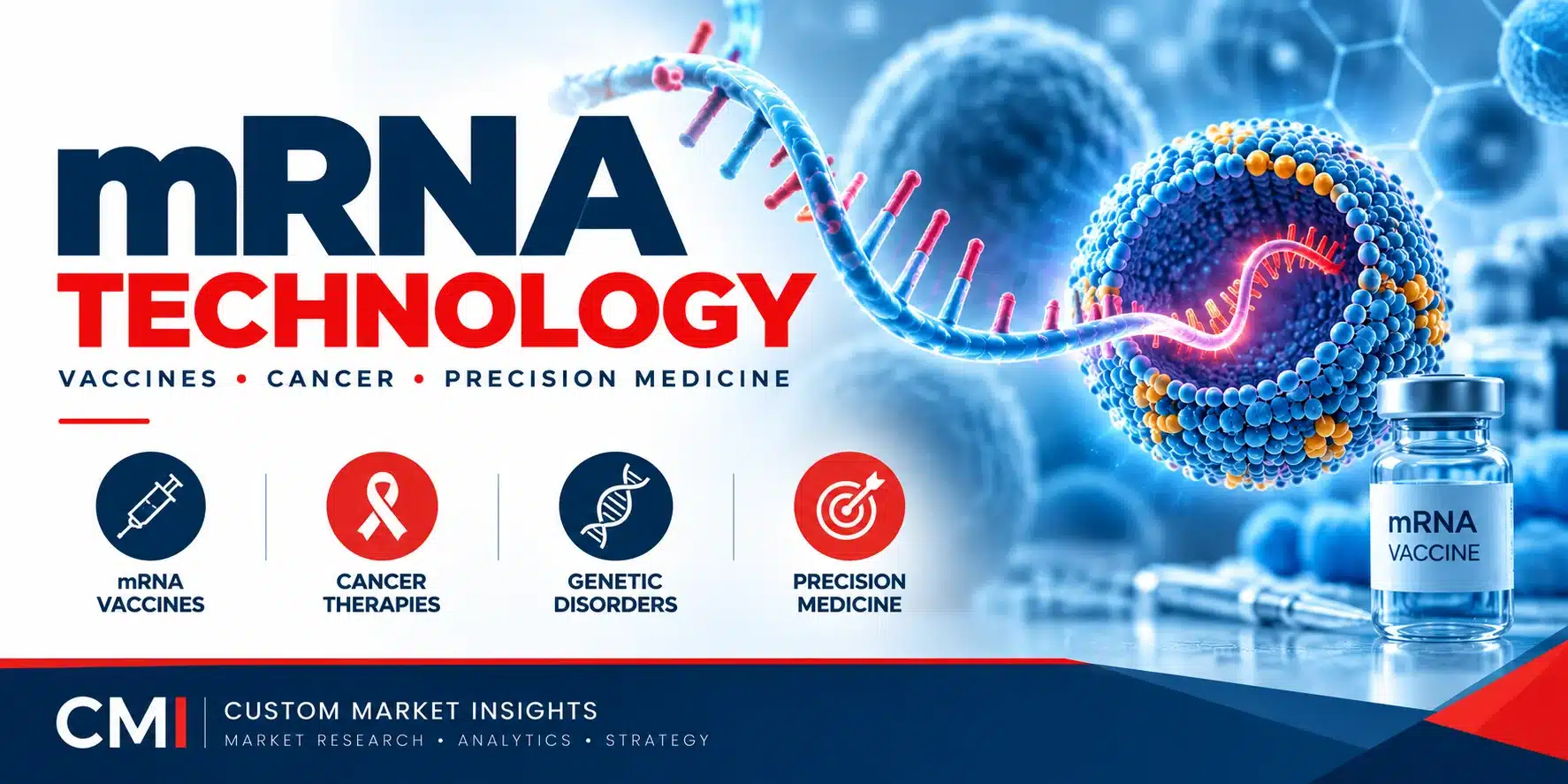
mRNA technology has genuinely rewired how we think about preventing and treating disease. Traditional vaccines have always worked by giving the body a weakened or inactivated version of a pathogen, enough for the immune system to learn what it looks like without causing real illness. mRNA vaccines flip that approach on its head. Instead of injecting the pathogen itself, they hand your own cells the genetic instructions to build a small piece of it, an antigen, and let your body do the manufacturing. That means you only ever need a tiny amount of genetic material to get the same immune response. And it turns out this approach isn’t limited to COVID-19 at all, it can be adapted to a genuinely wide range of diseases.
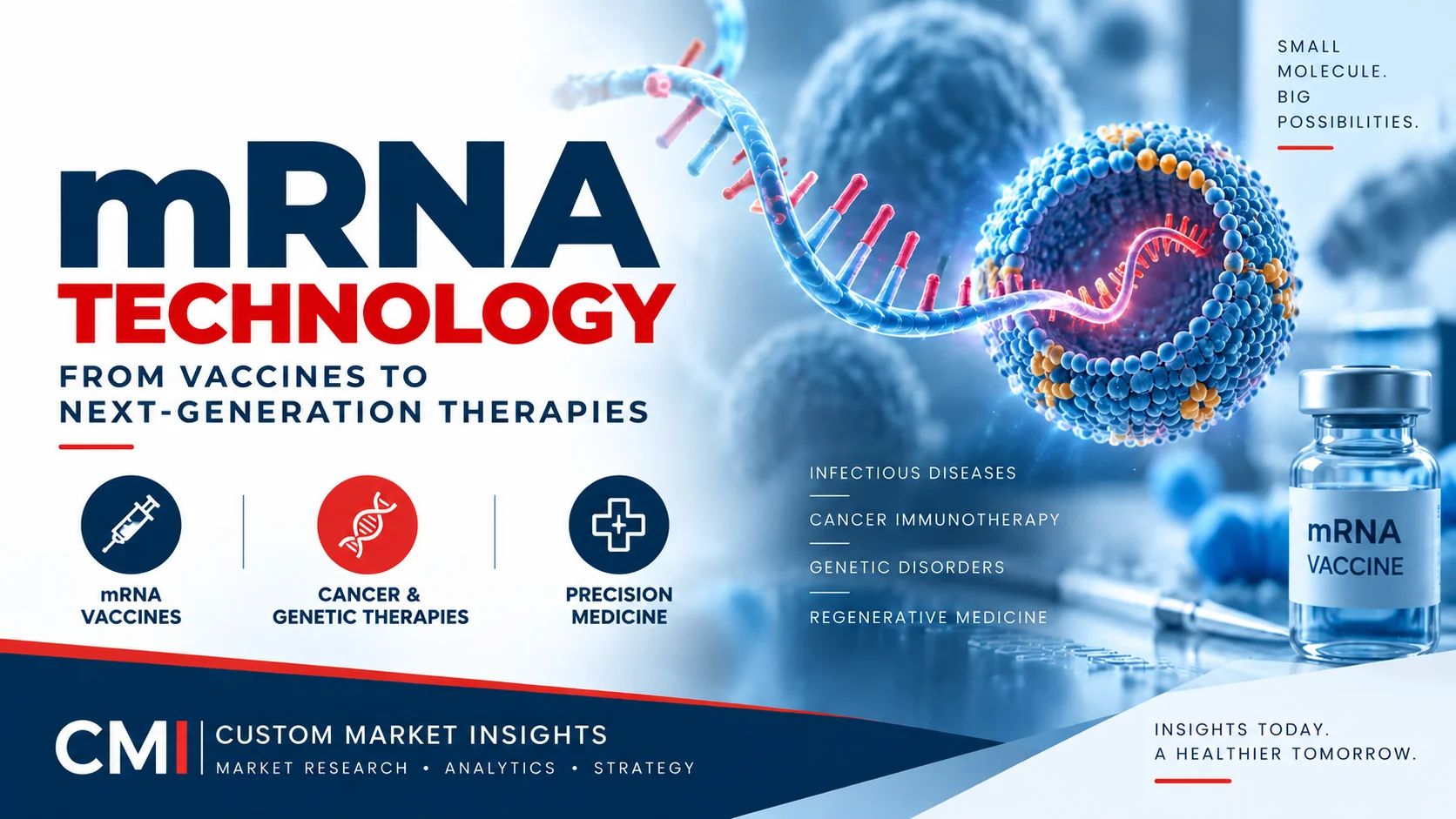
How mRNA Actually Works
mRNA is a single-stranded molecule that carries genetic instructions from DNA in the cell nucleus out to ribosomes, the cellular machinery that reads those instructions and actually builds proteins. Some of those proteins keep the body running day to day, others become structural building blocks or sources of energy.
mRNA vaccines borrow this natural process directly. Inject a synthetic mRNA strand encoding a specific antigen, usually a protein or protein fragment the immune system will recognize, and the patient’s own cells start producing that antigen right where they are. The immune system spots it as foreign and learns how to fight it, all without ever encountering the actual pathogen.
Why This Approach Has Real Advantages
A few things make mRNA vaccines genuinely different from what came before.
They’re remarkably adaptable. Older vaccines were mostly built around inactivated pathogens or specific pathogen components, bacterial proteins, and the like. mRNA vaccines work differently, once you know a pathogen’s genetic code, you can design the corresponding mRNA sequence for essentially any infectious disease where scientists understand what triggers a strong immune response. That flexibility showed up clearly during COVID-19 vaccine development. Researchers sequenced the virus’s RNA in January 2020, and viable vaccine candidates existed within months, a timeline that would have been unthinkable with older vaccine technology. It also means updated sequences can be rolled out fast when new variants emerge, rather than starting the whole process over from scratch.
They’re inherently safer. Since there’s no live virus involved anywhere in the process, there’s no risk of the vaccine itself causing infection. That’s a meaningful advantage over a lot of existing vaccine types, live but weakened flu shots, adenoviral vector vaccines that use a separate virus as a delivery vehicle, or subunit vaccines built from lab-created viral fragments.
They scale fast. Once a sequence is finalized, manufacturing can ramp up to produce large quantities relatively quickly, which matters enormously in any situation where speed genuinely saves lives.
Where mRNA Vaccines Have Actually Gone So Far
A lot of the recent progress traces back to nucleoside-modified mRNA, which improves how efficiently cells translate the instructions into protein while reducing how much the body’s innate immune sensors react to the foreign RNA itself. That combination has helped overcome some of the field’s biggest early obstacles, mRNA stability, getting the molecule delivered efficiently inside the body, and avoiding an unwanted innate immune reaction before the vaccine even gets a chance to work.
Lipid nanoparticles play a critical supporting role here too, they physically protect the fragile RNA molecule from breaking down before it reaches its target while also acting as an adjuvant that boosts the immune response by activating toll-like receptors. The vaccine itself, in a sense, doesn’t really exist in the injected material at all; it gets manufactured inside the patient’s own cells once the genetic instructions arrive.
In animal studies, mRNA vaccines have shown real protective effects against a genuinely wide range of pathogens, including influenza, Zika, rabies, Ebola, streptococcus, and even toxoplasma gondii. On the human side, the COVID-19 mRNA vaccines from Pfizer and BioNTech and from Moderna moved through large-scale global trials and have since been administered in the hundreds of millions of doses. Cancer treatment is another area seeing real movement, with therapeutic approaches like dendritic cell vaccines and injectable mRNA vaccines showing antigen-specific T cell responses and, in some patients, meaningfully longer disease-free survival when combined with other treatments.
Pfizer and BioNTech’s early work on a pandemic influenza vaccine offered a useful reality check too. Immune response in humans turned out weaker than what researchers had seen in animal models using first-generation adjuvants, which has pushed ongoing research toward understanding exactly which immune signaling pathways matter most in people, and toward improving delivery and stability enough to produce strong, lasting immunity.
Beyond Vaccines: A Genuine Therapeutic Platform
The success of mRNA vaccines has opened up a much broader therapeutic frontier. Because mRNA can instruct cells to produce specific proteins directly at the site where they’re needed, it has real potential across a range of diseases that have very little to do with infectious disease at all.
Replacing missing or faulty proteins. In conditions like cystic fibrosis, a defective gene produces a non-functional protein. mRNA therapy could deliver a healthy version of that genetic instruction, letting cells produce the correct protein and potentially reversing disease progression rather than just managing symptoms.
Personalizing cancer treatment. mRNA can be used to build personalized cancer vaccines, introducing tumor-specific antigens that direct the immune system to attack cancer cells more precisely. It can also deliver molecules that actively stimulate the immune system against tumors that are already established.
Addressing genetic disorders. Diseases like hemophilia, where the body is missing a specific protein, could potentially be treated by using mRNA to instruct cells to produce what’s missing, offering something closer to a durable fix than a lifelong workaround.
Supporting tissue regeneration. mRNA therapies also show promise in regenerative medicine, delivering instructions for growth factors and other molecules that can help stimulate healing in damaged tissue.
What’s Still in the Way
None of this potential comes without real obstacles. Delivery remains the central challenge, mRNA molecules are fragile, and getting them safely and efficiently into the right cells inside the body is genuinely difficult. Lipid nanoparticles have solved a lot of this already, but there’s real room to improve targeting precision and stability further. Manufacturing the mRNA itself is comparatively fast, but figuring out exactly how to deploy it and proving it works through rigorous testing remains expensive and time-consuming. And making sure this technology stays accessible globally, not just in wealthy markets that can afford the infrastructure, will take continued investment and research.
Where This Is Heading
The pace of progress in mRNA research offers a genuine glimpse of what personalized medicine could actually look like at scale. Customized mRNA vaccines and therapeutics could become a defining part of how disease gets prevented and treated going forward, offering precision that’s both more effective and, in some cases, genuinely curative rather than just palliative. As researchers keep refining delivery methods, addressing safety questions, and uncovering new applications, this technology looks increasingly likely to push healthcare toward a more preventive model overall, catching and correcting problems at the molecular level before they become full-blown disease.
mRNA technology has already proven itself as a genuinely transformative force in medicine, and the vaccine work is really just the opening chapter. By using the body’s own cellular machinery to produce disease-fighting proteins, mRNA has demonstrated a safe, adaptable, and fast approach to immunization, and the therapeutic applications extending well beyond vaccines into genetic disease, cancer, and regenerative medicine suggest this is just the beginning of what the platform can actually do.
Connect with our experts.