
Blood Glucose Monitoring System Market Size, Trends and Insights By Product Type (Self-Monitoring Blood Glucose Systems, Continuous Glucose Monitoring Systems), By Modality (Wearable, Non-Wearable), By End User (Hospitals, Home Care Settings), and By Region - Global Industry Overview, Statistical Data, Competitive Analysis, Share, Outlook, and Forecast 2026 – 2035
Report Snapshot
| Study Period: | 2026-2035 |
| Fastest Growing Market: | Asia-Pacific |
| Largest Market: | North America |
Major Players
- Insulet Corporation
- Medtronic plc
- GlucoRx Limited
- Zhejiang POCTech Co. Ltd
- Others
Reports Description
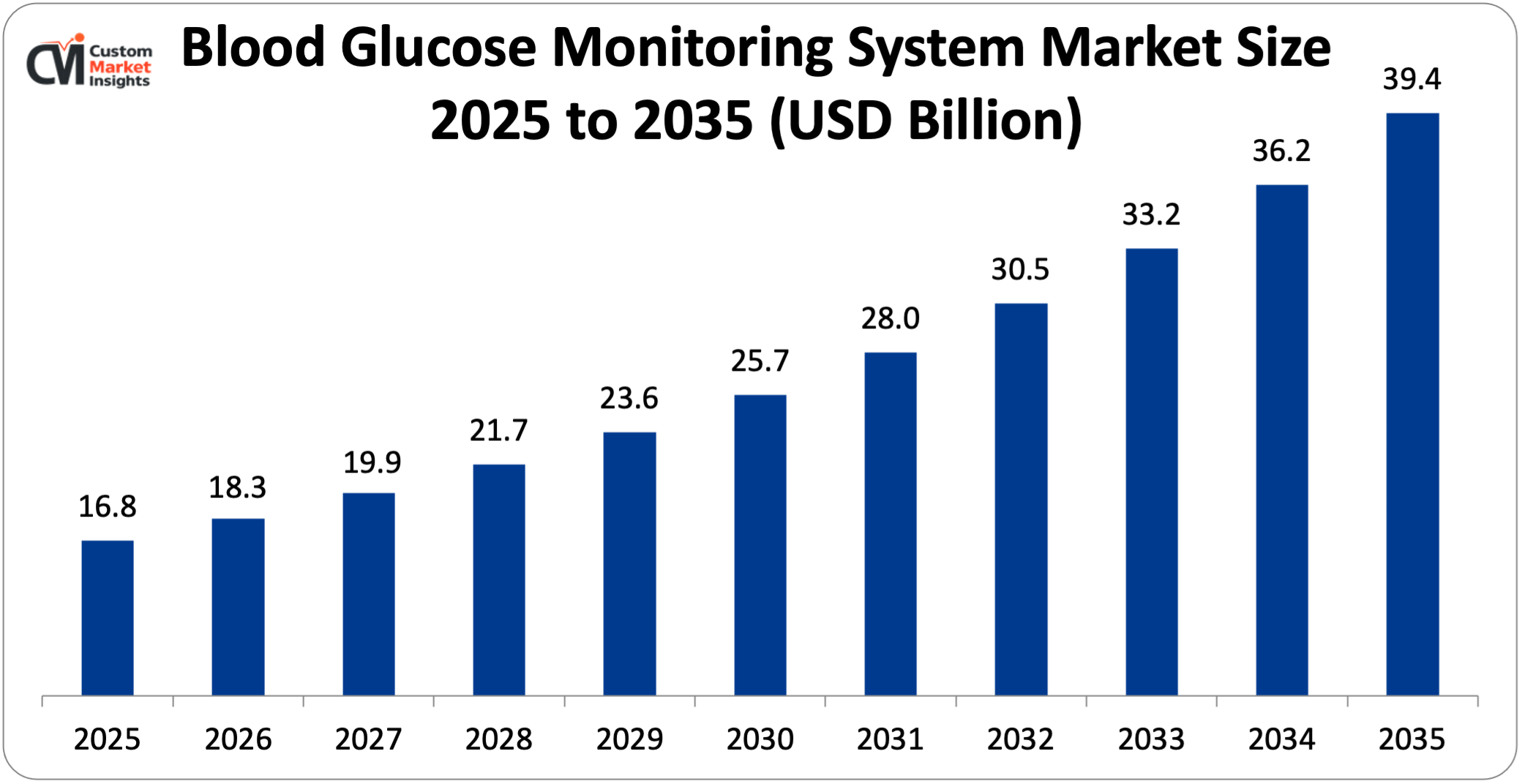
The market size of global blood glucose monitoring systems will be estimated at USD 16.8 billion in 2025 and is expected to grow to between USD 18.3 billion in 2026 and about USD 39.4 billion by 2035, with a current CAGR (compound annual growth rate) of 8.9% during the period of 2026 to 2035. Blood glucose monitoring system (BGMS) is a medical device (blood glucose monitoring device) or combination of devices that individuals use to measure the level of glucose (sugar) in their blood, mainly for diabetes management.
Usually, such devices include a glucose meter, test strips, and a lancing device for self-monitoring of blood glucose (SMBG) or some high-technology usage, such as continuous glucose monitoring (CGM) systems, in which the device has a sensor that is under the skin, which the patients wear throughout the day and receive a detailed view of their glucose levels from. Such systems allow the users and clinicians to observe patterns, trends, and fluctuations of glucose levels and adjust their treatment, for example, diet and medications, accordingly, ultimately prevent the risks of hypoglycemia or hyperglycemia, and promote better overall glycemic control and, ultimately, disease management.
Market Highlight
- In 2025, North America will dominate the global market with an estimated market share of 44%. The increasing presence of major players and continuous product launches in the region drive the market growth.
- The Asia Pacific is growing at the highest CAGR over the analysis period. The increasing elderly population and growing focus on preventive healthcare.
- By product type, the self-monitoring blood glucose systems segment dominated the industry in 2025 with a market share of 66%.
- By modality, the wearable segment captures the largest market share in 2025.
- By end user, the hospitals segment held more than 40% of revenue share.
Significant Growth Factors
The blood glucose monitoring system market trends present significant growth opportunities due to several factors:
- Rising Prevalence Of Diabetes: The increase in the incidence rate of diabetes is one of the key factors propelling the growth of the blood glucose monitoring system market globally. Nowadays, more and more people are suffering from diabetes and need to keep track of their blood sugar levels on a personal level in order to keep this chronic disease in check. This growing prevalence of diabetes worldwide is largely due to changes in lifestyle habits such as lack of physical activity, increased consumption of high-fat, sugar- and salt-rich foods, slow metabolism due to obesity, and an aging population. Because it is a long-term disease, it becomes essential for patients to monitor their blood glucose regularly so as to avoid the problems associated with it, including cardiovascular diseases, kidney failure, blindness, and nerve damage. With advancements in technology, the number of SMBG devices and CGMS has increased greatly over the years, and so have their usage levels. Further, awareness campaigns regarding early diagnosis and disease management and increased availability of healthcare facilities have also worked in favor of increased usage of blood glucose monitoring devices, thereby working to expand the market. For instance, according to the newest International Diabetes Federation (IDF) Diabetes Atlas (2025), 11.1% (which is 1 in 9) of the adult population globally (20-79 years) is living with diabetes, and over 4 in 10 of those people are undiagnosed.
- Increasing Demand For Home Healthcare: The growing need for home healthcare is a prominent factor in the growth of the market for blood glucose monitors as a number of patients opt for affordable and convenient strategies to monitor their chronic health diseases, like diabetes, from the comfort of their living room. On the other hand, home healthcare is associated with affordable treatment, resulting in minimum strain on hospitals and reducing the cost burden on health systems. Blood glucose monitoring systems (portable and easy to operate) are used to monitor patients’ blood glucose levels by administering relatively small blood samples and providing feedback for quick responses and worry-free life. Moreover, advancements in technology like the use of smaller devices, smartphone integration, and real-time data sharing are helping increase the scope of ease of use. The mobile population and aging populace, customization needs, the remote monitoring trend, and the focus on cost-effective methods of treatment are some other factors fueling the growth of the blood glucose monitoring system market.
What are the Major Advances Changing the Blood Glucose Monitoring System Market Today?
- Emergence of non-invasive Monitoring Technologies: The introduction of non-invasive monitoring is said to be one of the biggest innovations so far in the blood glucose monitoring system market because it will do away with the need for painful finger pricks and invasive sensors, which enhance patient compliance. This new technology involves the use of “spectroscopy, electromagnetic waves, and even breath or sweat” to measure blood glucose without the blood draw. This new wavelength technology is attracting much attention from consumers and hospitals for use in long-term diabetic management and home healthcare. The debut and surge of innovative products such as MOGLU at the CES 2025 and other non-invasive continuous glucose monitoring monitors are moving toward eliminating invasive sensors with their new “use of Raman spectroscopy, a non-invasive technique to detect the presence of glucose signals in the tissue” and “convenience and cost reduction.” The development of non-invasive optical monitors such as DiaMonTech makes it possible to measure blood sugar levels without needles; the developers are therefore working on pain-free daily diabetes management systems. The Nattbud device uses visualized and real-time analysis of glucose levels using microsensor technology using the person’s breath, and this information is provided through an app that is synced to it. Also, another product in the pipeline is a non-invasive electromagnetic glucose monitor that detects glucose using radio waves without the blood draw. The product was conceived in India and is being developed by scientists to produce a compact, affordable device. This has helped to popularize the use of non-invasive blood glucose monitoring and has had a positive effect on the whole blood glucose monitoring system market.
- Data-driven Personalized Healthcare: With the ever-increasing advancement and development in health informatics technologies and wireless communication, a new era in the blood glucose monitoring system (BGMS) market is starting to emerge. This is called data-driven personalized healthcare, which is a highly individualized monitoring and preventive care system capable of maintaining highly precise diabetes management based on the past and present data of the monitored patient. The existing glucose monitoring systems, especially the continuous glucose monitoring (CGM) systems, generate a large amount of information, which is then processed with the help of algorithms and analytics platforms to generate unique suggestions and plans of care. With the incorporation of digital health and artificial intelligence (AI)-based systems, the BGMS devices can not only predict the future blood glucose trends and identify the impending hypoglycemic and hyperglycemic events but also suggest more precise and specific corrective approaches. For instance, data-driven personalized healthcare can be implemented in the form of connected CGM systems enrolled with the mobile applications and computing platforms, which provide customized alerts and dietary and insulin dosing recommendations based on the user-specific blood glucose profiles. This moves the BGMS systems from generalized monitoring approaches into the realm of precision approach, which is more likely to improve the outcomes and adherence to the therapy. As an added benefit, cloud connectivity ensures real-time data sharing with the healthcare professionals for closer monitoring and more prompt medical interventions, an approach especially relevant in the home healthcare applications and for patients at high risk.
Category Wise Insights
By Product Type
Why Self-Monitoring Blood Glucose Systems Hold a Prominent Position in the Market?
The self-monitoring blood glucose systems segment dominated the industry in 2025 with a market share of 66%. The growth is attributable to its cost-effectiveness and easy-to-use nature. The self-monitoring of blood glucose (SMBG) is a fundamental part of everyday management of diabetes with the help of a glucose meter to monitor blood sugar levels. Moreover, other SMBG gadgets, such as test strips and lancets, are used to control glucose levels. The introduction of a new SMBD device is expected to propel the growth of the segment during the forecast period.
The prevalence of blood glucose meters is mounting gradually with the benefits they offer, including portability and greater accuracy, which are becoming more popular with customers. Players in the market are working on enhancing and introducing compact blood glucose meters. Some of the smallest advanced technology blood glucose meters reachable in the UK are Abbott Diabetes Care (Freestyle Lite), Bayer (CONTOUR NEXT USB), Lifescan (One Touch UltraEasy), Accu-Chek (Aviva Nano, Mobile), and the TRUEone blood glucose meter. The development of convenient, small, and discreet blood glucose meters is likely to propel the growth of this segment in the course of the forecast period.
The continuous glucose monitoring systems segment is growing at the highest CAGR over the analysis period. CBGM is a vital tool in the management of type 1 diabetes, as it allows the user to almost completely avoid extreme hypoglycemia. They continually check blood glucose levels to give consecutive readings every five minutes. CBGM is divided into insulin pumps, sensors, and transmitters/receivers. A tiny transmitter is placed under the skin, which measures blood glucose levels and transmits wirelessly to a monitor.
By Modality
Why Wearable Capture the Highest Market Share the Blood Glucose Monitoring System Market?
The wearable segment captures the largest market share in 2025. The growth is owing to the product launch, which is expected to drive the segment growth. For instance, in July 2025, Trinity Biotech, a public biotechnology company focused on human diagnostics and diabetes management solutions, announced the development of CGM+, its new flagship AI-native continuous glucose monitoring system. While the device is not yet commercially available, the platform is in late stages of device development and is a significant upgrade on standard glucose monitoring devices due to the integration of multiple biosensors on a single wearable platform. The CGM+ platform integrates an ultrathin, minimally invasive electrochemical glucose sensor with continuous monitoring of heart activity, body temperature, and physical activity levels for optimized real-time learning by AI algorithms for contextual health insights.
The non-wearable segment is growing at a steady rate over the projected period. Segment growth will mainly be driven by the market penetration of traditional self-monitoring of blood glucose (SMBG) devices (e.g., average glucometers continue to be the most dominant form of glucose testing, especially in less-developed and emerging markets, with mainstream adoption of these systems in these regions due to their low cost and ease of use). For many less developed markets where access to CGM systems is limited or where the cost of CGM technology would be prohibitively expensive for routine glucose testing, non-wearable systems are a more attractive proposition and a more cost-effective and reliable option. Fixed systems are also favored in this segment, as traditional glucometers are best given the desired accuracy and testing intermittency requirements, especially in T2DM patients. This will be further increased through various government initiatives, higher awareness of diabetes, and a large number of cheap test strips.
By End User
Why Hospitals Capture the Highest Market Share the Blood Glucose Monitoring System Market?
The hospitals segment held more than 40% of revenue share. Growing consumer needs for individual diabetic patients’ hospitalizations and higher hospital costs have encouraged the buy of BGMs because they offer real-time data to practitioners while reducing patients’ suffering with more accurate treatment plans. Outpatient and inpatient hospital settings are reported to buy BGM hospitals will see the new supplies to keep and send the patient data. To mention that, the CGM device received approval from The Food and Drug Administration (FDA) to be utilized in hospitals during the COVID-19 crisis, so there might be an increase in this segment in the future, expecting the new challenges.
The home care settings segment is growing at a rapid rate over the projected period. Home glucose monitoring using SMBG has revolutionized the way we monitor short-term glucose levels. It has become the most common method worldwide to monitor short-term glucose levels. SMBG gave the patient, diabetic or non-diabetic, the power to self-monitor their sugar levels at home in the comfort of their own home, allowing them to make decisions about their treatment methods, i.e., dietary intake, insulin, exercise, and stress levels.
Report Scope
| Feature of the Report | Details |
| Market Size in 2026 | USD 18.3 billion |
| Projected Market Size in 2035 | USD 39.4 billion |
| Market Size in 2025 | USD 16.8 billion |
| CAGR Growth Rate | 8.9% CAGR |
| Base Year | 2025 |
| Forecast Period | 2026-2035 |
| Key Segment | By Product Type, Modality, End User and Region |
| Report Coverage | Revenue Estimation and Forecast, Company Profile, Competitive Landscape, Growth Factors and Recent Trends |
| Regional Scope | North America, Europe, Asia Pacific, Middle East & Africa, and South & Central America |
| Buying Options | Request tailored purchasing options to fulfil your requirements for research. |
Regional Analysis
How Big is North America Blood Glucose Monitoring System Market Size?
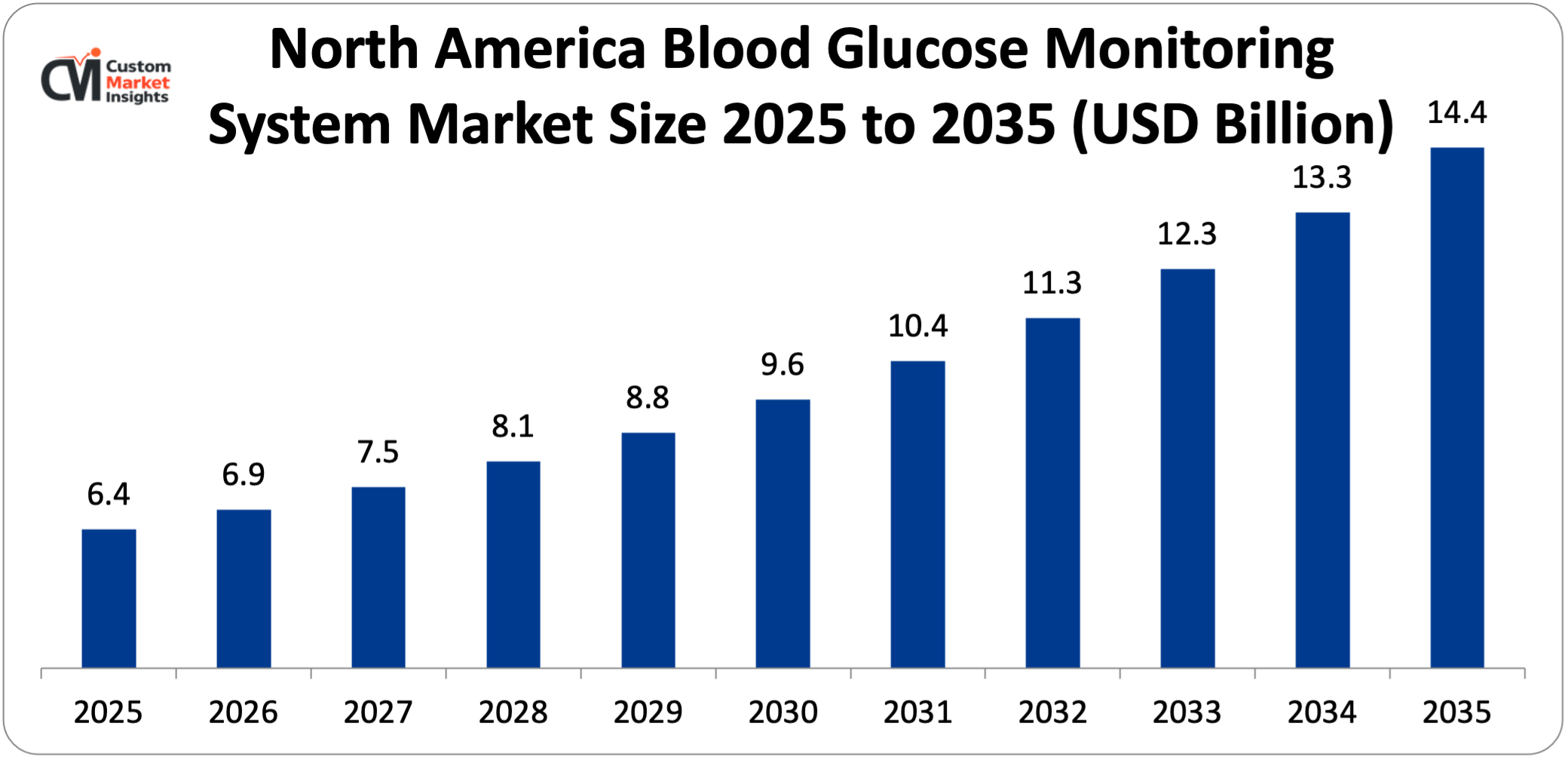
Its market size, in terms of North American blood glucose monitoring system, is projected to be USD 6.4 billion in 2025 with a growth of about USD 14.4 billion in 2035 with a CAGR of 8.5% between 2026 and 2035.
Why did North America Dominate the Blood Glucose Monitoring System Market in 2025?
In 2025, North America will dominate the global market with an estimated market share of 38%. The region has a substantial population base with a high prevalence of diabetes, and as a consequence, there is a high demand for technologically advanced blood glucose monitoring instruments. Moreover, the region has a sophisticated healthcare infrastructure, growing awareness regarding diabetes management, and a positive reimbursement policy that intensifies its demand.
US Blood Glucose Monitoring System Market Trends
In the North America region, the US leads the industry expansion over the projected period. The growing innovative product approval drives the industry growth. For instance, in September 2025, The Food and Drug Administration approved the first-ever continuous glucose monitoring system for weight loss, developed by startup Signos, presenting a new widely accessible option for Americans looking for help with their weight. While programs like GLP-1 drugs or weight loss surgery may be reserved for those with obesity or other health issues, there are no such restrictions with the Signos system; users simply need to want to lose weight. This system uses a combination of an AI platform with off-the-shelf continuous glucose monitors (CGM) from Dexcom to allow for personalized, real-time recommendations for lifestyle changes that support healthy weight loss. During use, a user wears small sensors on their upper arm that wirelessly deliver data gathered by the sensor to the Signos app, where users can record food consumption, exercise, and other relevant health data.
Why is Europe Experiencing Significant Growth in the Blood Glucose Monitoring System Market?
Europe holds a significant market share in 2025. The growth in the BGMS market is primarily driven by the increasing awareness of the management of diabetes, resulting in increased use of CGM and self-monitoring devices by the general population. Furthermore, reimbursement benefits are coupled with increased support of government health authorities in countries like Germany, the UK, France, etc. Are stimulating the adoption of high-end glucose monitoring devices. Moreover, the growing prevalence of CGM devices, rising penetration of digital health devices, and increasing preferences for home healthcare and remote patient monitoring are key factors contributing to the revenue growth of the European BGMS market. Introduction of new CGM technologies and an aging population, along with the positive impact of preventive healthcare, is also contributing to the growth.
UK Blood Glucose Monitoring System Market Trends
The UK held the dominant position in the market in 2025. Increasing product introduction and rising prevalence of diabetes are major factors driving the industry growth. For instance, in May 2025, Urathon will proudly take Yuwell. Anytime CGM goes to the Medical Show, the UK’s most popular healthcare exhibition, bringing together GPs, nurses, pharmacists, and many other healthcare professionals. This was the first time it was introduced to hundreds of healthcare professionals from throughout the UK demonstrating to them how it can assist in making blood glucose monitoring simple, comfortable, practical, and accessible for people living with diabetes. The team explained how the device functioned and discussed its advantages with regard to both patients and clinicians and addressed questions on the application of the device both within the NHS and in private healthcare settings. The Yuwell Anytime CGM attracted much attention due to its small, discreet size, its ease of use, and the real-time information feedback.
Why is the Asia Pacific Growing at a Rapid Rate in the Blood Glucose Monitoring System Market?
The Asia Pacific is expected to grow at the highest CAGR over the projected period. Huge population of the region, especially in countries like China and India, is seen as another factor for a large potential patient base. Furthermore, the enhanced healthcare infrastructure, the expanding middle class (which has a tendency to spend more on healthcare), and technological improvements in blood glucose monitoring devices are seen as enabling factors for the market.
China Blood Glucose Monitoring System Market Trends
China is growing at a significant rate in the market. The market for blood glucose monitoring systems in China is experiencing robust revenue growth due to an increasing country diabetes burden and legislative health care programs implemented by the government. The largest diabetic population in the world exists in China, with 148 million adults (11.9% prevalence) having diabetes based on international health data.
Why is the Middle East & Africa Region is growing rapidly in the Blood Glucose Monitoring System?
The MEA region is growing at a steady rate over the projected period. This growth is attributed to increasing incidences of diabetes, an aging population, and the need for remote monitoring devices. As per the International Diabetes Federation (IDF), the Middle East recorded the second highest number of deaths due to diabetes in patients under 60 years.
UAE Blood Glucose Monitoring System Market Trends
The UAE is growing at the highest CAGR during the forecast period. The increasing investment in advanced healthcare infrastructure is the main factor driving the market growth.
Top Players in the Blood Glucose Monitoring System Market and Their Offerings
- Insulet Corporation
- Medtronic plc
- GlucoRx Limited
- Zhejiang POCTech Co., Ltd.
- i-SENS Inc.
- Nemaura Medical Inc.
- Sinocare Inc.
- Bionime
- AgaMatrix
- Senseonics Holdings Inc.
- Hoffmann-La Roche Ltd
- Dexcom Inc.
- Sanofi
- Novo Nordisk
- Abbott Laboratories
- Ypsomed Holdings
- Glysens Incorporated
- Others
Key Developments
Blood glucose monitoring system market has experienced considerable changes in the last two years as the market players are trying to diversify their technological aspects and develop product portfolios using strategic approaches.
- In February 2026, LifeScan (“the Company”), a world leader in glucose monitoring, announced a transformational partnership with i-SENS, a global biosensor specialist, to launch a continuous glucose monitoring (“CGM”) system under the OneTouch® Vita brand. The Company and i-SENS expect to launch the CGM products in Germany, Ireland, Portugal, and Belgium by early 2027, with plans to expand into additional markets over time. This announcement reflects LifeScan’s long-term commitment to bring new innovations to market to improve the quality of life for patients. With a shared focus on delivering meaningful solutions for people living with diabetes, this partnership will bring together LifeScan’s trusted OneTouch® brand and global distribution network with i-SENS advanced technology and manufacturing capacities. There are no changes across the rest of the OneTouch® portfolio in connection with this announcement. (https://i-sens.com/lifescan-announces-transformational-partnership-with-i-sens-to-launch-onetouch-continuous-glucose-monitoring-system/)
- In September 2025, Roche shared real-world evidence from the rollout of the Accu-Chek SmartGuide continuous glucose monitoring (CGM) solution at the European Association for the Study of Diabetes (EASD) annual meeting and announced its integration with the mySugr diabetes management app, providing many more people with diabetes access to an AI-enabled predictive solution for the first time. (https://www.prnewswire.com/news-releases/roche-receives-ce-mark-for-accu-chek-smartguide-continuous-glucose-monitoring-and-mysugr-app-integration-offering-an-enhanced-diabetes-management-experience-302556554.html)
These strategic measures have enabled the companies to reinforce their competitive positions, increase the product line, boost their technological competencies, and also seize growth opportunities in the fast-growing blood glucose monitoring system market.
The Blood Glucose Monitoring System Market is segmented as follows:
By Product Type
- Self-Monitoring Blood Glucose Systems
- Continuous Glucose Monitoring Systems
By Modality
- Wearable
- Non-Wearable
By End User
- Hospitals
- Home Care Settings
Regional Coverage:
North America
- U.S.
- Canada
- Mexico
- Rest of North America
Europe
- Germany
- France
- U.K.
- Russia
- Italy
- Spain
- Netherlands
- Rest of Europe
Asia Pacific
- China
- Japan
- India
- New Zealand
- Australia
- South Korea
- Taiwan
- Rest of Asia Pacific
The Middle East & Africa
- Saudi Arabia
- UAE
- Egypt
- Kuwait
- South Africa
- Rest of the Middle East & Africa
Latin America
- Brazil
- Argentina
- Rest of Latin America
Table of Contents
- Chapter 1. Report Introduction
- 1.1. Report Description
- 1.1.1. Purpose of the Report
- 1.1.2. USP & Key Offerings
- 1.2. Key Benefits For Stakeholders
- 1.3. Target Audience
- 1.4. Report Scope
- 1.1. Report Description
- Chapter 2. Market Overview
- 2.1. Report Scope (Segments And Key Players)
- 2.1.1. Blood Glucose Monitoring System by Segments
- 2.1.2. Blood Glucose Monitoring System by Region
- 2.2. Executive Summary
- 2.2.1. Market Size & Forecast
- 2.2.2. Blood Glucose Monitoring System Market Attractiveness Analysis, By Product Type
- 2.2.3. Blood Glucose Monitoring System Market Attractiveness Analysis, By Modality
- 2.2.4. Blood Glucose Monitoring System Market Attractiveness Analysis, By End User
- 2.1. Report Scope (Segments And Key Players)
- Chapter 3. Market Dynamics (DRO)
- 3.1. Market Drivers
- 3.1.1. Rising Prevalence Of Diabetes
- 3.1.2. Increasing Demand For Home Healthcare
- 3.2. Market Restraints
- 3.3. Market Opportunities
- 3.5. Pestle Analysis
- 3.6. Porter Forces Analysis
- 3.7. Technology Roadmap
- 3.8. Value Chain Analysis
- 3.9. Government Policy Impact Analysis
- 3.10. Pricing Analysis
- 3.1. Market Drivers
- Chapter 4. Blood Glucose Monitoring System Market – By Product Type
- 4.1. Product Type Market Overview, By Product Type Segment
- 4.1.1. Blood Glucose Monitoring System Market Revenue Share, By Product Type, 2025 & 2035
- 4.1.2. Self-Monitoring Blood Glucose Systems
- 4.1.3. Blood Glucose Monitoring System Share Forecast, By Region (USD Billion)
- 4.1.4. Comparative Revenue Analysis, By Country, 2025 & 2035
- 4.1.5. Key Market Trends, Growth Factors, & Opportunities
- 4.1.6. Continuous Glucose Monitoring Systems
- 4.1.7. Blood Glucose Monitoring System Share Forecast, By Region (USD Billion)
- 4.1.8. Comparative Revenue Analysis, By Country, 2025 & 2035
- 4.1.9. Key Market Trends, Growth Factors, & Opportunities
- 4.1. Product Type Market Overview, By Product Type Segment
- Chapter 5. Blood Glucose Monitoring System Market – By Modality
- 5.1. Modality Market Overview, By Modality Segment
- 5.1.1. Blood Glucose Monitoring System Market Revenue Share, By Modality, 2025 & 2035
- 5.1.2. Wearable
- 5.1.3. Blood Glucose Monitoring System Share Forecast, By Region (USD Billion)
- 5.1.4. Comparative Revenue Analysis, By Country, 2025 & 2035
- 5.1.5. Key Market Trends, Growth Factors, & Opportunities
- 5.1.6. Non-Wearable
- 5.1.7. Blood Glucose Monitoring System Share Forecast, By Region (USD Billion)
- 5.1.8. Comparative Revenue Analysis, By Country, 2025 & 2035
- 5.1.9. Key Market Trends, Growth Factors, & Opportunities
- 5.1. Modality Market Overview, By Modality Segment
- Chapter 6. Blood Glucose Monitoring System Market – By End User
- 6.1. End User Market Overview, By End User Segment
- 6.1.1. Blood Glucose Monitoring System Market Revenue Share, By End User, 2025 & 2035
- 6.1.2. Hospitals
- 6.1.3. Blood Glucose Monitoring System Share Forecast, By Region (USD Billion)
- 6.1.4. Comparative Revenue Analysis, By Country, 2025 & 2035
- 6.1.5. Key Market Trends, Growth Factors, & Opportunities
- 6.1.6. Home Care Settings
- 6.1.7. Blood Glucose Monitoring System Share Forecast, By Region (USD Billion)
- 6.1.8. Comparative Revenue Analysis, By Country, 2025 & 2035
- 6.1.9. Key Market Trends, Growth Factors, & Opportunities
- 6.1. End User Market Overview, By End User Segment
- Chapter 7. Blood Glucose Monitoring System Market – Regional Analysis
- 7.1. Blood Glucose Monitoring System Market Overview, By Region Segment
- 7.1.1. Global Blood Glucose Monitoring System Market Revenue Share, By Region, 2025 & 2035
- 7.1.2. Global Blood Glucose Monitoring System Market Revenue, By Region, 2026 – 2035 (USD Billion)
- 7.1.3. Global Blood Glucose Monitoring System Market Revenue, By Product Type, 2026 – 2035
- 7.1.4. Global Blood Glucose Monitoring System Market Revenue, By Modality, 2026 – 2035
- 7.1.5. Global Blood Glucose Monitoring System Market Revenue, By End User, 2026 – 2035
- 7.2. North America
- 7.2.1. North America Blood Glucose Monitoring System Market Revenue, By Country, 2026 – 2035 (USD Billion)
- 7.2.2. North America Blood Glucose Monitoring System Market Revenue, By Product Type, 2026 – 2035
- 7.2.3. North America Blood Glucose Monitoring System Market Revenue, By Modality, 2026 – 2035
- 7.2.4. North America Blood Glucose Monitoring System Market Revenue, By End User, 2026 – 2035
- 7.2.5. U.S. Blood Glucose Monitoring System Market Revenue, 2026 – 2035 (USD Billion)
- 7.2.6. Canada Blood Glucose Monitoring System Market Revenue, 2026 – 2035 (USD Billion)
- 7.2.7. Mexico Blood Glucose Monitoring System Market Revenue, 2026 – 2035 (USD Billion)
- 7.2.8. Rest of North America Blood Glucose Monitoring System Market Revenue, 2026 – 2035 (USD Billion)
- 7.3. Europe
- 7.3.1. Europe Blood Glucose Monitoring System Market Revenue, By Country, 2026 – 2035 (USD Billion)
- 7.3.2. Europe Blood Glucose Monitoring System Market Revenue, By Product Type, 2026 – 2035
- 7.3.3. Europe Blood Glucose Monitoring System Market Revenue, By Modality, 2026 – 2035
- 7.3.4. Europe Blood Glucose Monitoring System Market Revenue, By End User, 2026 – 2035
- 7.3.5. Germany Blood Glucose Monitoring System Market Revenue, 2026 – 2035 (USD Billion)
- 7.3.6. France Blood Glucose Monitoring System Market Revenue, 2026 – 2035 (USD Billion)
- 7.3.7. U.K. Blood Glucose Monitoring System Market Revenue, 2026 – 2035 (USD Billion)
- 7.3.8. Russia Blood Glucose Monitoring System Market Revenue, 2026 – 2035 (USD Billion)
- 7.3.9. Italy Blood Glucose Monitoring System Market Revenue, 2026 – 2035 (USD Billion)
- 7.3.10. Spain Blood Glucose Monitoring System Market Revenue, 2026 – 2035 (USD Billion)
- 7.3.11. Netherlands Blood Glucose Monitoring System Market Revenue, 2026 – 2035 (USD Billion)
- 7.3.12. Rest of Europe Blood Glucose Monitoring System Market Revenue, 2026 – 2035 (USD Billion)
- 7.4. Asia Pacific
- 7.4.1. Asia Pacific Blood Glucose Monitoring System Market Revenue, By Country, 2026 – 2035 (USD Billion)
- 7.4.2. Asia Pacific Blood Glucose Monitoring System Market Revenue, By Product Type, 2026 – 2035
- 7.4.3. Asia Pacific Blood Glucose Monitoring System Market Revenue, By Modality, 2026 – 2035
- 7.4.4. Asia Pacific Blood Glucose Monitoring System Market Revenue, By End User, 2026 – 2035
- 7.4.5. China Blood Glucose Monitoring System Market Revenue, 2026 – 2035 (USD Billion)
- 7.4.6. Japan Blood Glucose Monitoring System Market Revenue, 2026 – 2035 (USD Billion)
- 7.4.7. India Blood Glucose Monitoring System Market Revenue, 2026 – 2035 (USD Billion)
- 7.4.8. New Zealand Blood Glucose Monitoring System Market Revenue, 2026 – 2035 (USD Billion)
- 7.4.9. Australia Blood Glucose Monitoring System Market Revenue, 2026 – 2035 (USD Billion)
- 7.4.10. South Korea Blood Glucose Monitoring System Market Revenue, 2026 – 2035 (USD Billion)
- 7.4.11. Taiwan Blood Glucose Monitoring System Market Revenue, 2026 – 2035 (USD Billion)
- 7.4.12. Rest of Asia Pacific Blood Glucose Monitoring System Market Revenue, 2026 – 2035 (USD Billion)
- 7.5. The Middle-East and Africa
- 7.5.1. The Middle-East and Africa Blood Glucose Monitoring System Market Revenue, By Country, 2026 – 2035 (USD Billion)
- 7.5.2. The Middle-East and Africa Blood Glucose Monitoring System Market Revenue, By Product Type, 2026 – 2035
- 7.5.3. The Middle-East and Africa Blood Glucose Monitoring System Market Revenue, By Modality, 2026 – 2035
- 7.5.4. The Middle-East and Africa Blood Glucose Monitoring System Market Revenue, By End User, 2026 – 2035
- 7.5.5. Saudi Arabia Blood Glucose Monitoring System Market Revenue, 2026 – 2035 (USD Billion)
- 7.5.6. UAE Blood Glucose Monitoring System Market Revenue, 2026 – 2035 (USD Billion)
- 7.5.7. Egypt Blood Glucose Monitoring System Market Revenue, 2026 – 2035 (USD Billion)
- 7.5.8. Kuwait Blood Glucose Monitoring System Market Revenue, 2026 – 2035 (USD Billion)
- 7.5.9. South Africa Blood Glucose Monitoring System Market Revenue, 2026 – 2035 (USD Billion)
- 7.5.10. Rest of the Middle East & Africa Blood Glucose Monitoring System Market Revenue, 2026 – 2035 (USD Billion)
- 7.6. Latin America
- 7.6.1. Latin America Blood Glucose Monitoring System Market Revenue, By Country, 2026 – 2035 (USD Billion)
- 7.6.2. Latin America Blood Glucose Monitoring System Market Revenue, By Product Type, 2026 – 2035
- 7.6.3. Latin America Blood Glucose Monitoring System Market Revenue, By Modality, 2026 – 2035
- 7.6.4. Latin America Blood Glucose Monitoring System Market Revenue, By End User, 2026 – 2035
- 7.6.5. Brazil Blood Glucose Monitoring System Market Revenue, 2026 – 2035 (USD Billion)
- 7.6.6. Argentina Blood Glucose Monitoring System Market Revenue, 2026 – 2035 (USD Billion)
- 7.6.7. Rest of Latin America Blood Glucose Monitoring System Market Revenue, 2026 – 2035 (USD Billion)
- 7.1. Blood Glucose Monitoring System Market Overview, By Region Segment
- Chapter 8. Competitive Landscape
- 8.1. Company Market Share Analysis – 2025
- 8.1.1. Global Blood Glucose Monitoring System Market: Company Market Share, 2025
- 8.2. Global Blood Glucose Monitoring System Market Company Market Share, 2024
- 8.1. Company Market Share Analysis – 2025
- Chapter 9. Company Profiles
- 9.1. Insulet Corporation
- 9.1.1. Company Overview
- 9.1.2. Key Executives
- 9.1.3. Product Portfolio
- 9.1.4. Financial Overview
- 9.1.5. Operating Business Segments
- 9.1.6. Business Performance
- 9.1.7. Recent Developments
- 9.2. Medtronic plc
- 9.3. GlucoRx Limited
- 9.4. Zhejiang POCTech Co. Ltd
- 9.5. i-SENS Inc.
- 9.6. Nemaura Medical Inc.
- 9.7. Sinocare Inc.
- 9.8. Bionime
- 9.9. AgaMatrix
- 9.10. Senseonics Holdings Inc.
- 9.11. F. Hoffmann-La Roche Ltd
- 9.12. Dexcom Inc.
- 9.13. Sanofi
- 9.14. Novo Nordisk
- 9.15. Abbott Laboratories
- 9.16. Ypsomed Holdings
- 9.17. Glysens Incorporated
- 9.18. Others.
- 9.1. Insulet Corporation
- Chapter 10. Research Methodology
- 10.1. Research Methodology
- 10.2. Secondary Research
- 10.3. Primary Research
- 10.3.1. Analyst Tools and Models
- 10.4. Research Limitations
- 10.5. Assumptions
- 10.6. Insights From Primary Respondents
- 10.7. Why Healthcare Foresights
- Chapter 11. Standard Report Commercials & Add-Ons
- 11.1. Customization Options
- 11.2. Subscription Module For Market Research Reports
- 11.3. Client Testimonials
- Chapter 12. List Of Figures
- 12.1. Figures No 1 to 22
- Chapter 13. List Of Tables
- 13.1. Tables No 1 to 46
Prominent Player
- Insulet Corporation
- Medtronic plc
- GlucoRx Limited
- Zhejiang POCTech Co. Ltd
- i-SENS Inc.
- Nemaura Medical Inc.
- Sinocare Inc.
- Bionime
- AgaMatrix
- Senseonics Holdings Inc.
- Hoffmann-La Roche Ltd
- Dexcom Inc.
- Sanofi
- Novo Nordisk
- Abbott Laboratories
- Ypsomed Holdings
- Glysens Incorporated
- Others
FAQs
The key players in the market are Insulet Corporation, Medtronic plc, GlucoRx Limited, Zhejiang POCTech Co. Ltd., i-SENS Inc., Nemaura Medical Inc., Sinocare Inc., Bionime, AgaMatrix, Senseonics Holdings Inc., F. Hoffmann-La Roche Ltd., Dexcom Inc., Sanofi, Novo Nordisk, Abbott Laboratories, Ypsomed Holdings, Glysens Incorporated, Others.
Public policies and government regulations have both positive and negative influences on the development of the blood glucose monitoring system market. Such regulations are important to safeguard the safety, accuracy, and reliability of products. They influence the marketing and acceptance of such devices. Governments also play a significant role by establishing reimbursement policies, diabetes management programs, and public health campaigns in raising awareness, early diagnosis, and digital health adoption. They have the power to generate demand by ensuring the affordability and accessibility of glucose monitoring systems that increase patient acceptance.
Price is a critical factor in the development and penetration of the blood glucose monitoring system market, as affordability levels for patients are the challenge in the market. Less expensive products, such as traditional SMBG systems, are more likely to be adopted in developing or more price-conscious markets. On the other hand, higher-end products such as CGM systems usually take longer to penetrate the market, as most people have to adapt to the purchase, consider the occasional costs, and decide to invest and endorse the product. Expensive or premium products are now starting to gain traction as prices come down. The effect of lower prices, advances in technology, and insurance reimbursement will help impact the mass market, thereby ensuring the market‘s growth.
According to the present analysis and forecast modeling, the market of blood glucose monitoring systems will witness a significant growth of about USD 39.4 billion in the year 2035 with the growing innovative product launch, increasing collaboration, and rising prevalence of diabetes with a CAGR of 8.9% between the years 2026 and 2035.
It is projected that North America will hold the largest market share in the blood glucose monitoring system market in the forecast period, with a share of about 38% of the global market share, which is attributed to the region’s presence of major players and increasing product approval.
The Asia Pacific is expected to grow at the highest CAGR during the forecast period. The growth in the region is owing to the growing older population and increasing health awareness.
Factors stimulating the blood glucose monitoring system market include the rising prevalence of diabetes; the use of sophisticated technology, including continuous monitoring and wearable devices; the increasing necessity for home health clinics; increased awareness leading to advantages of combating the disease; an aging population vulnerable to various chronic disorders; digital health and telemedicine and other government initiatives; and better health care facilities.