
Microbial Fermentation Technology Market Size, Trends and Insights By Microorganism Type (Bacteria, Algae, Yeast, Actinomycetes, Fungi), By Process Type (Batch Fermentation, Fed-Batch Fermentation, Continuous Fermentation, Submerged Fermentation, Solid-State Fermentation), By Application (Antibiotics, Monoclonal Antibodies, Probiotics Supplements, Biosimilars, Recombinant Proteins, Small Molecules, Enzymes, Vaccines, Others), By End User (Bio-Pharmaceutical Companies, Academic & Research Institutes, Contract Research Organizations (CROs), CMOs & CDMOs), and By Region - Global Industry Overview, Statistical Data, Competitive Analysis, Share, Outlook, and Forecast 2026 – 2035
Report Snapshot
| Study Period: | 2026-2035 |
| Fastest Growing Market: | North America |
| Largest Market: | Asia Pacific |
Major Players
- Bio-CAT Microbials
- AGC Biologics
- ABPDU
- Bio-Technical Resources
- Others
Reports Description
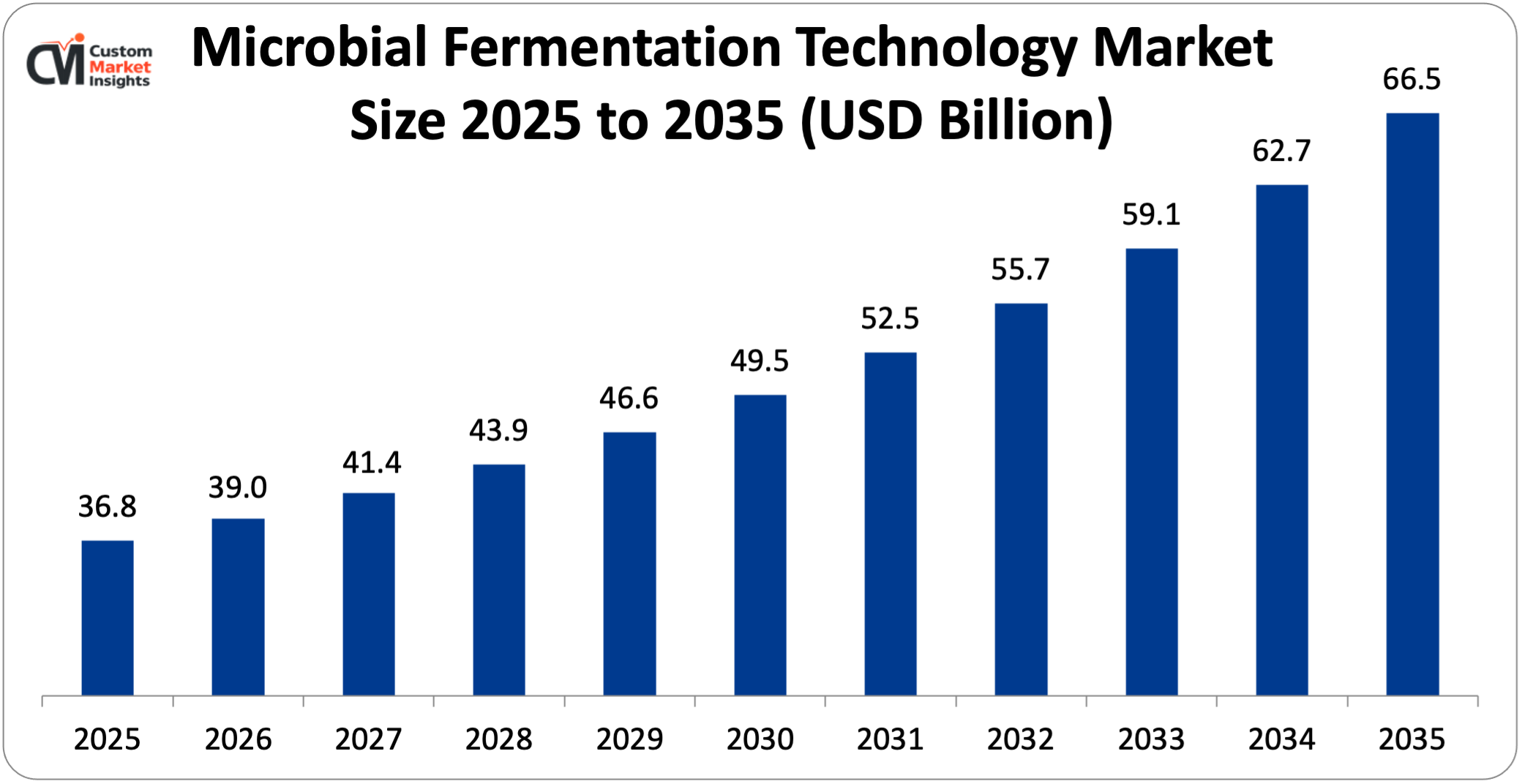
The market size of global microbial fermentation technology will be estimated at USD 36.8 billion in 2025 and is expected to grow to between USD 39 billion in 2026 and about USD 66.5 billion by 2035, with a current CAGR (compound annual growth rate) of 6.1% during the period of 2026 to 2035. Microbial fermentation technology is a biotechnological technique that uses bacteria, yeast, fungi, and other organisms to ferment various organic substrates into products in a controlled environment.
Microbial fermentation can make use of the various metabolic functions of cells in fermenters or bioreactors to produce huge amounts of industrial and commercial products, such as caffeine, fructose, citric acid, cultured cells, antibiotics, vaccines, enzymes, amino acids, organic acids, biofuel, and probiotics. It has become an essential technology in the pharmaceutical, food and beverage, agricultural, and biotechnological industries as an effective, scalable, and economical solution. The scientific progress such as engineering of microbial genomes, design of metabolic pathway and optimization of cell culture conditions etc. can significantly promote the efficiency of industrial fermentation.
Market Highlight
- In 2025, North America will dominate the global market with an estimated market share of 38%. The increasing investment in R&D drives the market growth.
- The Asia Pacific is growing at the highest CAGR over the analysis period. The increasing chronic disease prevalence.
- By microorganism type, the bacteria segment is expected to capture the largest market share over the projected period.
- By process type, the batch fermentation segment captures the largest market share in 2025.
- By application, the antibiotics segment captures the largest market share in 2025 of over 32%.
- By end user, the CMO and CDMO segment captures the largest market share in 2025 of over 42%.
Significant Growth Factors
The microbial fermentation technology market trends present significant growth opportunities due to several factors:
- Rise in Demand for Biopharmaceutical Products: The increased demand for biopharmaceutical products is a key driver for the microbial fermentation technology market, as a large number of modern drugs and other biologics are generated through microbial fermentation processes. Pharmaceutical companies can use microbial fermentation technology to produce complex medicines, like antibiotics, recombinant proteins, vaccines, and biosimilars, in large amounts and with high efficiency. Due to the increased prevalence of chronic conditions worldwide and the increased preference for biologic drugs by physicians, pharmaceutical manufacturers are investing in advanced fermentation facilities as well as bioprocess technologies. As a consequence, the pharmaceutical fermentation market is also predicted to grow at a substantial rate; from a market size of around USD 27.01 billion in 2026, the total market is estimated to reach USD 50.12 billion by 2035, an increase that will be primarily attributed to increased uptake of biologics and biosimilars in the near future. There are several biotechnology and pharmaceutical companies investing in such technology to upscale their biopharmaceutical production processes. For instance, in India, a biotechnology company called Biocon Ltd. uses fermentation for the manufacturing of therapeutic proteins, enzymes, and other biologics used in medicine through their fermentation facilities. BioVectra Inc. in Canada and F. Hoffmann-La Roche AG, Switzerland, for instance, also utilize fermentation-based bioprocessing to generate therapeutic enzymes, proteins, and other biologics. They work on fermentation infrastructure, strain engineering, and optimized bioreactor systems for improving productivity and providing cost-effective biological production. On the other hand, companies like FujiFilm Diosynth Biotechnologies and Olon Biotech that provide contract development and manufacturing services are growing their fermentation-based manufacturing to help other drug developers make biologic drugs. Such investments would also allow drug developers to accelerate clinical and commercialization programs while adhering to quality standards for microbial fermentation. Thus, the considerable rise in popularity of biologic drugs and vaccines is set to further drive the demand for microbial fermentation technologies.
- Growing Focus on Sustainable And Bio-based Production: Enhanced interest in sustainable and bio-based production was a crucial aspect that fueled the significant growth of this technology market. Industries in the pharmaceuticals, chemicals, food, and energy categories are continuously shifting from classical petroleum-based manufacturing to bio-based production processes to conserve the environment and reduce carbon emissions. Microbial fermentation technology produces various renewable raw materials; for example, sugars, natural cellulosic plant biomass, and agricultural wastes can be converted into bio-products, for example, biofuels, acids, plastics, enzymes, and chemicals. The technology is largely regarded as a greener process when compared to traditional chemical pathways, as it involves less energy as well as reduces the synthesis of toxic waste products. Several biotechnology corporations and chemical giants have invested in fermentation-based sustainable production systems. For example, BASF corporation has been developing biotechnology platforms that are based on microbial fermentation to produce biochemicals and enzymes to be used in industry. Similarly, DSM-Firmenich is mainly working on fermentation technology for the sustainable manufacturing of materials for nutrition, health, and personal care products. Another example of companies working on fermentation technology is Amyris, which is working on a precision fermentation technology to convert plant sugars into bio-based molecules, which can be used in cosmetics, fine fragrances, and renewable fuels. All of these show that many companies are using a mix of microbial fermentation fuels to support a circular economy and create eco-friendly alternatives to traditional petrochemical products. In anticipation of global climate change, sustainable bio-based industries are expected to continuously develop by increasing their use of microbial fermentation technology, which will lead to further expansion of this market.
What are the Major Advances Changing the Microbial Fermentation Technology Market Today?
- AI and Machine Learning in Fermentation Processes: The use of AI and ML in fermentation processes is currently one of the most impactful emerging technologies in the microbial fermentation technology market. The use of trial-and-error experimentation is currently prevalent within fermentation to optimize different microbial strains, nutrient conditions for optimal growth, and bioreactor condition parameters. AI and ML services provide companies the ability to analyze large biological datasets, output the most optimal fermentation conditions, and automate strain engineering processes. This leads to greatly increased productivity and reduced development times. Advanced AI algorithms are able to predict how to change genomes, automate control of microbial metabolism, and input variables such as pH and temperature and the correct amount of oxygen needed in the bioreactor for industrial applications. A recent innovation in 2025 showcasing this technology trend is the release of the Albatros AI fermentation platform by MOA Foodtech. The platform is an AI service that helps speed up the development of fermentation-derived ingredients by assessing the performance of microbes and selecting the optimal fermentation conditions. The same platform can then convert gluten- and starch-rich food waste by-products into high-value ingredients as well as more effectively monitor processes throughout the fermentation process to reduce production time. In 2025, Ginkgo Bioworks, a prominent synthetic biology company, released an autonomous laboratory system integrated with advanced fermentation research AI systems. In working with AI researchers, a system was demonstrated in which an AI model designed and implemented experiments through tens of thousands of biological experiments in an automated lab that quickly optimized microbial and protein processes. This is an example of AI-enabled closed-loop experimentation that greatly exceeds the speed of traditional laboratory experiments. Additionally, biotech startup company Lemnisca was provided funds in 2025 to develop an AI-powered fermentation platform capable of predicting key parameters such as pH swings and the oxygen consumption of fermentation using integrated, automated laboratory systems.
- High-throughput Strain Screening and Omics Technologies: The introduction of high-throughput strain screening and omics technologies is a key driver in the growth of the microbe fermentation technology market, as they dramatically cut short research and development cycles by providing a faster way to identify and optimize high-performance microbial strains for use in industrial fermentation. High-throughput strain screening technology platforms provide the ability to test thousands of microorganisms across multiple parameters all at the same time, while the introduction of new omics technology platforms (genomics, transcriptomics, proteomics, and metabolomics) allows researchers to obtain detailed metabolic information on the microbe and gene expression profiles, providing the ability to understand and manipulate the effects of fermentation culture conditions on the microorganism and thus improve metabolite yield through genetic or metabolic engineering. Currently, companies are using high-throughput screening and these complex genomic, proteomic, and metabolomic technologies in pharmaceutical, food, and industrial biotechnologies for the development of antibiotics, enzymes, biofuels, organic acids, and other premium chemicals.
Category Wise Insights
By Microorganism Type
Why Bacteria Hold a Prominent Position in the Market?
The bacteria segment is expected to capture the largest market share over the projected period. The growth of the market is mainly due to its wide range of industrial applications and its high productivity. Some bacterial strains, such as Escherichia coli, Bacillus, and Lactobacillus, are very well known and extensively used in microbial fermentation; they grow fast, are easy to manipulate genetically, and can be used as host strains for the production of diverse products such as enzymes, organic and amino acids, antibiotics, and recombinant proteins.
The global growth in revenue of the bacterial fermentation segment is not only due to wide application in various other industries such as food and beverage and agriculture; it is also contributed to by a steady increase in demand from pharmaceutical and biotechnology industries for biotechnology products such as biologics, diagnostics, vaccines, and therapeutic proteins. Furthermore, bacterial fermentation is also used in food and beverage applications widely for the production of probiotic strains, fermented dairy products, and food additives.
Furthermore, developments in bioengineering, synthetic biology, and bioprocess optimization are improving bacterial productivity and scalability and are helping to lower costs and improve the universality of bacterial platforms and features that are attractive to manufacturers. Moreover, the growing adoption of bio-based manufacturing and more sustainable production methods will only increase demand for bacterial fermentation-related technologies.
The yeast segment is growing at the highest CAGR over the analysis period. This segment is a significant factor in the revenue growth of the market owing to the relatively large consumption of yeast in the biofuel, food, beverage, and pharmaceutical industries. Saccharomyces cerevisiae and other yeast species are widely used for the fermentation of sugars into valuable products owing to their high efficiency at producing ethanol, enzymes, recombinant proteins, vitamins, and other bio-based chemicals.
This growth is driven by rising demand for bioethanol and renewable fuels, growing demand for biological drugs and vaccines, and increasing consumer consumption of fermented food and beverage products. Additionally, yeast is also a commercially preferred host organism in biotechnology applications owing to its straightforward genetics and ease of cultivation and availability for producing complex proteins with eukaryotic post-translational modifications.
Recent advances in metabolic engineering, synthetic biology, and precision fermentation have helped improve yeast performance and yield of complex products required for high-value bio-based and pharmaceutical ingredients. Hence, the application of yeast-based fermentation technologies in multiple industries is expected to be driving the revenue growth of this segment in upcoming years.
By Process Type
Why Batch Fermentation Capture the Highest Market Share the Microbial Fermentation Technology Market?
The batch fermentation segment captures the largest market share in 2025. This segment is mainly due to its wide utilization in pharmaceutical, food, and biotech industries for the production of enzymes, antibiotics, vaccines, and organic acids. In this process, the microbes are grown and cultured inside a closed system, fed with nutrients at the beginning of fermentation, and then left out for the same data until the end of the fermentation process. Batch fermentation, compared to other processes, is more flexible and gives maximum means of controlling fermenter parameters; it is least prone to contamination and has maximum parameters using chemometric models.
The increase in revenue of this segment is, however, justified by the increasing growth of demand for biologics, food products produced from fermented ingredients, and bio-based chemicals, which all have batch fermentation as the main or an underlying process used during the fermentation. Efforts are being directed to improve fed-batch fermentation to reduce its time through automation, control systems, and process optimization. Batch fermentation is used predominantly in fermentation-based biotech and pharmaceutical products.
The continuous fermentation segment is growing rapidly over the projected period. This is primarily because of the higher productivity and efficiency provided in comparison to other methods of traditional fermentation. In continuous fermentation, the medium is constantly refreshed in addition to the removal of fermentation products and waste from the bioreactor. Due to this, the microorganism stays in an active growth state for longer, providing a system of more constant product yield, less idle time, and increased time efficiency of the fermentation equipment that would be a significant advantage in industry.
This section of the market is expanding due to increasing demand for biofuels, organic acids, industrial enzymes, and bulk biochemicals, where continuous processing allows for reduced process costs and processing scalability advantages. Improvements are gradually being made to high-throughput automated bioreactor systems for continuous processing, with the development of many onboard real-time monitoring and process control systems for these bioreactors further ensuring effective run times and increased stability of these fermenters. As more industries opt for high-throughput and high-efficiency processes that are highly cost-effective biomanufacturing processes, it is likely that the revenues generated by this form of microbial fermentation will increase.
By Application
Does the Antibiotics Dominates the Microbial Fermentation Technology Market?
The antibiotics segment captures the largest market share in 2025 of over 32%. The leading position of this segment is due to the fact that the demand for antibiotics is high all over the world, the emphasis on microbial metabolite research is increasing, and new antibiotics are emerging. Microbial fermentation is of fundamental importance for antibiotic production. As a few studies have reported it, 70 – 80% of all the antibiotics found came from one of the genera of bacteria.
The vaccines segment is growing at the highest CAGR over the projected period. The growth is driven by increasing demand for preventive medicines from consumers around the globe and continuous modernization of biotechnology. Microbial fermentation is an important process for vaccine production by helping manufacturers to mass produce microbes, which then produce vaccine antigens, recombinant proteins, and others for viral vectors.
The segment is gaining momentum due to the increasing incidence of infectious diseases, expanding immunization programs, and increasing government investments in vaccines and other manufacturing infrastructure. Furthermore, increasing development of recombinant and next-generation vaccines for prevalent diseases such as influenza, hepatitis, human papillomavirus, and newly emerging viruses has also stimulated the deployment of microbial fermentation. Leading pharmaceutical and biotechnology companies are further investing heavily in fermentation systems and bioprocessing optimization to mass-produce vaccines.
By End User
Why the CMOs and CDMOs Dominates the Microbial Fermentation Technology Market?
The CMO and CDMO segments capture the largest market share in 2025 of over 42%. This sector is increasingly favoring CMOs and CDMOs, as most bioprocessing innovations are occurring in smaller companies that face capacity constraints due to a shortage of trained employees and limited resources for commercializing products. The increasing clinical pipeline for biologics will further increase this segment‘s dominance.
The Contract Research Organizations (CROs) segment is growing at the highest CAGR over the projected period. A major enabling force of this growth has been pharma and biotech, which seek external, in-licensing capabilities for research, development, and early bioprocess optimization. Contract research organizations provide companies with scientific expertise, state-of-the-art laboratory equipment, fermentation technology, and production technology know-how, all of which help accelerate the development of fermentation-based products, including biologics, vaccines, enzymes, and chemical-based products. products.
The outsourcing of fermentation process development, microbial strain development, characterization studies, and scale-up studies to a CRO is an attractive proposition for most biotech companies to reduce operating expenses and to accelerate the development timelines for complex biopharmaceuticals. Small and medium-scale biotech companies tend to outsource to a CRO instead of establishing their own fermentation plants due to the high technical expertise and capital investment required; however, a growing pipeline of biological drugs, increased research in synthetic biology, and the application of microbial fermentation technology in the food and industrial biotechnology sectors are further driving the demand for CRO services, thereby increasing revenues.
Report Scope
| Feature of the Report | Details |
| Market Size in 2026 | USD 39 billion |
| Projected Market Size in 2035 | USD 66.5 billion |
| Market Size in 2025 | USD 36.8 billion |
| CAGR Growth Rate | 6.1% CAGR |
| Base Year | 2025 |
| Forecast Period | 2026-2035 |
| Key Segment | By Microorganism Type, Process Type, Application, End User and Region |
| Report Coverage | Revenue Estimation and Forecast, Company Profile, Competitive Landscape, Growth Factors and Recent Trends |
| Regional Scope | North America, Europe, Asia Pacific, Middle East & Africa, and South & Central America |
| Buying Options | Request tailored purchasing options to fulfil your requirements for research. |
Regional Analysis
How Big is North America Microbial Fermentation Technology Market Size?
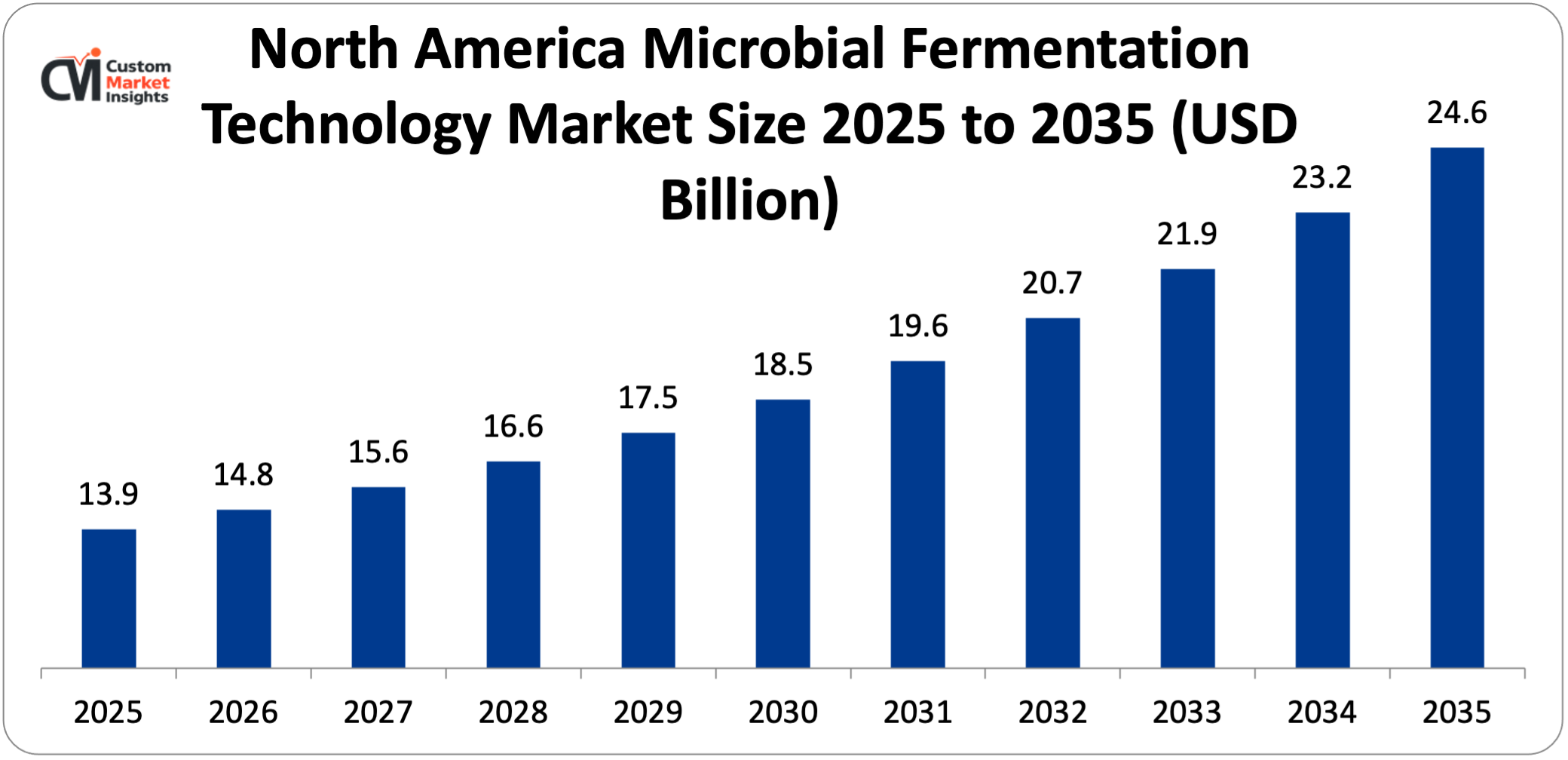
Its market size, in terms of North American microbial fermentation technology, is projected to be USD 13.9 billion in 2025 with a growth of about USD 24.6 billion in 2035 with a CAGR of 5.8% between 2026 and 2035.
Why did North America Dominate the Microbial Fermentation Technology Market in 2025?
In 2025, North America will dominate the global market with an estimated market share of 38%. The presence of developed biotechnology and pharmaceutical industries in this region primarily drives this growth. The U.S. and Canada are playing a very significant role in this growth owing to their high R&D infrastructure, commercialization and investment in biotech innovation, and government support in biomanufacturing. Developed biotech and pharma industry, along with a large number of pharma & biotech companies, exists in this region, which uses the microbial fermentation process for manufacturing biologics, antibiotics, vaccines, enzymes, and bio-based chemicals.
Rising adoption of biopharmaceuticals and rising applications of precision fermentation in the food and nutraceuticals sector, along with the rising adoption of sustainable bio-based manufacturing processes, are further pushing this growth. Presence of leading biotech companies and contract research organizations and the development of cutting-edge fermentation facilities, along with continuous investment in synthetic biology and bioprocess technologies, are driving this growth for microbial fermentation technology applications in several industry segments in North America.
US Microbial Fermentation Technology Market Trends
In the North America region, the US leads the industry expansion over the projected period. The revolution in the manufacturing of biologics is one of the key factors that is influencing the Market in the United States. Furthermore, the growth of the market is driven by the growing government investments for biopharmaceutical research and the use of novel manufacturing equipment for GMP manufacturing.
Why is Europe Experiencing Significant Growth in the Microbial Fermentation Technology Market?
Europe holds a significant market share in 2025. The microbial fermentation technology market is growing due to high concentrations of the biotechnology, pharmaceutical, and industrial biotechnology industries in the region, which are based in Germany, France, and the UK. The region is a center for research infrastructure, academic-industry collaboration, and biotech-friendly regulation, which acts to boost biotechnology innovation.
The increasing demand for biopharmaceuticals, vaccines, and enzyme-based products is further supporting the application of microbial fermentation technology in the pharmaceutical and healthcare industries. Furthermore, the region is increasingly employing a bio-based approach for manufacturing, which further supports the application of fermentation processes in manufacturing biofuels, bioplastics, and specialty chemicals.
Various government initiatives to promote the bioeconomy and high investments in synthetic biology and industrial biotechnology are considered important factors for the growth of the regional microbial fermentation technology industry. High amount of existing research institutes specializing in biotechnologies, and considerable demand of fermented food ingredients for use in food and supplement products also contribute to revenue growth of the microbial fermentation technology market in Europe.
UK Microbial Fermentation Technology Market Trends
The UK held the dominant position in the market in 2025. The country has a sophisticated framework of pharmaceutical and research facilities to enable the commercial development of fermentation products, including vaccines, biopharmaceuticals, enzymes, and bio-based chemicals. The government has a program of initiatives to stimulate the growth of the bioeconomy, and the stimulation of research funding programs in biotechnology and industrial bioprocessing is helping to drive the use of cutting-edge microbial fermentation technologies. This cluster of leading universities, research institutes, and biotechnology firms is also boosting innovation in synthetic biology, precision fermentation, and microbial strain engineering.
Why is the Asia Pacific Growing at a Rapid Rate in the Microbial Fermentation Technology Market?
The Asia Pacific is expected to grow at the highest CAGR over the projected period. This is due to the acknowledgement that Asian countries have remained the center of biopharmaceutical outsourcing. Asian companies, comprising local companies as well as global giants, are assumed to construct approximately 50% of new bioprocessing facilities in the world. For example, many bioprocessing facilities are anticipated to be erected in China to fulfill local needs. The combination of all the aforementioned factors would increase the demand for microbial fermentation technology in the region.
China Microbial Fermentation Technology Market Trends
China is growing at a significant rate in the market. Fast growth in the biotechnologies, pharmaceuticals, and biomanufacturing industries in China fuels this growth. The country has become a world-leading producer of fermentation-derived products, including antibiotics, amino acids, enzymes, organic acids, and vitamins, backed up with huge-scale manufacturing and low-cost production. The huge worldwide need for biopharmaceuticals, vaccines, and nutraceutical ingredients is motivating pharmaceutical and biotech companies from all over the country to enlarge existing and build new fermentation plants.
Why is the Middle East & Africa Region is growing rapidly in the Microbial Fermentation Technology?
The MEA region is growing at a steady rate over the projected period. As countries like the United Arab Emirates, South Africa, and Saudi Arabia invest more in biotechnology, healthcare, and food processing, they are focusing on growing their biotechnology skills and creating bio-based manufacturing as part of their plan to diversify their economies. The increasing need for pharmaceutical supplies, vaccines, and nutraceuticals is expected to contribute to the positive demand for microbial fermentation technologies in the healthcare sector, as such technologies are significantly required for the development of cost-effective and high-quality biopharmaceuticals.
UAE Microbial Fermentation Technology Market Trends
The UAE is growing at the highest CAGR during the forecast period. The increasing investment in the biopharmaceutical sector is the main factor driving the market growth.
Top Players in the Microbial Fermentation Technology Market and Their Offerings
- Scientific Protein Laboratories
- Bio-CAT Microbials
- AGC Biologics
- ABPDU
- Bio-Technical Resources
- Biocatalysts
- Bluestem Biosciences
- EKF Diagnostics
- Fujifilm Diosynth
- Microbial Discovery Group
- Osprey Biotechnics
- Wisconsin BioProducts
- Abolis Biotechnologies
- Zero Acre Farms
- United Breweries Ltd.
- Hoffmann-La Roche AG
- Koninklijke DSM NV
- Biocon Ltd.
- BioVectra Inc.
- TerraVia Holdings Inc.
- Zea2 Bioworks
- Others
Key Developments
Microbial fermentation technology market has experienced considerable changes in the last two years as the market players are trying to diversify their technological aspects and develop product portfolios using strategic approaches.
- In December 2025, Bio, the pioneer in AI-enabled continuous fermentation technology, and Bühler Group, the global solution provider for food, feed, and advanced materials, are teaming up to bring an integrated continuous precision fermentation platform to market. The collaboration advances industrial biomanufacturing by accelerating process development, reducing unit production costs thanks to a continuous process, and improving operation performance. Bühler and Pow.Bio are now ready to begin onboarding customers. (https://www.buhlergroup.com/global/en/media/media-releases/pow-bio-and-buehler-join-forces-to-advance-next-generation-preci.html)
- In December 2025, Onego Bio, a food ingredient company producing non-animal egg protein with precision fermentation, announced the launch of a new expert series titled “The Power of Trichoderma reesei: Building the Future with Fungi.” This multi-part initiative reveals the full potential of Trichoderma reesei, the microbial platform behind Onego’s Bioalbumen®, by spotlighting its scientific strengths, industrial scale, and practical performance across food manufacturing. (https://www.businesswire.com/news/home/20251209632524/en/Onego-Bio-Launches-The-Power-of-Trichoderma-reesei-Series-to-Showcase-Innovation-Scale-and-Real-World-Applications)
These strategic measures have enabled the companies to reinforce their competitive positions, increase the product line, boost their technological competencies, and also seize growth opportunities in the fast-growing microbial fermentation technology market.
The Microbial Fermentation Technology Market is segmented as follows:
By Microorganism Type
- Bacteria
- Algae
- Yeast
- Actinomycetes
- Fungi
By Process Type
- Batch Fermentation
- Fed-Batch Fermentation
- Continuous Fermentation
- Submerged Fermentation
- Solid-State Fermentation
By Application
- Antibiotics
- Monoclonal Antibodies
- Probiotics Supplements
- Biosimilars
- Recombinant Proteins
- Small Molecules
- Enzymes
- Vaccines
- Others
By End User
- Bio-Pharmaceutical Companies
- Academic & Research Institutes
- Contract Research Organizations (CROs)
- CMOs & CDMOs
Regional Coverage:
North America
- U.S.
- Canada
- Mexico
- Rest of North America
Europe
- Germany
- France
- U.K.
- Russia
- Italy
- Spain
- Netherlands
- Rest of Europe
Asia Pacific
- China
- Japan
- India
- New Zealand
- Australia
- South Korea
- Taiwan
- Rest of Asia Pacific
The Middle East & Africa
- Saudi Arabia
- UAE
- Egypt
- Kuwait
- South Africa
- Rest of the Middle East & Africa
Latin America
- Brazil
- Argentina
- Rest of Latin America
Tables Of Contents
- Chapter 1. Report Introduction
- 1.1. Report Description
- 1.1.1. Purpose of the Report
- 1.1.2. USP & Key Offerings
- 1.2. Key Benefits For Stakeholders
- 1.3. Target Audience
- 1.4. Report Scope
- 1.1. Report Description
- Chapter 2. Market Overview
- 2.1. Report Scope (Segments And Key Players)
- 2.1.1. Microbial Fermentation Technology by Segments
- 2.1.2. Microbial Fermentation Technology by Region
- 2.2. Executive Summary
- 2.2.1. Market Size & Forecast
- 2.2.2. Microbial Fermentation Technology Market Attractiveness Analysis, By Microorganism Type
- 2.2.3. Microbial Fermentation Technology Market Attractiveness Analysis, By Process Type
- 2.2.4. Microbial Fermentation Technology Market Attractiveness Analysis, By Application
- 2.2.5. Microbial Fermentation Technology Market Attractiveness Analysis, By End User
- 2.1. Report Scope (Segments And Key Players)
- Chapter 3. Market Dynamics (DRO)
- 3.1. Market Drivers
- 3.1.1. Rise in Demand for Biopharmaceutical Products
- 3.1.2. Growing Focus on Sustainable And Bio-based Production
- 3.2. Market Restraints
- 3.3. Market Opportunities
- 3.5. Pestle Analysis
- 3.6. Porter Forces Analysis
- 3.7. Technology Roadmap
- 3.8. Value Chain Analysis
- 3.9. Government Policy Impact Analysis
- 3.10. Pricing Analysis
- 3.1. Market Drivers
- Chapter 4. Microbial Fermentation Technology Market – By Microorganism Type
- 4.1. Microorganism Type Market Overview, By Microorganism Type Segment
- 4.1.1. Microbial Fermentation Technology Market Revenue Share, By Microorganism Type, 2025 & 2035
- 4.1.2. Bacteria
- 4.1.3. Microbial Fermentation Technology Share Forecast, By Region (USD Billion)
- 4.1.4. Comparative Revenue Analysis, By Country, 2025 & 2035
- 4.1.5. Key Market Trends, Growth Factors, & Opportunities
- 4.1.6. Algae
- 4.1.7. Microbial Fermentation Technology Share Forecast, By Region (USD Billion)
- 4.1.8. Comparative Revenue Analysis, By Country, 2025 & 2035
- 4.1.9. Key Market Trends, Growth Factors, & Opportunities
- 4.1.10. Yeast
- 4.1.11. Microbial Fermentation Technology Share Forecast, By Region (USD Billion)
- 4.1.12. Comparative Revenue Analysis, By Country, 2025 & 2035
- 4.1.13. Key Market Trends, Growth Factors, & Opportunities
- 4.1.14. Actinomycetes
- 4.1.15. Microbial Fermentation Technology Share Forecast, By Region (USD Billion)
- 4.1.16. Comparative Revenue Analysis, By Country, 2025 & 2035
- 4.1.17. Key Market Trends, Growth Factors, & Opportunities
- 4.1.18. Fungi
- 4.1.19. Microbial Fermentation Technology Share Forecast, By Region (USD Billion)
- 4.1.20. Comparative Revenue Analysis, By Country, 2025 & 2035
- 4.1.21. Key Market Trends, Growth Factors, & Opportunities
- 4.1. Microorganism Type Market Overview, By Microorganism Type Segment
- Chapter 5. Microbial Fermentation Technology Market – By Process Type
- 5.1. Process Type Market Overview, By Process Type Segment
- 5.1.1. Microbial Fermentation Technology Market Revenue Share, By Process Type, 2025 & 2035
- 5.1.2. Batch Fermentation
- 5.1.3. Microbial Fermentation Technology Share Forecast, By Region (USD Billion)
- 5.1.4. Comparative Revenue Analysis, By Country, 2025 & 2035
- 5.1.5. Key Market Trends, Growth Factors, & Opportunities
- 5.1.6. Fed-Batch Fermentation
- 5.1.7. Microbial Fermentation Technology Share Forecast, By Region (USD Billion)
- 5.1.8. Comparative Revenue Analysis, By Country, 2025 & 2035
- 5.1.9. Key Market Trends, Growth Factors, & Opportunities
- 5.1.10. Continuous Fermentation
- 5.1.11. Microbial Fermentation Technology Share Forecast, By Region (USD Billion)
- 5.1.12. Comparative Revenue Analysis, By Country, 2025 & 2035
- 5.1.13. Key Market Trends, Growth Factors, & Opportunities
- 5.1.14. Submerged Fermentation
- 5.1.15. Microbial Fermentation Technology Share Forecast, By Region (USD Billion)
- 5.1.16. Comparative Revenue Analysis, By Country, 2025 & 2035
- 5.1.17. Key Market Trends, Growth Factors, & Opportunities
- 5.1.18. Solid-State Fermentation
- 5.1.19. Microbial Fermentation Technology Share Forecast, By Region (USD Billion)
- 5.1.20. Comparative Revenue Analysis, By Country, 2025 & 2035
- 5.1.21. Key Market Trends, Growth Factors, & Opportunities
- 5.1. Process Type Market Overview, By Process Type Segment
- Chapter 6. Microbial Fermentation Technology Market – By Application
- 6.1. Application Market Overview, By Application Segment
- 6.1.1. Microbial Fermentation Technology Market Revenue Share, By Application, 2025 & 2035
- 6.1.2. Antibiotics
- 6.1.3. Microbial Fermentation Technology Share Forecast, By Region (USD Billion)
- 6.1.4. Comparative Revenue Analysis, By Country, 2025 & 2035
- 6.1.5. Key Market Trends, Growth Factors, & Opportunities
- 6.1.6. Monoclonal Antibodies
- 6.1.7. Microbial Fermentation Technology Share Forecast, By Region (USD Billion)
- 6.1.8. Comparative Revenue Analysis, By Country, 2025 & 2035
- 6.1.9. Key Market Trends, Growth Factors, & Opportunities
- 6.1.10. Probiotics Supplements
- 6.1.11. Microbial Fermentation Technology Share Forecast, By Region (USD Billion)
- 6.1.12. Comparative Revenue Analysis, By Country, 2025 & 2035
- 6.1.13. Key Market Trends, Growth Factors, & Opportunities
- 6.1.14. Biosimilars
- 6.1.15. Microbial Fermentation Technology Share Forecast, By Region (USD Billion)
- 6.1.16. Comparative Revenue Analysis, By Country, 2025 & 2035
- 6.1.17. Key Market Trends, Growth Factors, & Opportunities
- 6.1.18. Recombinant Proteins
- 6.1.19. Microbial Fermentation Technology Share Forecast, By Region (USD Billion)
- 6.1.20. Comparative Revenue Analysis, By Country, 2025 & 2035
- 6.1.21. Key Market Trends, Growth Factors, & Opportunities
- 6.1.22. Small Molecules
- 6.1.23. Microbial Fermentation Technology Share Forecast, By Region (USD Billion)
- 6.1.24. Comparative Revenue Analysis, By Country, 2025 & 2035
- 6.1.25. Key Market Trends, Growth Factors, & Opportunities
- 6.1.26. Enzymes
- 6.1.27. Microbial Fermentation Technology Share Forecast, By Region (USD Billion)
- 6.1.28. Comparative Revenue Analysis, By Country, 2025 & 2035
- 6.1.29. Key Market Trends, Growth Factors, & Opportunities
- 6.1.30. Vaccines
- 6.1.31. Microbial Fermentation Technology Share Forecast, By Region (USD Billion)
- 6.1.32. Comparative Revenue Analysis, By Country, 2025 & 2035
- 6.1.33. Key Market Trends, Growth Factors, & Opportunities
- 6.1.34. Others
- 6.1.35. Microbial Fermentation Technology Share Forecast, By Region (USD Billion)
- 6.1.36. Comparative Revenue Analysis, By Country, 2025 & 2035
- 6.1.37. Key Market Trends, Growth Factors, & Opportunities
- 6.1. Application Market Overview, By Application Segment
- Chapter 7. Microbial Fermentation Technology Market – By End User
- 7.1. End User Market Overview, By End User Segment
- 7.1.1. Microbial Fermentation Technology Market Revenue Share, By End User, 2025 & 2035
- 7.1.2. Bio-Pharmaceutical Companies
- 7.1.3. Microbial Fermentation Technology Share Forecast, By Region (USD Billion)
- 7.1.4. Comparative Revenue Analysis, By Country, 2025 & 2035
- 7.1.5. Key Market Trends, Growth Factors, & Opportunities
- 7.1.6. Academic & Research Institutes
- 7.1.7. Microbial Fermentation Technology Share Forecast, By Region (USD Billion)
- 7.1.8. Comparative Revenue Analysis, By Country, 2025 & 2035
- 7.1.9. Key Market Trends, Growth Factors, & Opportunities
- 7.1.10. Contract Research Organizations (CROs)
- 7.1.11. Microbial Fermentation Technology Share Forecast, By Region (USD Billion)
- 7.1.12. Comparative Revenue Analysis, By Country, 2025 & 2035
- 7.1.13. Key Market Trends, Growth Factors, & Opportunities
- 7.1.14. CMOs & CDMOs
- 7.1.15. Microbial Fermentation Technology Share Forecast, By Region (USD Billion)
- 7.1.16. Comparative Revenue Analysis, By Country, 2025 & 2035
- 7.1.17. Key Market Trends, Growth Factors, & Opportunities
- 7.1. End User Market Overview, By End User Segment
- Chapter 8. Microbial Fermentation Technology Market – Regional Analysis
- 8.1. Microbial Fermentation Technology Market Overview, By Region Segment
- 8.1.1. Global Microbial Fermentation Technology Market Revenue Share, By Region, 2025 & 2035
- 8.1.2. Global Microbial Fermentation Technology Market Revenue, By Region, 2026 – 2035 (USD Billion)
- 8.1.3. Global Microbial Fermentation Technology Market Revenue, By Microorganism Type, 2026 – 2035
- 8.1.4. Global Microbial Fermentation Technology Market Revenue, By Process Type, 2026 – 2035
- 8.1.5. Global Microbial Fermentation Technology Market Revenue, By Application, 2026 – 2035
- 8.1.6. Global Microbial Fermentation Technology Market Revenue, By End User, 2026 – 2035
- 8.2. North America
- 8.2.1. North America Microbial Fermentation Technology Market Revenue, By Country, 2026 – 2035 (USD Billion)
- 8.2.2. North America Microbial Fermentation Technology Market Revenue, By Microorganism Type, 2026 – 2035
- 8.2.3. North America Microbial Fermentation Technology Market Revenue, By Process Type, 2026 – 2035
- 8.2.4. North America Microbial Fermentation Technology Market Revenue, By Application, 2026 – 2035
- 8.2.5. North America Microbial Fermentation Technology Market Revenue, By End User, 2026 – 2035
- 8.2.6. U.S. Microbial Fermentation Technology Market Revenue, 2026 – 2035 (USD Billion)
- 8.2.7. Canada Microbial Fermentation Technology Market Revenue, 2026 – 2035 (USD Billion)
- 8.2.8. Mexico Microbial Fermentation Technology Market Revenue, 2026 – 2035 (USD Billion)
- 8.2.9. Rest of North America Microbial Fermentation Technology Market Revenue, 2026 – 2035 (USD Billion)
- 8.3. Europe
- 8.3.1. Europe Microbial Fermentation Technology Market Revenue, By Country, 2026 – 2035 (USD Billion)
- 8.3.2. Europe Microbial Fermentation Technology Market Revenue, By Microorganism Type, 2026 – 2035
- 8.3.3. Europe Microbial Fermentation Technology Market Revenue, By Process Type, 2026 – 2035
- 8.3.4. Europe Microbial Fermentation Technology Market Revenue, By Application, 2026 – 2035
- 8.3.5. Europe Microbial Fermentation Technology Market Revenue, By End User, 2026 – 2035
- 8.3.6. Germany Microbial Fermentation Technology Market Revenue, 2026 – 2035 (USD Billion)
- 8.3.7. France Microbial Fermentation Technology Market Revenue, 2026 – 2035 (USD Billion)
- 8.3.8. U.K. Microbial Fermentation Technology Market Revenue, 2026 – 2035 (USD Billion)
- 8.3.9. Russia Microbial Fermentation Technology Market Revenue, 2026 – 2035 (USD Billion)
- 8.3.10. Italy Microbial Fermentation Technology Market Revenue, 2026 – 2035 (USD Billion)
- 8.3.11. Spain Microbial Fermentation Technology Market Revenue, 2026 – 2035 (USD Billion)
- 8.3.12. Netherlands Microbial Fermentation Technology Market Revenue, 2026 – 2035 (USD Billion)
- 8.3.13. Rest of Europe Microbial Fermentation Technology Market Revenue, 2026 – 2035 (USD Billion)
- 8.4. Asia Pacific
- 8.4.1. Asia Pacific Microbial Fermentation Technology Market Revenue, By Country, 2026 – 2035 (USD Billion)
- 8.4.2. Asia Pacific Microbial Fermentation Technology Market Revenue, By Microorganism Type, 2026 – 2035
- 8.4.3. Asia Pacific Microbial Fermentation Technology Market Revenue, By Process Type, 2026 – 2035
- 8.4.4. Asia Pacific Microbial Fermentation Technology Market Revenue, By Application, 2026 – 2035
- 8.4.5. Asia Pacific Microbial Fermentation Technology Market Revenue, By End User, 2026 – 2035
- 8.4.6. China Microbial Fermentation Technology Market Revenue, 2026 – 2035 (USD Billion)
- 8.4.7. Japan Microbial Fermentation Technology Market Revenue, 2026 – 2035 (USD Billion)
- 8.4.8. India Microbial Fermentation Technology Market Revenue, 2026 – 2035 (USD Billion)
- 8.4.9. New Zealand Microbial Fermentation Technology Market Revenue, 2026 – 2035 (USD Billion)
- 8.4.10. Australia Microbial Fermentation Technology Market Revenue, 2026 – 2035 (USD Billion)
- 8.4.11. South Korea Microbial Fermentation Technology Market Revenue, 2026 – 2035 (USD Billion)
- 8.4.12. Taiwan Microbial Fermentation Technology Market Revenue, 2026 – 2035 (USD Billion)
- 8.4.13. Rest of Asia Pacific Microbial Fermentation Technology Market Revenue, 2026 – 2035 (USD Billion)
- 8.5. The Middle-East and Africa
- 8.5.1. The Middle-East and Africa Microbial Fermentation Technology Market Revenue, By Country, 2026 – 2035 (USD Billion)
- 8.5.2. The Middle-East and Africa Microbial Fermentation Technology Market Revenue, By Microorganism Type, 2026 – 2035
- 8.5.3. The Middle-East and Africa Microbial Fermentation Technology Market Revenue, By Process Type, 2026 – 2035
- 8.5.4. The Middle-East and Africa Microbial Fermentation Technology Market Revenue, By Application, 2026 – 2035
- 8.5.5. The Middle-East and Africa Microbial Fermentation Technology Market Revenue, By End User, 2026 – 2035
- 8.5.6. Saudi Arabia Microbial Fermentation Technology Market Revenue, 2026 – 2035 (USD Billion)
- 8.5.7. UAE Microbial Fermentation Technology Market Revenue, 2026 – 2035 (USD Billion)
- 8.5.8. Egypt Microbial Fermentation Technology Market Revenue, 2026 – 2035 (USD Billion)
- 8.5.9. Kuwait Microbial Fermentation Technology Market Revenue, 2026 – 2035 (USD Billion)
- 8.5.10. South Africa Microbial Fermentation Technology Market Revenue, 2026 – 2035 (USD Billion)
- 8.5.11. Rest of the Middle East & Africa Microbial Fermentation Technology Market Revenue, 2026 – 2035 (USD Billion)
- 8.6. Latin America
- 8.6.1. Latin America Microbial Fermentation Technology Market Revenue, By Country, 2026 – 2035 (USD Billion)
- 8.6.2. Latin America Microbial Fermentation Technology Market Revenue, By Microorganism Type, 2026 – 2035
- 8.6.3. Latin America Microbial Fermentation Technology Market Revenue, By Process Type, 2026 – 2035
- 8.6.4. Latin America Microbial Fermentation Technology Market Revenue, By Application, 2026 – 2035
- 8.6.5. Latin America Microbial Fermentation Technology Market Revenue, By End User, 2026 – 2035
- 8.6.6. Brazil Microbial Fermentation Technology Market Revenue, 2026 – 2035 (USD Billion)
- 8.6.7. Argentina Microbial Fermentation Technology Market Revenue, 2026 – 2035 (USD Billion)
- 8.6.8. Rest of Latin America Microbial Fermentation Technology Market Revenue, 2026 – 2035 (USD Billion)
- 8.1. Microbial Fermentation Technology Market Overview, By Region Segment
- Chapter 9. Competitive Landscape
- 9.1. Company Market Share Analysis – 2025
- 9.1.1. Global Microbial Fermentation Technology Market: Company Market Share, 2025
- 9.2. Global Microbial Fermentation Technology Market Company Market Share, 2024
- 9.1. Company Market Share Analysis – 2025
- Chapter 10. Company Profiles
- 10.1. Scientific Protein Laboratories
- 10.1.1. Company Overview
- 10.1.2. Key Executives
- 10.1.3. Product Portfolio
- 10.1.4. Financial Overview
- 10.1.5. Operating Business Segments
- 10.1.6. Business Performance
- 10.1.7. Recent Developments
- 10.2. Bio-CAT Microbials
- 10.3. AGC Biologics
- 10.4. ABPDU
- 10.5. Bio-Technical Resources
- 10.6. Biocatalysts
- 10.7. Bluestem Biosciences
- 10.8. EKF Diagnostics
- 10.9. Fujifilm Diosynth
- 10.10. Microbial Discovery Group
- 10.11. Osprey Biotechnics
- 10.12. Wisconsin BioProducts
- 10.13. Abolis Biotechnologies
- 10.14. Zero Acre Farms
- 10.15. United Breweries Ltd.
- 10.16. Hoffmann-La Roche AG
- 10.17. Koninklijke DSM NV
- 10.18. Biocon Ltd.
- 10.19. BioVectra Inc.
- 10.20. TerraVia Holdings Inc.
- 10.21. Zea2 Bioworks
- 10.22. Others.
- 10.1. Scientific Protein Laboratories
- Chapter 11. Research Methodology
- 11.1. Research Methodology
- 11.2. Secondary Research
- 11.3. Primary Research
- 11.3.1. Analyst Tools and Models
- 11.4. Research Limitations
- 11.5. Assumptions
- 11.6. Insights From Primary Respondents
- 11.7. Why Healthcare Foresights
- Chapter 12. Standard Report Commercials & Add-Ons
- 12.1. Customization Options
- 12.2. Subscription Module For Market Research Reports
- 12.3. Client Testimonials
- Chapter 13. List Of Figures
- 13.1. Figures No 1 to
- Chapter 14. List Of Tables
- 14.1. Tables No 1 to
Prominent Player
- Scientific Protein Laboratories
- Bio-CAT Microbials
- AGC Biologics
- ABPDU
- Bio-Technical Resources
- Biocatalysts
- Bluestem Biosciences
- EKF Diagnostics
- Fujifilm Diosynth
- Microbial Discovery Group
- Osprey Biotechnics
- Wisconsin BioProducts
- Abolis Biotechnologies
- Zero Acre Farms
- United Breweries Ltd.
- Hoffmann-La Roche AG
- Koninklijke DSM NV
- Biocon Ltd.
- BioVectra Inc.
- TerraVia Holdings Inc.
- Zea2 Bioworks
- Others
FAQs
The key players in the market are Scientific Protein Laboratories, Bio-CAT Microbials, AGC Biologics, ABPDU, Bio-Technical Resources, Biocatalysts, Bluestem Biosciences, EKF Diagnostics, Fujifilm Diosynth, Microbial Discovery Group, Osprey Biotechnics, Wisconsin BioProducts, Abolis Biotechnologies, Zero Acre Farms, United Breweries Ltd., Hoffmann-La Roche AG, Koninklijke DSM NV, Biocon Ltd., BioVectra Inc., TerraVia Holdings Inc., Zea2 Bioworks, Others.
Strict government regulations are significant for this market because they direct the regulation of the various products obtained from fermentation, which are required in the pharmaceutical, food, bioprocessing, and biotechnology industries, ensuring quality, safety, and environmental sustainability. Regulatory authorities put into effective use protocols and guidelines followed by the use of strains, bioprocessing parameters, and approval of the final product and process. The regulatory agencies also have designed policies and standards for the development of microbial fermentation processes and scientifically guided them towards the adoption of environmentally friendly, economically viable, efficient, and sustainable bioprocesses. Several initiatives, policies, and funding programs by government authorities that can enable the development of a bioeconomy are further focused on motivating more investments and research efforts in these technologies. Nonetheless, approval and regulatory procedures need to be made before using GMOs, biologics, and vaccines, which may further increase the total product development time.
The high cost associated with investing in the microbial fermentation technology market can determine the market growth and penetration, especially as the main capital expenditures, fermentation equipment, bioreactors, and processes in strain development and process optimization, are expenses that could be prohibitive when investing in this market for small biotech firms and research institutes. By gaining a better understanding of technological innovations that enhance process efficiency and reduce costs, fermentation-based manufacturing could become a more attractive option due to its lower operating costs and improved scalability.
According to the present analysis and forecast modeling, the market of microbial fermentation technology will witness a significant growth of about USD 66.5 billion in the year 2035 with the growing innovative product launch, increasing collaboration, and rising prevalence of chronic disease with a CAGR of 6.1% between the years 2026 and 2035.
It is projected that North America will hold the largest market share in the microbial fermentation technology market in the forecast period, with a share of about 38% of the global market share, which is attributed to the region’s presence of major players.
The Asia Pacific is expected to grow at the highest CAGR during the forecast period. The growth in the region is owing to the increase in demand for vaccines for various conditions.
The major growth drivers for the microbial fermentation technology market are increasing demand for biopharmaceuticals and vaccines, research in biopharmaceuticals and vaccines, increasing application of fermentation in the production of food, beverages, and nutraceuticals, and increasing focus of manufacturing using bioresources for a sustainable future. Enhanced application of fermentation using the applications of synthetic biology, AI driven fermentation optimization techniques, and bioprocess technologies, along with increasing biology investments in R&D (Research & development) and outsourcing to CROs (Clinical research organizations) & CDMOs (Contract Development & manufacturing Organizations), will drive the growth of this market exponentially.