
Carotenoids Market Size, Trends and Insights By Product (Beta Carotene, Astaxanthin, Lycopene, Lutein, Canthaxanthin, Zeaxanthin, Other Products), By Application (Food, Pharmaceuticals, Supplements, Feed, Cosmetics), By Source (Synthetic, Natural), and By Region - Global Industry Overview, Statistical Data, Competitive Analysis, Share, Outlook, and Forecast 2026 – 2035
Report Snapshot
CAGR: 5.5%
| Study Period: | 2026-2035 |
| Fastest Growing Market: | Europe |
| Largest Market: | Asia-Pacific |
Major Players
- Sensient Colors LLC
- Allied Biotech Corporation
- dsm-firmenich
- BioExtract
- Others
Reports Description
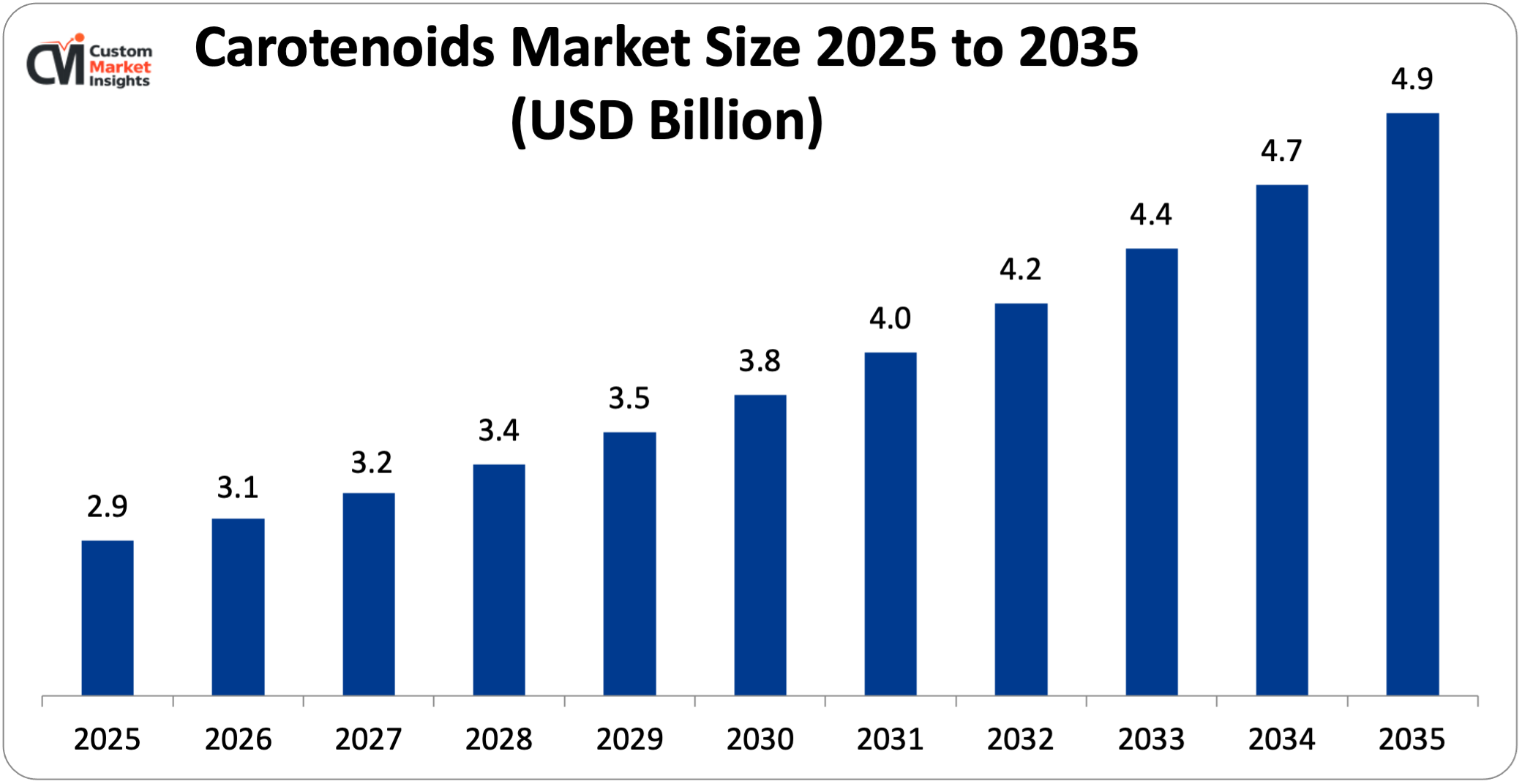
The market size of global carotenoids will be estimated at USD 2.9 billion in 2025 and is expected to grow to between USD 3.1 billion in 2026 and about USD 4.9 billion by 2035, with a current CAGR (compound annual growth rate) of 5.5% during the period of 2026 to 2035. Carotenoids are a group of naturally occurring pigments occurring predominantly in plants, algae, and bacteria, and also in some fungi.
They give a lot of fruits and vegetables their yellows, oranges, and reds. Carotenoids are naturally hydrophobic compounds from the terpenoid group with a long chain of conjugated double bonds, which makes them very good antioxidants. In plants they can perform various roles; they can be used to harvest light during photosynthesis and also to prevent cellular damage caused by oxygen. They are also used in foods and drinks, in the feed industry, and in the fields of nutraceuticals and supplements, cosmetics, and pharmaceuticals.
Market Highlight
- In 2025, Europe will dominate the global market with an estimated market share of 29%. The growing demand for natural products drives the industry growth.
- The Asia Pacific is growing at the highest CAGR over the analysis period. The increasing food & beverage sector drives the market growth.
- By product, the astaxanthin carotenoids segment dominated the market in 2025 with 42% of the market share.
- By application, the feed application segment captures the largest market share in 2025 of 28%.
- By source, the synthetic segment garners the largest chunk of market share of over 50%.
Significant Growth Factors
The carotenoids market trends present significant growth opportunities due to several factors:
- Growing Nutraceutical And Dietary Supplement Industry: The rapidly growing area of the global nutraceutical and dietary supplement industry significantly contributes to market growth, with the primary reason being the increasing consumer awareness about all the health benefits offered by dietary supplements and functional foods, in addition to the traditional role of providing basic nutrition. The emergence of the healthy aging concept and increasing consumer awareness of preventive measures to maintain good health, support the immune system, and prevent degenerative diseases have resulted in an increase in the consumption of dietary supplements and functional foods across the globe. Carotenoids form an important part of several nutraceutical products, as they are composed of natural pigments, antioxidants, and other beneficial phytochemicals essential for eye health, cardiovascular health, and the immune system. Based on published market observations and industry estimates, the revenue growth within the world‘s dietary supplements market has remained consistent over the last decade and is forecast to show robust growth in the next decade, spawned by factors such as an aging population, a rising rate of lifestyle diseases, and consumers’ trend of using natural ingredients and plant extracts in food and beverage applications. This translates to ever-increasing demand for new products and ingredients such as carotenoids for use in supplements, fortified foods, and functional beverages.
- Increasing Consumer Health Awareness: The increasing awareness of health among consumers is perhaps one of the most important factors to determine the growth of the market, driven by the increasing focus of individuals on nutrition and prevention to remain healthy. Driven by the digital access to information and media coverage, an increasing number of consumers are aware of the link between food and health, including the fact that diet and functional ingredients may help prevent and manage chronic disease and long-term health. With consumers’ increased focus on health and nutrition, more demand is arising for products high in beneficial nutrients, such as antioxidants, vitamins, and natural pigments. Some functional ingredients, like carotenoids, are also becoming more popular because of their possible general health function and antioxidant effect for visual health, immunity in increasing the resistance, and cellular protection. We are thus seeing the spread of functional foods, beverages, and supplements, with ingredients such as carotenoids widely used. Market growth is thus attributed to consumers’ strong focus on health and nutrition, along with the growing adoption of healthier lifestyles.
What are the Major Advances Changing the Carotenoids Market Today?
- Advances in Microbial Fermentation and Synthetic Biology: Clean and sustainable microbial fermentation/synthetic biology is probably the biggest recent innovation (as it enables more technically, economically, and sustainably scalable production) in the carotenoids market. Prior to this ongoing development, natural carotenoids were mainly obtained either from natural sources (e.g. Carrots, tomatoes) or chemically synthesized; however, this was limited by lower yields, higher cost, and more challenging growth environments. However, positive advances in the fields of synthetic biology, microbial fermentation, and metabolic engineering have allowed scientists to induce genetically modified yeast, bacteria, and microalgae to biosynthesize carotenoids, such as astaxanthin, beta-carotene, and lycopene, at high concentrations in optimized cultures. Such genetically engineered organisms can utilize readily available substrates such as glucose to synthesize high-value carotenoids for further extraction. These afore-mentioned natural label processes can help form the basis of large-scale production with shorter cycle times and tightly controlled manufacturing environments.
- Advanced Extraction and Downstream Processing Technologies: New advanced extraction and downstream processing technology developments are also considered one of the promising technology developments in the carotenoids market, as they encompass many crucial advantages in processing carotenoids regarding efficiency, quality, and commercial use. Carotenoids are unstable compounds and tend to degrade when subjected to heat, oxygen, or reactive chemicals, and so traditional extraction methods are not enough to reach their optimum yields. Innovative technological methods, such as supercritical CO₂ extraction, laser extraction, ultrasonic-assisted extraction, and enzyme-assisted extraction, utilize natural sources, including plants, algae, and microorganisms, at high yield and minimal degradation during carotenoid extraction. Moreover, downstream processing technology development techniques such as novel purification, filtration, encapsulation, and stabilization techniques have the capability of producing pure carotenoids with higher stability and bioavailability of the end product. The efficiency of downstream processing technology development also involves a reduction in time, energy, and solvent consumption.
Category Wise Insights
By Product
Why Astaxanthin Carotenoids Hold a Prominent Position in the Market?
The astaxanthin carotenoids segment dominated the market in 2025 with 42% of the market share. This rapid increase is largely due to its health benefits. It is included in popular nutraceuticals: those recommended for support of cardiovascular health, immune system health, and anti-inflammatory effects, and people are purchasing larger amounts of astaxanthin; these also represent one of the fastest-growing markets in the countries of purchase for astaxanthin in supplement form (for health-conscious people). Another market in which astaxanthin is an important component is the aquaculture and animal feed markets. It is used here largely for farmed fish (salmon and trout) and shrimp pigmentation. Its antioxidant effects are also, of course, vital to maintain healthy farmed animals (in particular chicks) and promote optimal growth. It is also widely used in cosmetics and skin care products as an antioxidant capable of reducing wrinkles and protecting the skin from aging and photodamage. Its ability to combat free radicals produced by UV radiation and pollution makes it a highly desirable skincare ingredient, such as in serums, creams, and sunscreens. As consumer knowledge of the benefits of natural and scientifically proven ingredients in skin care and cosmetics continues to increase, astaxanthin is expected to become an even more highly sought-after product.
The beta carotene-based carotenoids segment is growing at the highest CAGR 5.6% over the analysis period. This can be attributed to its potential for use in various fields, as well as the health benefits mentioned earlier. As a precursor of vitamin A, it has several health benefits for the eyes, immune system, and skin health. It also is a key component in several types of nutraceuticals and dietary supplements to prevent a number of chronic diseases, including cardiovascular ailments as well as some types of cancers. The orange-yellow pigmentation makes it a sought-after natural colorant in a number of food and beverage products. It is used in juice, dairy, and confectionery products to fulfill the requirement of consumers for clean-label and natural-color products. It is also finding uses in personal care and cosmetic applications thanks to its antioxidant properties, in the form of anti-aging skin care products, sunscreen products, and hair care products, particularly in North America and Europe, where consumers prefer natural and functional products. Microencapsulation and emulsification technologies have a major role to play in stabilizing this natural colorant in processing conditions for a variety of applications.
By Application
Why Feed Application Dominates the Carotenoids Market?
The feed application segment captures the largest market share in 2025 of 28%. The growth of the feeds segment is due to the product’s role in enhancing animal health, improving the quality and appearance of animal-derived products, and the increasing consumer preference for natural ingredients. Feed carotenoids are gaining increased popularity, and new sources of carotenoids, in particular astaxanthin, β-carotene, lutein, and canthaxanthin, are being introduced into feedstuffs for poultry, aquaculture, and livestock species to elevate pigmentation levels, enhance performance, and enhance the nutritional value of their products. For example, in aquaculture, astaxanthin is an important pigment source because it imparts a pink-red coloration to commercially farmed trout, salmon, and prawns but also gives the advantage of enhancing immune function and disease resistance. In poultry, β-carotene and canthaxanthin are added to produce a high-quality yolk that appears brighter and more attractive to the customer as well as improving meat quality. As consumer preferences shift towards improved health benefits as well as visual qualities, demand for injected feed will continue to grow, thus providing the basis for further growth in the feed carotenoids segment of the greater carotenoids market.
The food-based carotenoids segment is growing rapidly with a CAGR of 5.9% over the projected period. The overall growth is coming from the application of carotenoids in the food sector as a natural color and health supplement. Main applications of different carotenoids such as beta-carotene, lycopene, lutein, and astaxanthin are found in foods such as juices, cheese, biscuits, bread, snacks, and others. The major application segment for these carotenoids is the beverage industry, as some of the carotenoids, such as beta-carotene and lycopene, are used in different colored beverages to get the natural orange and red pigmentation, respectively. In a similar fashion, a few of these carotenoids are used in dairy products, such as butter and cheese, to provide natural orange-yellow coloration and in baked snacks for a nice natural touch in color. The shift of consumer preference from synthetic additives to natural colorants has been responsible for the increase in these carotenoid applications in the food industry. Moreover, their application is increasing in many functional foods & dietary supplements such as snack bars, cereals, and ready foods.
By Source
Does Synthetic Segment Dominates the Carotenoids Market?
The synthetic segment garners the largest chunk of market share of over 50%. Growth is driven by the cost-effectiveness and purity & consistency of synthetic products. The ability to produce in large volume and the stability of supply chains make the synthetics desirable to the F&B, animal feed, and pharmaceutical industries. In the F&B industry, synthetic beta-carotene and lycopene are the most commonly used products in soft drinks, snacks, and baked foods for color and added stability. In the animal feed industry, synthetic canthaxanthin and astaxanthin are used to enhance pigmentation of egg yolks, poultry skin, and farmed fish. While consumers are increasingly demanding “all natural” ingredients, synthetics are still a cost-effective option for large-scale manufacture, and synthetic-natural F&B products are increasingly common.
The natural segment is growing rapidly with a CAGR of 5.8% over the projected period. The increase is driven by the healthy image to which carotenoids are associated in the public mind, namely, that they are rich in antioxidants and anti-inflammatory agents and support the body‘s immune system. More and more consumers want clean, sustainable products and prefer natural carotenoids over synthetic ones, which is boosting the demand for natural carotenoid compounds like beta-carotene, lutein, and astaxanthin in dietary supplements that support eye health, heart health, and overall well-being.
Report Scope
| Feature of the Report | Details |
| Market Size in 2026 | USD 3.1 billion |
| Projected Market Size in 2035 | USD 4.9 billion |
| Market Size in 2025 | USD 2.9 billion |
| CAGR Growth Rate | 5.5% CAGR |
| Base Year | 2025 |
| Forecast Period | 2026-2035 |
| Key Segment | By Product, Application, Source and Region |
| Report Coverage | Revenue Estimation and Forecast, Company Profile, Competitive Landscape, Growth Factors and Recent Trends |
| Regional Scope | North America, Europe, Asia Pacific, Middle East & Africa, and South & Central America |
| Buying Options | Request tailored purchasing options to fulfil your requirements for research. |
Regional Analysis
How Big is Europe Carotenoids Market Size?
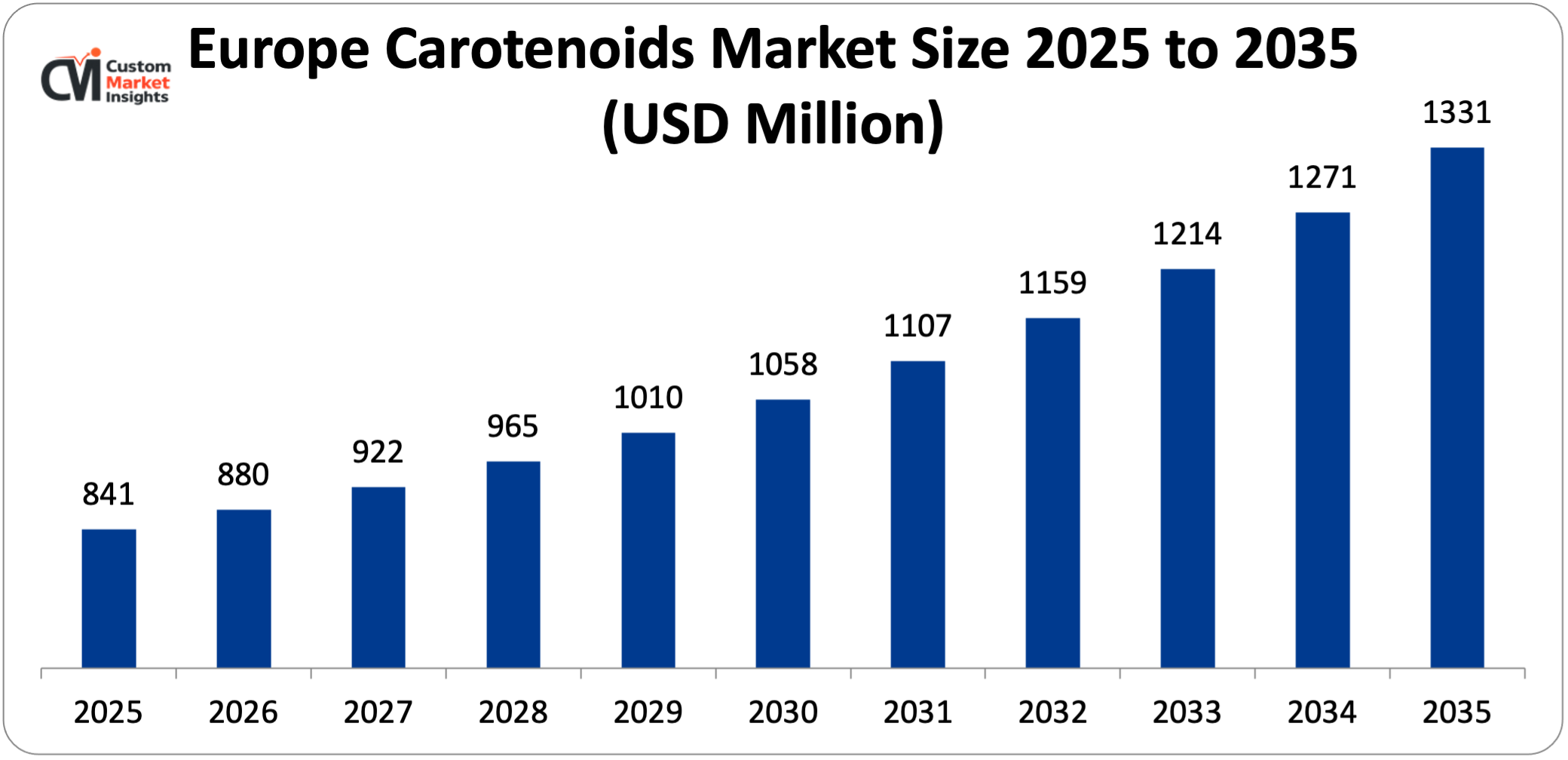
Its market size, in terms of Europe Carotenoids, is projected to be USD 841 million in 2025 with a growth of about USD 1331 million in 2035 with a CAGR of 4.7% between 2026 and 2035.
Why did Europe Dominate the Carotenoids Market in 2025?
In 2025, Europe will dominate the global market with an estimated market share of 29%. Regional growth will be supported by an increase in health awareness and by the rising burden of chronic disease, which is responsible for 86% of deaths worldwide. These factors will increase the demand for vitamin A-rich carotenoids and antioxidants in supplements. Carotenoid benefits for eye health, immune support, and skin will consequently contribute to the development of related “preventive” nutrition. However, the growing cosmetics and personal care segment (e.g., in Europe and the UK L’Oreal has a 31.6% share of sales, and in 2023 the UK had a EUR 15 billion cosmetics turnover) will contribute to an increased use of carotenoids for sun protection, basic color cosmetics, and skin health applications. The food and beverage segment will also be significant, with nonalcoholic drink consumption in Germany, for example, increasing by 12.4% in volume and 48.6% in value for fruit juices and 20.7% for energy drinks (up to April 2012), and these are expected to take up more carotenoids as natural colorants.
Germany Carotenoids Market Trends
In the European region, Germany leads the industry expansion over the projected period. Growth in consumption of healthy and functional non-alcoholic drinks like fruit juices, drinks with vitamins and minerals, and energy drinks, which they value and prefer due to their natural color and optimum health conditions, with caramel coloring (AllKomp). Being the biggest European country in terms of beverages and having a per capita soft drink consumption of 114.4 liters per year, the non-alcoholic beverage market has been developed up to USD 5.2 billion in 2023. The fruit juices increased by 48.6%, and the vitamin, mineral, and energy drinks by 20.7%.
Why is North America Experiencing a Significant Growth in the Carotenoids Market?
North America holds a significant market share in 2025. The regional growth can be largely attributed to the increased awareness of the many nutritional and health benefits of the product, especially from the natural colorant derived from the carotenoids in foods and beverages. Factors contributing to the increased use of carotenoids are once again the increase in the use of dietary supplements and the overall uptrend of the clean label trend in the food and nutraceuticals businesses in the region. As of April 2023, 58.5% of adults and 34.8% of children and adolescents in the U.S. Use at least one dietary supplement (confirmed to account for some form of carotenoid consumption), and females have a higher usage rate.
US Carotenoids Market Trends
The US held the dominant position in the market in 2025. This is mainly because of increasing consumption of nutraceuticals and dietary supplements owing to carotenoids like lutein, astaxanthin, and beta carotene, which are used mostly as antioxidants and for benefiting eye health, boosting the immune system, and overall health. Moreover, consumer inclination towards natural food colorings is one of the driving factors, especially in the food and beverages segment, where artificial food colorings are being replaced by natural colorings. Growing acceptance of the prophylactic approach and expansion of applications in cosmetics, pharmaceutical applications, and animal feed is further uplifting the revenues. Additionally, the gratifying growth of natural and clean-label products in the United States is leading many companies to incorporate carotenoids from natural sources like fruits, vegetables, and algae, which in turn is benefiting the revenues of the market.
Why is the Asia Pacific Growing at a Rapid Rate in the Carotenoids Market?
The Asia Pacific is expected to grow at the highest CAGR over the projected period. The knowledge relating to the health & nutrition benefits of natural food ingredients, especially natural colorants, will aid in increasing market shares. Carotenoids are widely used in the food industry because of their bright color, antioxidants & anti-inflammatory properties, which are increasingly sought after for clean-label, natural & functional food products. In addition, in light of the expansion of the food & beverage industry, increasing disposable income levels & large populations within the developed & emerging economies like China & India, there is also high demand for affordable & healthy food products. In 2023 retail sales of packaged food in China were valued at around USD 327.6 billion, making it the second-largest market after the US. Compared to 2019 this was increased by 12.4% (USD 36 billion) and is predicted to increase to USD 411.8 billion by 2028 i.e. a hike of 23.2% (USD 81 billion) since 2024. Hence, increasing the production of packaged foods in China will result in an increased demand for carotenoids both as natural colorants & supplements.
China Carotenoids Market Trends
China led the European market. In terms of revenues, growth of the market is mainly driven by the surge in the emerging nutraceutical and functional food industries in China, where carotenoids such as lutein, lycopene, and beta-carotene are in higher demand for their known antioxidant and eye-care benefits. Other factors that are boosting the market include the rising consumer awareness regarding preventive health care and the skyrocketing demand for natural colorants in the stabilized food and beverage formulations. The country’s vast aquaculture and poultry industries are also expected to support the market since carotenoids are used as feed additives for aquatic and avian species and chicken so as to enhance their coloration, growth qualities, and nutritional value. Inflating the food processing sector, coupled with the spiraling investment into biotechnology-based production avenues, is propelling the utilization of carotenoids for several applications; these factors are thus significantly driving the revenues of the carotenoids market in China.
Why is the Middle East & Africa Region is growing rapidly in the Carotenoids?
The MEA region is growing at a steady rate over the projected period. The regional growth is driven by increasing demand from the cosmetic and personal care industries, where companies such as Nivea, Garnier, L’Oréal, and Revlon are using high quantities of carotenoids. Furthermore, other ingredients, such as major players like the RCL group, Clover, Tiger Brands, and Montagu, are also boosting the uses of carotenoids in a variety of products, foods, beverages, and cosmetics. Also, the increasing demand from the regional pharmaceutical industry, a large user of carotenoids in dietary supplements for vitamin A, is also shaping the regional growth according to the International Trade Association (ITA), the South African beauty and personal care market is expected to reach USD 5.03 billion by 2028 expanding at a CAGR of 3.73%. Lastly, regional exports, mainly from South Africa, have further provided a competitive environment for manufacturers to reach wider consumer markets (being 21.8 % of the total intra-African trade).
UAE Carotenoids Market Trends
The UAE is growing at the highest CAGR during the forecast period. The industry growth is largely fueled by the dominant position of the health and wellness food and drink sector in the country, with consumers increasingly choosing dietary supplements and functional foods containing antioxidants like beta-carotene, lutein, and astaxanthin. The higher health consciousness and widespread realization about preventive healthcare and advantages of natural ingredients have motivated food and supplement companies to include significant quantities of carotenoids in their products. Furthermore, growth of the food & beverage industry and rising requirements for natural colors for nutrition enhancement of processed food & beverages are further rising demand for carotenoids as natural colors. Apart from the health and wellness food industry, the expanding aquatic and animal feed industry of the country is also positively influencing the circumstances of the UAE carotenoids market due to the usage of carotenoids to improve pigmentation in seafood and animals.
Top Players in the Carotenoids Market and Their Offerings
- Sensient Colors LLC
- Allied Biotech Corporation
- dsm-firmenich
- BioExtract
- Cyanotech Corporation.
- Kemin Industries Inc.
- Divi’s Nutraceuticals
- Döhler GmbH
- BASF
- Lycored
- NHU
- Ingex Botanicals
- Alfa Chemistry
- Ambe Phytoextracts Pvt. Ltd.
- Shimadzu Corporation
- Others
Key Developments
Carotenoids market has experienced considerable changes in the last two years as the market players are trying to diversify their technological aspects and develop product portfolios using strategic approaches.
- In July 2024, Lycored, a global leader in naturally derived carotenoids, unveiled its new lycopene-based colorant, ResilientRed™ BF, at the IFT FIRST 2024 Expo in Chicago. Derived from tomatoes, this nature-based colorant is designed to meet the increasing demand for clean-label, naturally colored foods and beverages. Part of Lycored’s ResilientRed family, the BF variant offers exceptional stability across pH, heat, and light conditions, making it ideal for UHT dairy, plant-based beverages, meat alternatives, and surimi seafood. It features improved viscosity for easier processing, is free from sugar esters and palm oil, and aligns with ingredient standards for retailers like whole foods market. (https://www.prnewswire.com/news-releases/lycored-debuts-your-new-best-friend–nature-based-colorant-resilientred-bf-at-ift-first-302194996.html)
These strategic measures have enabled the companies to reinforce their competitive positions, increase the product line, boost their technological competencies, and also seize growth opportunities in the fast-growing Carotenoids market.
The Carotenoids Market is segmented as follows:
By Product
- Beta Carotene
- Astaxanthin
- Lycopene
- Lutein
- Canthaxanthin
- Zeaxanthin
- Other Products
By Application
- Food
- Pharmaceuticals
- Supplements
- Feed
- Cosmetics
By Source
- Synthetic
- Natural
Regional Coverage:
North America
- U.S.
- Canada
- Mexico
- Rest of North America
Europe
- Germany
- France
- U.K.
- Russia
- Italy
- Spain
- Netherlands
- Rest of Europe
Asia Pacific
- China
- Japan
- India
- New Zealand
- Australia
- South Korea
- Taiwan
- Rest of Asia Pacific
The Middle East & Africa
- Saudi Arabia
- UAE
- Egypt
- Kuwait
- South Africa
- Rest of the Middle East & Africa
Latin America
- Brazil
- Argentina
- Rest of Latin America
Table of Contents
- Chapter 1. Report Introduction
- 1.1. Report Description
- 1.1.1. Purpose of the Report
- 1.1.2. USP & Key Offerings
- 1.2. Key Benefits For Stakeholders
- 1.3. Target Audience
- 1.4. Report Scope
- 1.1. Report Description
- Chapter 2. Market Overview
- 2.1. Report Scope (Segments And Key Players)
- 2.1.1. Carotenoids by Segments
- 2.1.2. Carotenoids by Region
- 2.2. Executive Summary
- 2.2.1. Market Size & Forecast
- 2.2.2. Carotenoids Market Attractiveness Analysis, By Product
- 2.2.3. Carotenoids Market Attractiveness Analysis, By Application
- 2.2.4. Carotenoids Market Attractiveness Analysis, By Source
- 2.1. Report Scope (Segments And Key Players)
- Chapter 3. Market Dynamics (DRO)
- 3.1. Market Drivers
- 3.1.1. Growing Nutraceutical And Dietary Supplement Industry
- 3.1.2. Increasing Consumer Health Awareness
- 3.2. Market Restraints
- 3.3. Market Opportunities
- 3.5. Pestle Analysis
- 3.6. Porter Forces Analysis
- 3.7. Technology Roadmap
- 3.8. Value Chain Analysis
- 3.9. Government Policy Impact Analysis
- 3.10. Pricing Analysis
- 3.1. Market Drivers
- Chapter 4. Carotenoids Market – By Product
- 4.1. Product Market Overview, By Product Segment
- 4.1.1. Carotenoids Market Revenue Share, By Product, 2025 & 2035
- 4.1.2. Beta Carotene
- 4.1.3. Carotenoids Share Forecast, By Region (USD Billion)
- 4.1.4. Comparative Revenue Analysis, By Country, 2025 & 2035
- 4.1.5. Key Market Trends, Growth Factors, & Opportunities
- 4.1.6. Astaxanthin
- 4.1.7. Carotenoids Share Forecast, By Region (USD Billion)
- 4.1.8. Comparative Revenue Analysis, By Country, 2025 & 2035
- 4.1.9. Key Market Trends, Growth Factors, & Opportunities
- 4.1.10. Lycopene
- 4.1.11. Carotenoids Share Forecast, By Region (USD Billion)
- 4.1.12. Comparative Revenue Analysis, By Country, 2025 & 2035
- 4.1.13. Key Market Trends, Growth Factors, & Opportunities
- 4.1.14. Lutein
- 4.1.15. Carotenoids Share Forecast, By Region (USD Billion)
- 4.1.16. Comparative Revenue Analysis, By Country, 2025 & 2035
- 4.1.17. Key Market Trends, Growth Factors, & Opportunities
- 4.1.18. Canthaxanthin
- 4.1.19. Carotenoids Share Forecast, By Region (USD Billion)
- 4.1.20. Comparative Revenue Analysis, By Country, 2025 & 2035
- 4.1.21. Key Market Trends, Growth Factors, & Opportunities
- 4.1.22. Zeaxanthin
- 4.1.23. Carotenoids Share Forecast, By Region (USD Billion)
- 4.1.24. Comparative Revenue Analysis, By Country, 2025 & 2035
- 4.1.25. Key Market Trends, Growth Factors, & Opportunities
- 4.1.26. Other Products
- 4.1.27. Carotenoids Share Forecast, By Region (USD Billion)
- 4.1.28. Comparative Revenue Analysis, By Country, 2025 & 2035
- 4.1.29. Key Market Trends, Growth Factors, & Opportunities
- 4.1. Product Market Overview, By Product Segment
- Chapter 5. Carotenoids Market – By Application
- 5.1. Application Market Overview, By Application Segment
- 5.1.1. Carotenoids Market Revenue Share, By Application, 2025 & 2035
- 5.1.2. Food
- 5.1.3. Carotenoids Share Forecast, By Region (USD Billion)
- 5.1.4. Comparative Revenue Analysis, By Country, 2025 & 2035
- 5.1.5. Key Market Trends, Growth Factors, & Opportunities
- 5.1.6. Pharmaceuticals
- 5.1.7. Carotenoids Share Forecast, By Region (USD Billion)
- 5.1.8. Comparative Revenue Analysis, By Country, 2025 & 2035
- 5.1.9. Key Market Trends, Growth Factors, & Opportunities
- 5.1.10. Supplements
- 5.1.11. Carotenoids Share Forecast, By Region (USD Billion)
- 5.1.12. Comparative Revenue Analysis, By Country, 2025 & 2035
- 5.1.13. Key Market Trends, Growth Factors, & Opportunities
- 5.1.14. Feed
- 5.1.15. Carotenoids Share Forecast, By Region (USD Billion)
- 5.1.16. Comparative Revenue Analysis, By Country, 2025 & 2035
- 5.1.17. Key Market Trends, Growth Factors, & Opportunities
- 5.1.18. Cosmetics
- 5.1.19. Carotenoids Share Forecast, By Region (USD Billion)
- 5.1.20. Comparative Revenue Analysis, By Country, 2025 & 2035
- 5.1.21. Key Market Trends, Growth Factors, & Opportunities
- 5.1. Application Market Overview, By Application Segment
- Chapter 6. Carotenoids Market – By Source
- 6.1. Source Market Overview, By Source Segment
- 6.1.1. Carotenoids Market Revenue Share, By Source, 2025 & 2035
- 6.1.2. Synthetic
- 6.1.3. Carotenoids Share Forecast, By Region (USD Billion)
- 6.1.4. Comparative Revenue Analysis, By Country, 2025 & 2035
- 6.1.5. Key Market Trends, Growth Factors, & Opportunities
- 6.1.6. Natural
- 6.1.7. Carotenoids Share Forecast, By Region (USD Billion)
- 6.1.8. Comparative Revenue Analysis, By Country, 2025 & 2035
- 6.1.9. Key Market Trends, Growth Factors, & Opportunities
- 6.1. Source Market Overview, By Source Segment
- Chapter 7. Carotenoids Market – Regional Analysis
- 7.1. Carotenoids Market Overview, By Region Segment
- 7.1.1. Global Carotenoids Market Revenue Share, By Region, 2025 & 2035
- 7.1.2. Global Carotenoids Market Revenue, By Region, 2026 – 2035 (USD Billion)
- 7.1.3. Global Carotenoids Market Revenue, By Product, 2026 – 2035
- 7.1.4. Global Carotenoids Market Revenue, By Application, 2026 – 2035
- 7.1.5. Global Carotenoids Market Revenue, By Source, 2026 – 2035
- 7.2. North America
- 7.2.1. North America Carotenoids Market Revenue, By Country, 2026 – 2035 (USD Billion)
- 7.2.2. North America Carotenoids Market Revenue, By Product, 2026 – 2035
- 7.2.3. North America Carotenoids Market Revenue, By Application, 2026 – 2035
- 7.2.4. North America Carotenoids Market Revenue, By Source, 2026 – 2035
- 7.2.5. U.S. Carotenoids Market Revenue, 2026 – 2035 (USD Billion)
- 7.2.6. Canada Carotenoids Market Revenue, 2026 – 2035 (USD Billion)
- 7.2.7. Mexico Carotenoids Market Revenue, 2026 – 2035 (USD Billion)
- 7.2.8. Rest of North America Carotenoids Market Revenue, 2026 – 2035 (USD Billion)
- 7.3. Europe
- 7.3.1. Europe Carotenoids Market Revenue, By Country, 2026 – 2035 (USD Billion)
- 7.3.2. Europe Carotenoids Market Revenue, By Product, 2026 – 2035
- 7.3.3. Europe Carotenoids Market Revenue, By Application, 2026 – 2035
- 7.3.4. Europe Carotenoids Market Revenue, By Source, 2026 – 2035
- 7.3.5. Germany Carotenoids Market Revenue, 2026 – 2035 (USD Billion)
- 7.3.6. France Carotenoids Market Revenue, 2026 – 2035 (USD Billion)
- 7.3.7. U.K. Carotenoids Market Revenue, 2026 – 2035 (USD Billion)
- 7.3.8. Russia Carotenoids Market Revenue, 2026 – 2035 (USD Billion)
- 7.3.9. Italy Carotenoids Market Revenue, 2026 – 2035 (USD Billion)
- 7.3.10. Spain Carotenoids Market Revenue, 2026 – 2035 (USD Billion)
- 7.3.11. Netherlands Carotenoids Market Revenue, 2026 – 2035 (USD Billion)
- 7.3.12. Rest of Europe Carotenoids Market Revenue, 2026 – 2035 (USD Billion)
- 7.4. Asia Pacific
- 7.4.1. Asia Pacific Carotenoids Market Revenue, By Country, 2026 – 2035 (USD Billion)
- 7.4.2. Asia Pacific Carotenoids Market Revenue, By Product, 2026 – 2035
- 7.4.3. Asia Pacific Carotenoids Market Revenue, By Application, 2026 – 2035
- 7.4.4. Asia Pacific Carotenoids Market Revenue, By Source, 2026 – 2035
- 7.4.5. China Carotenoids Market Revenue, 2026 – 2035 (USD Billion)
- 7.4.6. Japan Carotenoids Market Revenue, 2026 – 2035 (USD Billion)
- 7.4.7. India Carotenoids Market Revenue, 2026 – 2035 (USD Billion)
- 7.4.8. New Zealand Carotenoids Market Revenue, 2026 – 2035 (USD Billion)
- 7.4.9. Australia Carotenoids Market Revenue, 2026 – 2035 (USD Billion)
- 7.4.10. South Korea Carotenoids Market Revenue, 2026 – 2035 (USD Billion)
- 7.4.11. Taiwan Carotenoids Market Revenue, 2026 – 2035 (USD Billion)
- 7.4.12. Rest of Asia Pacific Carotenoids Market Revenue, 2026 – 2035 (USD Billion)
- 7.5. The Middle-East and Africa
- 7.5.1. The Middle-East and Africa Carotenoids Market Revenue, By Country, 2026 – 2035 (USD Billion)
- 7.5.2. The Middle-East and Africa Carotenoids Market Revenue, By Product, 2026 – 2035
- 7.5.3. The Middle-East and Africa Carotenoids Market Revenue, By Application, 2026 – 2035
- 7.5.4. The Middle-East and Africa Carotenoids Market Revenue, By Source, 2026 – 2035
- 7.5.5. Saudi Arabia Carotenoids Market Revenue, 2026 – 2035 (USD Billion)
- 7.5.6. UAE Carotenoids Market Revenue, 2026 – 2035 (USD Billion)
- 7.5.7. Egypt Carotenoids Market Revenue, 2026 – 2035 (USD Billion)
- 7.5.8. Kuwait Carotenoids Market Revenue, 2026 – 2035 (USD Billion)
- 7.5.9. South Africa Carotenoids Market Revenue, 2026 – 2035 (USD Billion)
- 7.5.10. Rest of the Middle East & Africa Carotenoids Market Revenue, 2026 – 2035 (USD Billion)
- 7.6. Latin America
- 7.6.1. Latin America Carotenoids Market Revenue, By Country, 2026 – 2035 (USD Billion)
- 7.6.2. Latin America Carotenoids Market Revenue, By Product, 2026 – 2035
- 7.6.3. Latin America Carotenoids Market Revenue, By Application, 2026 – 2035
- 7.6.4. Latin America Carotenoids Market Revenue, By Source, 2026 – 2035
- 7.6.5. Brazil Carotenoids Market Revenue, 2026 – 2035 (USD Billion)
- 7.6.6. Argentina Carotenoids Market Revenue, 2026 – 2035 (USD Billion)
- 7.6.7. Rest of Latin America Carotenoids Market Revenue, 2026 – 2035 (USD Billion)
- 7.1. Carotenoids Market Overview, By Region Segment
- Chapter 8. Competitive Landscape
- 8.1. Company Market Share Analysis – 2025
- 8.1.1. Global Carotenoids Market: Company Market Share, 2025
- 8.2. Global Carotenoids Market Company Market Share, 2024
- 8.1. Company Market Share Analysis – 2025
- Chapter 9. Company Profiles
- 9.1. Sensient Colors LLC
- 9.1.1. Company Overview
- 9.1.2. Key Executives
- 9.1.3. Product Portfolio
- 9.1.4. Financial Overview
- 9.1.5. Operating Business Segments
- 9.1.6. Business Performance
- 9.1.7. Recent Developments
- 9.2. Allied Biotech Corporation
- 9.3. dsm-firmenich
- 9.4. BioExtract
- 9.5. Cyanotech Corporation.
- 9.6. Kemin Industries Inc.
- 9.7. Divi’s Nutraceuticals
- 9.8. Döhler GmbH
- 9.9. BASF
- 9.10. Lycored
- 9.11. NHU
- 9.12. Ingex Botanicals
- 9.13. Alfa Chemistry
- 9.14. Ambe Phytoextracts Pvt. Ltd.
- 9.15. Shimadzu Corporation
- 9.16. Others.
- 9.1. Sensient Colors LLC
- Chapter 10. Research Methodology
- 10.1. Research Methodology
- 10.2. Secondary Research
- 10.3. Primary Research
- 10.3.1. Analyst Tools and Models
- 10.4. Research Limitations
- 10.5. Assumptions
- 10.6. Insights From Primary Respondents
- 10.7. Why Healthcare Foresights
- Chapter 11. Standard Report Commercials & Add-Ons
- 11.1. Customization Options
- 11.2. Subscription Module For Market Research Reports
- 11.3. Client Testimonials
- Chapter 12. List Of Figures
- 12.1. Figures No 1 to 30
- Chapter 13. List Of Tables
- 13.1. Tables No 1 to 46
FAQs
The key players in the market are Sensient Colors LLC, Allied Biotech Corporation, dsm-firmenich, BioExtract, Cyanotech Corporation, Kemin Industries Inc., Divi’s Nutraceuticals, Döhler GmbH, BASF, Lycored, NHU, Ingex Botanicals, Alfa Chemistry, Ambe Phytoextracts Pvt. Ltd., Shimadzu Corporation, Others.
Government regulation is a major factor that influences the growth of the carotenoids market by safeguarding the use of carotenoids as natural components in food, nutraceutical, and pharmaceutical products for product safety, quality standards, and labeling standards in the case of nutraceutical and pharmaceutical formulations. Various regulatory bodies like the United States Food and Drug Administration (USFDA) and the European Food Safety Authority (EFSA) are responsible for granting approvals and setting regulations for the use of the carotenoid ingredients in food, dietary supplements, animal feed, and pharmaceuticals. These regulations help boost consumer confidence among citizens and promote the use of natural and safe ingredients in all industrial applications, though the approval processes, compliance processes, and costs involved may influence development patterns.
Price point is a critical factor in the growth and adoption of the carotenoids market because it influences buying decisions in the food, nutraceutical, cosmetic, and animal feed industries. Since the production of carotenoids extracted from natural sources or produced through more advanced technology exists, the production costs tend to be higher. This in turn results in a higher end product price point and limits product usage in price-sensitive industries. Nonetheless, the development of such advanced techniques as microbial fermentation and advancements in carotenoid extraction techniques allow a lowering of the production costs of carotenoids. Ultimately, such a decrease in production costs translates into a lowered market price point and provides a significant driver for broader usage in functional foods, feed additives, and dietary supplements to take advantage of market opportunities.
According to the present analysis and forecast modeling, the market of carotenoids will witness a significant growth of about USD 4.9 billion in the year 2035 with the growing innovative product launch, increasing investment in R&D, and growing food & beverage sector with a CAGR of 5.5% between the years 2026 and 2035.
It is projected that the Asia Pacific will hold the largest market share in the carotenoids market in the forecast period, with a share of about 43% of the global market share, which is attributed to the region’s growing food & beverage sector and increasing investment.
Europe is expected to grow at the highest CAGR during the forecast period. The growth in the region is owing to the increasing demand for the natural products.
The main drivers for the market include increased consumer awareness about health and nutrition, the rising demand for nutraceuticals and dietary supplements, and the growing consumer preference for natural food colorants instead of synthetic food colorants. In addition, the growth in the population of animal feed and aquaculture industries using carotenoids to enhance skin pigmentation and benefits to the nutritional value of the animals is helping to boost the market. Additionally, the advances in new production methods such as microbial fermentation and improved extraction methods are also helping in increasing the production efficiency and quality of products.