
Wearable Health Silicone Elastomers Market Size, Trends and Insights By Type (High Consistency Rubber, Liquid Silicone Rubber), By Application (Fitness Trackers, Smartwatches, Medical Devices), By End-user (Healthcare, Consumer Electronics, Sports & Fitness)), and By Region - Global Industry Overview, Statistical Data, Competitive Analysis, Share, Outlook, and Forecast 2026 – 2035
Report Snapshot
CAGR: 8.87%
| Study Period: | 2026-2035 |
| Fastest Growing Market: | Asia Pacific |
| Largest Market: | North America |
Major Players
- Dow Inc.
- Wacker Chemie AG
- Elkem ASA
- Momentive Performance Materials Inc.
- Others
Reports Description
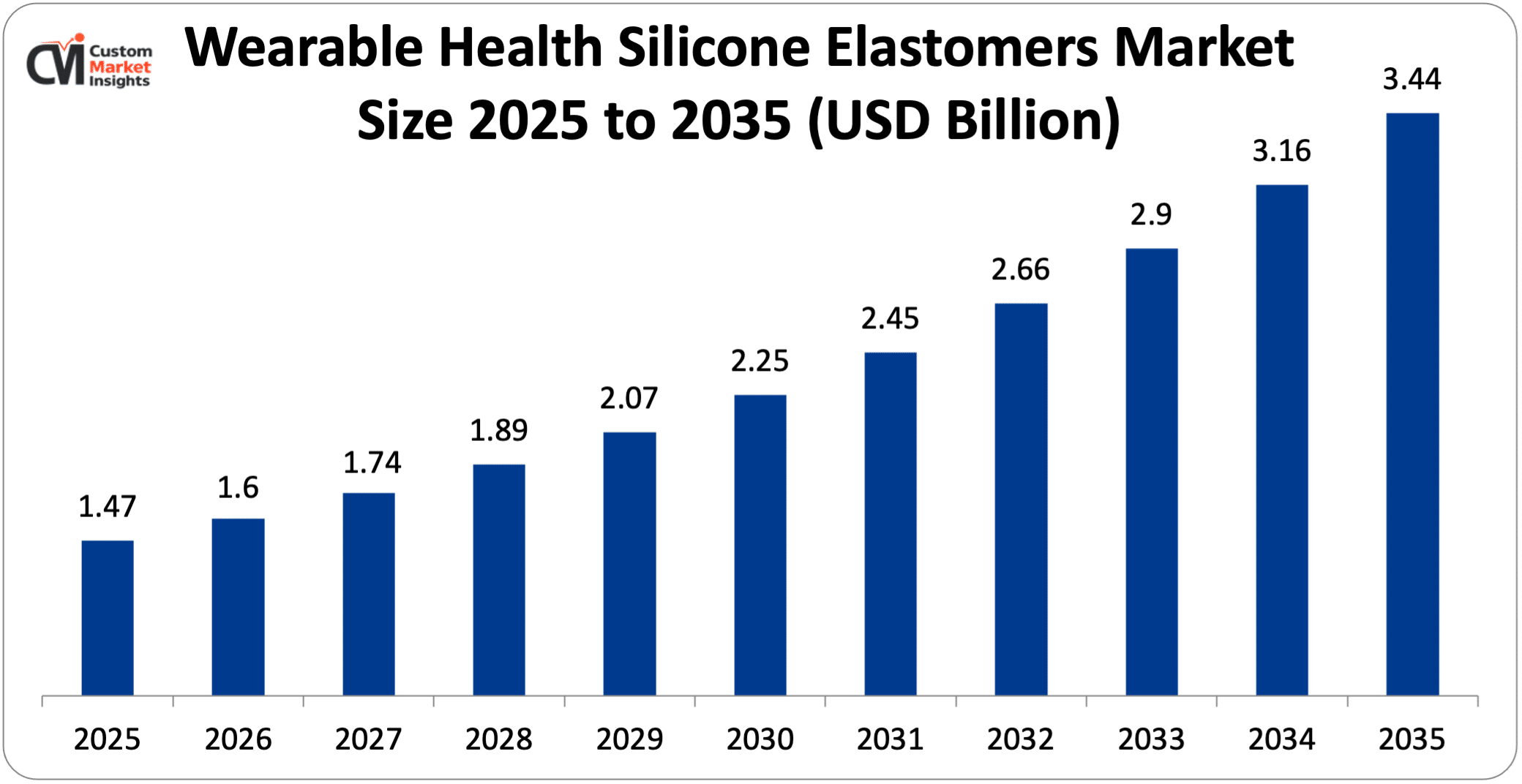
As per the wearable health silicone elastomers market analysis conducted by the CMI team, the wearable health silicone elastomers market is expected to record a CAGR of 8.87% from 2026 to 2035. In 2026, the market size was USD 1.6 Billion. By 2035, the valuation is anticipated to reach USD 3.44 Billion. The market is expanding due to increased production of various wearable medical devices like fitness trackers, smartwatches, and continuous health monitoring systems.
The growth is basically triggered by growing consumer awareness of personal healthcare, demand for flexible, biocompatible, durable materials in wearable devices, and increasing incidences of chronic diseases. Silicone elastomers are preferred owing to their long-term stability, resistance to varied ranges of temperature, and skin-friendliness, thereby rendering them ideal for continuous skin contact applications.
Market Highlights
- North America dominated the wearable health silicone elastomers market in 2025 with 53.34% of the overall share.
- The Asia Pacific is expected to witness the fastest CAGR of 9.5% in the wearable health silicone elastomers market during the forecast period.
- By type, high-consistency rubber held around 72.37% of the market share by 2025.
- By type, liquid silicone rubber is expected to witness the fastest CAGR of 12.34% between 2026 and 2035.
- Through application, fitness trackers dominated in 2025 with 68.23% of the overall market share.
- By application, smartwatches are expected to witness the fastest CAGR of 9.97% between 2026 and 2035.
- By end-user, the healthcare sector dominated in 2025 with 45.64% of the overall market share.
- By end-user, the consumer electronics sector is expected to witness the fastest CAGR of 9.34% between 2026 and 2035
Significant Growth Factors
- Rising Shift Toward Remote and Preventive Patient Care and Expansion of Wearable Healthcare Ecosystem
Widespread adoption on the part of smartwatches, fitness trackers, and medical monitoring patches is noticeably driving the demand for high class elastomers offering flexibility, long-term skin safety, and biocompatibility. With healthcare systems increasingly adopting continuous monitoring solutions and telehealth, the elastomers are turning out to be critical materials facilitating uninterrupted data collection and reliable sensor integration. Plus, increased consumer awareness pertaining to wellness and health, along with rising incidences of chronic diseases, is catalyzing wearable devices’ adoption at the global level. The trend is supported further by miniaturization and advancements in sensor technologies, which call for materials maintaining comfort and durability while ascertaining precise biometric readings.
- Continual Innovation in Material Science
Development of advanced silicone formulations like conductive silicones, LSR (liquid silicone rubber), and antimicrobial elastomers is adding to the revenue of the wearable health silicone elastomers market. Such innovations are facilitating improved device functionality encompassing enhanced stretchability, breathability, and integration with the electronic components for health monitoring in real time. The manufacturers are increasingly emphasizing the creation of self -adhesive, ultra-soft, and aesthetically appealing materials extending 24/7 support to wearability without resulting in skin irritation. Also, strict regulatory requirements related to medical-grade materials are compelling the market players to invest in certified elastomers, which does strengthen market credibility and product quality. Moreover, there are collaborations witnessed between wearable device manufacturers and material suppliers, which are expediting the product development cycles.
What are the Major Advancements Changing the Wearable Health Silicone Elastomers Market Today?
- Emergence of Functionalized and Smart Elastomers
Emergence of sensor-integrated and conductive silicones is one of the major advancements altering the wearable health silicone elastomers market. Such advanced materials have been engineered for not only providing skin compatibility and flexibility but also actively participating in physiological monitoring and signal transmission. Conductive silicone elastomers are equipped with specialized fillers, which do facilitate biosensors’ seamless integration into the wearable devices like continuous monitoring systems and smart patches, thereby allowing for tracking of vital parameters such as muscle activity, glucose levels, and heart rate in real time. Additionally, innovations in polymer engineering and flexible electronics have helped elastomers in acting as substrates for electronic skin, which are capable of detecting temperature, strain, and pressure with higher sensitivity. On the whole, silicone elastomers are evolving into the intelligent healthcare systems’ active components, thereby expediting adoption of next-gen wearable therapeutic devices and diagnostics.
- Development of Antimicrobial, Self-Healing, and High Class Silicone Elastomer Formulations
Self-healing polysiloxane elastomers are capable of automatically repairing micro-damages caused due to environmental exposure or mechanical stress, thereby prolonging the lifespan of the wearable devices and ascertaining uninterrupted performance. Also, antimicrobial silicone materials are gaining popularity in medical-grade wearables, whereby they are helping in preventing skin irritation as well as infection during prolonged usage. The healthcare companies, material scientists, and wearable device manufacturers are also collaborating for commercializing the above-mentioned innovations, thereby assuring compliance with stringent medical standards with optimization of performance. In all, such breakthroughs are facilitating more hygienic, resilient, and high-performance wearable health devices.
- Impact of AI on Wearable Health Silicone Elastomers Market
AI-powered analytics facilitate continuous interpretation of the biometric data that is collected through sensors fixed in silicone-based wearables, thereby raising demand for high class elastomers that ascertain accurate sensor-skin contact, long-term comfort, and flexibility. This has, in turn, driven innovation in the silicone formulations customized for AI-integrated devices like ultra-sift and conductive elastomers, improving device responsiveness and signal precision. Besides, AI is helping in streamlining the material research as well as product development by facilitating elastomer properties’ predictive modeling. AI integration also supports the advanced features such as early disease detection, real-time health monitoring, and customized healthcare insights.
Category Wise insights
By Type
- Why is high consistency rubber dominating the wearable health silicone elastomers market?
High consistency rubber (HCR) is dominating the wearable health silicone elastomers market owing to its durability, superlative mechanical strength, and versatility with respect to producing high-performance, complex components needed in the wearable devices. HCR, in comparison with the other forms of silicone, does offer exceptional tear resistance, long-term stability, and elasticity, thereby rendering it ideal for the products that witness continuous movement and prolonged contact with the skin, such as bands, straps, and protective casings. Its ability to be able to withstand moisture, extreme temperatures, and exposure to chemicals does further improve product reliability in different usage conditions. HCR is also compatible with various medical-grade formulations, thereby ensuring safety and biocompatibility for the sensitive skin applications. The manufacturers are also preferring HCR due to its adaptability to several processing techniques such as injection molding and compression, thereby facilitating cost-effective mass production.
By Application
- How are fitness trackers leading the wearable health silicone elastomers market?
Fitness trackers are leading the wearable health silicone elastomer market owing to the continual demand for durable, comfortable, and skin-friendly materials. The devices are usually worn for extended time frames, whereby they create a robust need for silicone elastomers providing softness, sweat resistance, flexibility, and biocompatibility. This does make them ideal for sensor interfaces and wristbands. The consumers are giving priority to health monitoring features like sleep analysis, heart rate tracking, and activity measurement. Plus, product upgrades on a frequent basis – like slimmer profiles, enhanced sensor precision, and improved aesthetics – are driving the manufacturers to utilize advanced silicone formulations ensuring both – user comfort and performance.
By End-user
- Why is healthcare leading the wearable health silicone elastomers market?
Healthcare is leading the wearable health silicone elastomer market due to increased applications of patient-centric treatment systems and drug-delivery wearables that call for highly reliable and biocompatible materials. The silicone elastomers are sizably used in devices like insulin pumps, transdermal patches, and infusion systems, wherein chemical inertness, skin contact, and accurate performance are vital. Their ability to maintain stability under different temperatures and resist interaction with APIs (active pharmaceutical ingredients) does make them ideal for sustained and controlled drug delivery applications. Moreover, a switch to chronic disease management, home-based care, and minimally invasive therapies has expedited adoption of the wearable pharmaceutical devices, thereby bolstering the demand for medical-grade silicone elastomers.
Report Scope
| Feature of the Report | Details |
| Market Size in 2026 | USD 1.6 Billion |
| Projected Market Size in 2035 | USD 3.44 Billion |
| Market Size in 2025 | USD 1.47 Billion |
| CAGR Growth Rate | 8.87% CAGR |
| Base Year | 2025 |
| Forecast Period | 2026-2035 |
| Key Segment | By Type, Application, End-user and Region |
| Report Coverage | Revenue Estimation and Forecast, Company Profile, Competitive Landscape, Growth Factors and Recent Trends |
| Regional Scope | North America, Europe, Asia Pacific, Middle East & Africa, and South & Central America |
| Buying Options | Request tailored purchasing options to fulfil your requirements for research. |
Regional Analysis
How big is North America’s Wearable Health Silicone Elastomers Market Size?
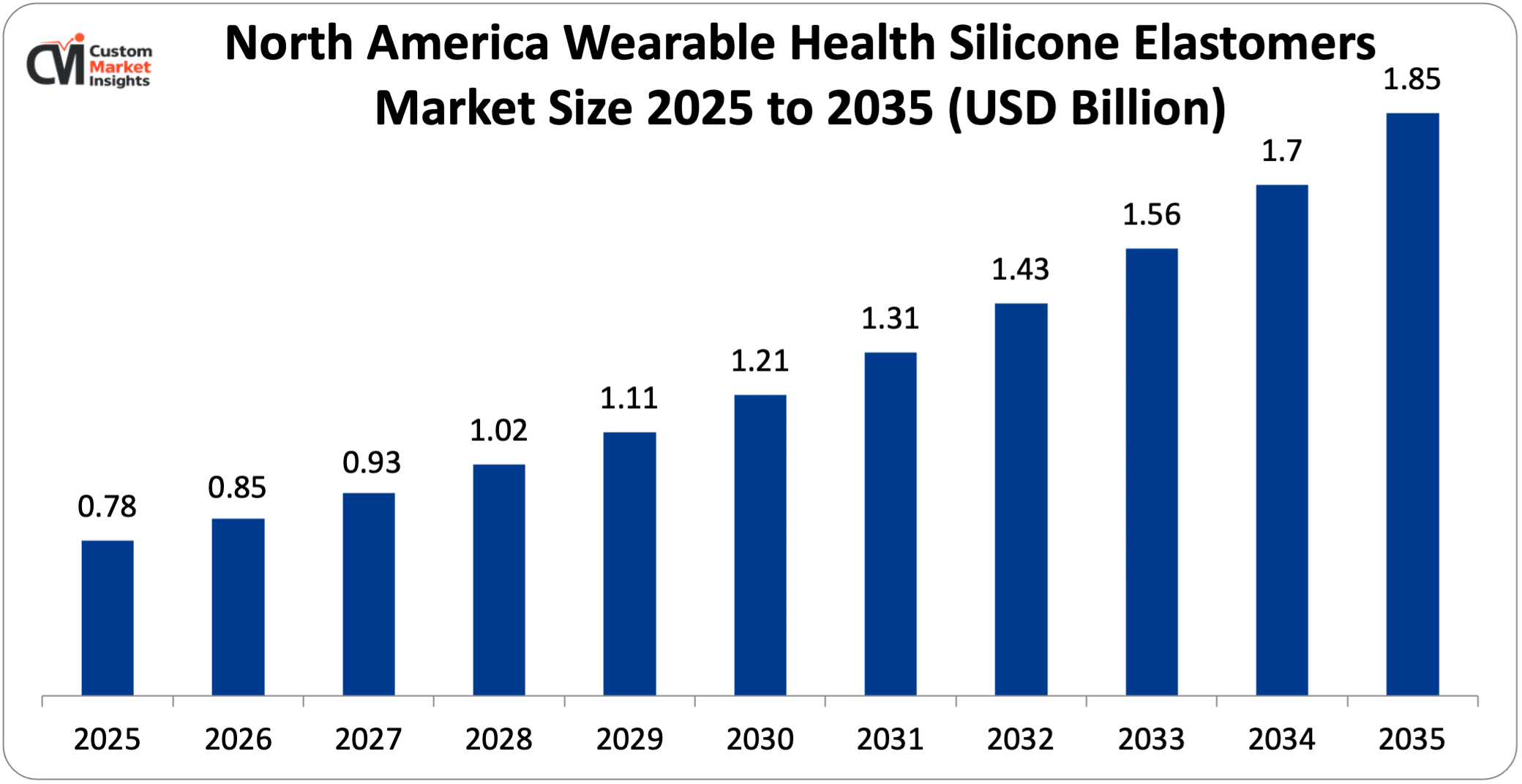
North America’s wearable health silicone elastomers market was worth USD 0.78 Billion in 2025 and is expected to reach USD 1.85 Billion by 2035 at a CAGR of 8.99% between 2025 and 2035.
Why did North America Dominate the Wearable Health Silicone Elastomers Market in 2025?
North America dominated the wearable health silicone elastomers market in 2025 owing to its advanced healthcare infrastructure, robust adoption of wearable medical technologies, and presence of leading material innovators and device manufacturers. Higher healthcare spending, growing incidences of chronic diseases, and rising investments in AI-driven monitoring solutions and digital health are further strengthening the regional demand. Material suppliers, healthcare providers, and tech companies are also collaborating to serve the health-conscious consumers better.
What is the Size of the U.S. Wearable Health Silicone Elastomers Market?
The market size of the U.S. infant heart monitor was USD 0.52 Billion in 2025 and is expected to reach USD 2.81 Billion in 2035, witnessing a CAGR of 9.83% between 2026 and 2035.
U.S. Wearable Health Silicone Elastomers Market Trends
The U.S. boasts a robust digital health ecosystem, higher penetration of wearable health devices, and continual innovation regarding medical-grade materials. Smartwatches, fitness trackers, and advanced medical wearables that need flexible, biocompatible, and durable silicone elastomers for precise sensor performance and long-term skin contact are keeping the cash registers ringing for the wearable health silicone elastomers market. One of the key trends is growing demand for high-purity and medical-grade silicone formulations as the manufacturers are emphasizing patient safety, regulatory compliance, and improved device reliability. Device multifunctionality and miniaturization are being enabled by accelerating production of conductive elastomers and liquid silicone rubber (LSR). The other change-makers include growing consumer emphasis on preventive healthcare, remote patient monitoring, and the integration of AI-driven health analytics.
Why is the Asia Pacific experiencing the fastest growth in the wearable health silicone elastomers market?
The Asia Pacific is expected to witness the fastest CAGR in the wearable health silicone elastomers market during the forecast period due to the expansion of healthcare infrastructure and rising adoption of various wearable health technologies across Japan, India, and China. As such, there is an exponential demand for smartwatches, fitness trackers, and remote monitoring devices relying on silicone elastomers for performance and comfort. The governments are also supporting digital health and telemedicine, which are accelerating expansion of the market. Continuous health monitoring is also being encouraged by rising occurrences of chronic diseases.
China Wearable Health Silicone Elastomers Market Trends
One of the trends shaping the growth of China’s wearable health silicone elastomers market is rising investments in high-performance elastomer formulations and material innovation, which include the ones optimized for skin compatibility, thermal stability, and reliability in the long run. Plus, the presence of R&D centers and manufacturing hubs at a large scale is facilitating cost-efficient production. The government initiatives that are promoting healthcare digitization are also driving the adoption of wearable health silicone elastomers.
Where does Europe stand with respect to Wearable Health Silicone Elastomers market?
Europe does hold a mature position in the wearable health silicone elastomers market, which is supported by an advanced medical device sector, robust healthcare systems, and a higher focus on regulatory compliance and quality. Economies like France, Germany, and the U.K. are prime contributors, which are driven by wearable health technologies increasingly being adopted, along with a rising focus on remote patient monitoring and preventive healthcare. There are stern regulatory frameworks like the European Medical Device Regulation (MDR), which ask for higher standards for material performance and safety, thereby bolstering the demand for various medical-grade silicone elastomers. Plus, there are collaborations happening amongst material manufacturers, technology companies, and healthcare providers on this count.
Germany Wearable Health Silicone Elastomers Market Trends
Germany is projected to witness a strong growth in the wearable health silicone elastomers market during the forecast period owing to the region’s sturdy medical device production base, focus on high class healthcare materials, and advanced engineering capacities. With German manufacturers prioritizing stern regulatory compliance, long-term performance, and product reliability in wearable applications, the demand for precision-engineered and medical-grade elastomers is on the rise. Plus, the influx of specialty silicone formulations is facilitating enhanced flexibility, sensor integration, and comfort. The demand is especially concentrated in R&D hubs and medical technology clusters.
Where is the Middle East & Africa regarding Wearable Health Silicone Elastomers market?
The MEA wearable health silicone elastomers market is at the developing stage but gaining momentum owing to enhanced healthcare infrastructure, growing awareness regarding digital health technologies, and rising investments in modern day medical systems. Economies like Saudi Arabia, the UAE, and South Africa are leading adoption at the regional level. This is credited to the fact that governments’ intervention is aimed at smart medical solutions and healthcare digitalization. Rising incidences of chronic ailments are also encouraging usage of wearable health devices herein.
Brazil Wearable Health Silicone Elastomers Market Trends
Brazil is witnessing a significant growth in the wearable health silicone elastomers market owing to increased demand for advanced medical-grade materials. The rising popularity of smart health devices, fitness trackers, and smart textiles in Brazil is notably driving usage of silicone elastomers owing to their durability, flexibility, and skin compatibility in the continuous monitoring applications. Plus, the economy’s healthcare sector is evolving at a rapid pace, with rising use of silicone-based materials in medical implants and wearable monitoring solutions, which is supported by an aging population and increased prevalence of chronic diseases. Customized silicone formulations are also on the anvil. There are also increased investments witnessed in innovation in material science and electronics manufacturing.
Top players in the Wearable Health Silicone Elastomers Market and their Offerings
- Dow Inc.
- Wacker Chemie AG
- Elkem ASA
- Momentive Performance Materials Inc.
- Shin-Etsu Chemical Co. Ltd.
- Others
Key Developments
Wearable health silicone elastomers market has experienced considerable changes in the last few years as the market players are trying to diversify their technological aspects and develop product portfolios using strategic approaches.
- In November 2024, Teknor Apex unleashed its expanded medical-grade thermoplastic elastomer (TPE) portfolio with novel grades specifically designed for biopharmaceutical tubing applications. The medical device manufacturers opt for thermoplastic elastomers (TPEs) for applications needing flexibility/rubber-like elasticity.
These strategic measures have enabled the companies to reinforce their competitive positions, increase the product line, boost their technological competencies, and also seize growth opportunities in the fast growing wearable health silicone elastomers market.
The Wearable Health Silicone Elastomers Market is segmented as follows:
By Type
- High Consistency Rubber
- Liquid Silicone Rubber
By Application
- Fitness Trackers
- Smartwatches
- Medical Devices
By End-user
- Healthcare
- Consumer Electronics
- Sports & Fitness)
Regional Coverage:
North America
- U.S.
- Canada
- Mexico
- Rest of North America
Europe
- Germany
- France
- U.K.
- Russia
- Italy
- Spain
- Netherlands
- Rest of Europe
Asia Pacific
- China
- Japan
- India
- New Zealand
- Australia
- South Korea
- Taiwan
- Rest of Asia Pacific
The Middle East & Africa
- Saudi Arabia
- UAE
- Egypt
- Kuwait
- South Africa
- Rest of the Middle East & Africa
Latin America
- Brazil
- Argentina
- Rest of Latin America
Table of Contents
- Chapter 1. Report Introduction
- 1.1. Report Description
- 1.1.1. Purpose of the Report
- 1.1.2. USP & Key Offerings
- 1.2. Key Benefits For Stakeholders
- 1.3. Target Audience
- 1.4. Report Scope
- 1.1. Report Description
- Chapter 2. Market Overview
- 2.1. Report Scope (Segments And Key Players)
- 2.1.1. Wearable Health Silicone Elastomers by Segments
- 2.1.2. Wearable Health Silicone Elastomers by Region
- 2.2. Executive Summary
- 2.2.1. Market Size & Forecast
- 2.2.2. Wearable Health Silicone Elastomers Market Attractiveness Analysis, By Type
- 2.2.3. Wearable Health Silicone Elastomers Market Attractiveness Analysis, By Application
- 2.2.4. Wearable Health Silicone Elastomers Market Attractiveness Analysis, By End-user
- 2.1. Report Scope (Segments And Key Players)
- Chapter 3. Market Dynamics (DRO)
- 3.1. Market Drivers
- 3.1.1. Rising Shift Toward Remote and Preventive Patient Care and Expansion of Wearable Healthcare Ecosystem
- 3.1.2. Continual Innovation in Material Science
- 3.2. Market Restraints
- 3.3. Market Opportunities
- 3.5. Pestle Analysis
- 3.6. Porter Forces Analysis
- 3.7. Technology Roadmap
- 3.8. Value Chain Analysis
- 3.9. Government Policy Impact Analysis
- 3.10. Pricing Analysis
- 3.1. Market Drivers
- Chapter 4. Wearable Health Silicone Elastomers Market – By Type
- 4.1. Type Market Overview, By Type Segment
- 4.1.1. Wearable Health Silicone Elastomers Market Revenue Share, By Type , 2025 & 2035
- 4.1.2. High Consistency Rubber
- 4.1.3. Wearable Health Silicone Elastomers Share Forecast, By Region (USD Billion)
- 4.1.4. Comparative Revenue Analysis, By Country, 2025 & 2035
- 4.1.5. Key Market Trends, Growth Factors, & Opportunities
- 4.1.6. Liquid Silicone Rubber
- 4.1.7. Wearable Health Silicone Elastomers Share Forecast, By Region (USD Billion)
- 4.1.8. Comparative Revenue Analysis, By Country, 2025 & 2035
- 4.1.9. Key Market Trends, Growth Factors, & Opportunities
- 4.1. Type Market Overview, By Type Segment
- Chapter 5. Wearable Health Silicone Elastomers Market – By Application
- 5.1. Application Market Overview, By Application Segment
- 5.1.1. Wearable Health Silicone Elastomers Market Revenue Share, By Application , 2025 & 2035
- 5.1.2. Fitness Trackers
- 5.1.3. Wearable Health Silicone Elastomers Share Forecast, By Region (USD Billion)
- 5.1.4. Comparative Revenue Analysis, By Country, 2025 & 2035
- 5.1.5. Key Market Trends, Growth Factors, & Opportunities
- 5.1.6. Smartwatches
- 5.1.7. Wearable Health Silicone Elastomers Share Forecast, By Region (USD Billion)
- 5.1.8. Comparative Revenue Analysis, By Country, 2025 & 2035
- 5.1.9. Key Market Trends, Growth Factors, & Opportunities
- 5.1.10. Medical Devices
- 5.1.11. Wearable Health Silicone Elastomers Share Forecast, By Region (USD Billion)
- 5.1.12. Comparative Revenue Analysis, By Country, 2025 & 2035
- 5.1.13. Key Market Trends, Growth Factors, & Opportunities
- 5.1. Application Market Overview, By Application Segment
- Chapter 6. Wearable Health Silicone Elastomers Market – By End-user
- 6.1. End-user Market Overview, By End-user Segment
- 6.1.1. Wearable Health Silicone Elastomers Market Revenue Share, By End-user , 2025 & 2035
- 6.1.2. Healthcare
- 6.1.3. Wearable Health Silicone Elastomers Share Forecast, By Region (USD Billion)
- 6.1.4. Comparative Revenue Analysis, By Country, 2025 & 2035
- 6.1.5. Key Market Trends, Growth Factors, & Opportunities
- 6.1.6. Consumer Electronics
- 6.1.7. Wearable Health Silicone Elastomers Share Forecast, By Region (USD Billion)
- 6.1.8. Comparative Revenue Analysis, By Country, 2025 & 2035
- 6.1.9. Key Market Trends, Growth Factors, & Opportunities
- 6.1.10. Sports & Fitness
- 6.1.11. Wearable Health Silicone Elastomers Share Forecast, By Region (USD Billion)
- 6.1.12. Comparative Revenue Analysis, By Country, 2025 & 2035
- 6.1.13. Key Market Trends, Growth Factors, & Opportunities
- 6.1. End-user Market Overview, By End-user Segment
- Chapter 7. Wearable Health Silicone Elastomers Market – Regional Analysis
- 7.1. Wearable Health Silicone Elastomers Market Overview, By Region Segment
- 7.1.1. Global Wearable Health Silicone Elastomers Market Revenue Share, By Region, 2025 & 2035
- 7.1.2. Global Wearable Health Silicone Elastomers Market Revenue, By Region, 2026 – 2035 (USD Billion)
- 7.1.3. Global Wearable Health Silicone Elastomers Market Revenue, By Type , 2026 – 2035
- 7.1.4. Global Wearable Health Silicone Elastomers Market Revenue, By Application , 2026 – 2035
- 7.1.5. Global Wearable Health Silicone Elastomers Market Revenue, By End-user , 2026 – 2035
- 7.2. North America
- 7.2.1. North America Wearable Health Silicone Elastomers Market Revenue, By Country, 2026 – 2035 (USD Billion)
- 7.2.2. North America Wearable Health Silicone Elastomers Market Revenue, By Type , 2026 – 2035
- 7.2.3. North America Wearable Health Silicone Elastomers Market Revenue, By Application , 2026 – 2035
- 7.2.4. North America Wearable Health Silicone Elastomers Market Revenue, By End-user , 2026 – 2035
- 7.2.5. U.S. Wearable Health Silicone Elastomers Market Revenue, 2026 – 2035 (USD Billion)
- 7.2.6. Canada Wearable Health Silicone Elastomers Market Revenue, 2026 – 2035 (USD Billion)
- 7.2.7. Mexico Wearable Health Silicone Elastomers Market Revenue, 2026 – 2035 (USD Billion)
- 7.2.8. Rest of North America Wearable Health Silicone Elastomers Market Revenue, 2026 – 2035 (USD Billion)
- 7.3. Europe
- 7.3.1. Europe Wearable Health Silicone Elastomers Market Revenue, By Country, 2026 – 2035 (USD Billion)
- 7.3.2. Europe Wearable Health Silicone Elastomers Market Revenue, By Type , 2026 – 2035
- 7.3.3. Europe Wearable Health Silicone Elastomers Market Revenue, By Application , 2026 – 2035
- 7.3.4. Europe Wearable Health Silicone Elastomers Market Revenue, By End-user , 2026 – 2035
- 7.3.5. Germany Wearable Health Silicone Elastomers Market Revenue, 2026 – 2035 (USD Billion)
- 7.3.6. France Wearable Health Silicone Elastomers Market Revenue, 2026 – 2035 (USD Billion)
- 7.3.7. U.K. Wearable Health Silicone Elastomers Market Revenue, 2026 – 2035 (USD Billion)
- 7.3.8. Russia Wearable Health Silicone Elastomers Market Revenue, 2026 – 2035 (USD Billion)
- 7.3.9. Italy Wearable Health Silicone Elastomers Market Revenue, 2026 – 2035 (USD Billion)
- 7.3.10. Spain Wearable Health Silicone Elastomers Market Revenue, 2026 – 2035 (USD Billion)
- 7.3.11. Netherlands Wearable Health Silicone Elastomers Market Revenue, 2026 – 2035 (USD Billion)
- 7.3.12. Rest of Europe Wearable Health Silicone Elastomers Market Revenue, 2026 – 2035 (USD Billion)
- 7.4. Asia Pacific
- 7.4.1. Asia Pacific Wearable Health Silicone Elastomers Market Revenue, By Country, 2026 – 2035 (USD Billion)
- 7.4.2. Asia Pacific Wearable Health Silicone Elastomers Market Revenue, By Type , 2026 – 2035
- 7.4.3. Asia Pacific Wearable Health Silicone Elastomers Market Revenue, By Application , 2026 – 2035
- 7.4.4. Asia Pacific Wearable Health Silicone Elastomers Market Revenue, By End-user , 2026 – 2035
- 7.4.5. China Wearable Health Silicone Elastomers Market Revenue, 2026 – 2035 (USD Billion)
- 7.4.6. Japan Wearable Health Silicone Elastomers Market Revenue, 2026 – 2035 (USD Billion)
- 7.4.7. India Wearable Health Silicone Elastomers Market Revenue, 2026 – 2035 (USD Billion)
- 7.4.8. New Zealand Wearable Health Silicone Elastomers Market Revenue, 2026 – 2035 (USD Billion)
- 7.4.9. Australia Wearable Health Silicone Elastomers Market Revenue, 2026 – 2035 (USD Billion)
- 7.4.10. South Korea Wearable Health Silicone Elastomers Market Revenue, 2026 – 2035 (USD Billion)
- 7.4.11. Taiwan Wearable Health Silicone Elastomers Market Revenue, 2026 – 2035 (USD Billion)
- 7.4.12. Rest of Asia Pacific Wearable Health Silicone Elastomers Market Revenue, 2026 – 2035 (USD Billion)
- 7.5. The Middle-East and Africa
- 7.5.1. The Middle-East and Africa Wearable Health Silicone Elastomers Market Revenue, By Country, 2026 – 2035 (USD Billion)
- 7.5.2. The Middle-East and Africa Wearable Health Silicone Elastomers Market Revenue, By Type , 2026 – 2035
- 7.5.3. The Middle-East and Africa Wearable Health Silicone Elastomers Market Revenue, By Application , 2026 – 2035
- 7.5.4. The Middle-East and Africa Wearable Health Silicone Elastomers Market Revenue, By End-user , 2026 – 2035
- 7.5.5. Saudi Arabia Wearable Health Silicone Elastomers Market Revenue, 2026 – 2035 (USD Billion)
- 7.5.6. UAE Wearable Health Silicone Elastomers Market Revenue, 2026 – 2035 (USD Billion)
- 7.5.7. Egypt Wearable Health Silicone Elastomers Market Revenue, 2026 – 2035 (USD Billion)
- 7.5.8. Kuwait Wearable Health Silicone Elastomers Market Revenue, 2026 – 2035 (USD Billion)
- 7.5.9. South Africa Wearable Health Silicone Elastomers Market Revenue, 2026 – 2035 (USD Billion)
- 7.5.10. Rest of the Middle East & Africa Wearable Health Silicone Elastomers Market Revenue, 2026 – 2035 (USD Billion)
- 7.6. Latin America
- 7.6.1. Latin America Wearable Health Silicone Elastomers Market Revenue, By Country, 2026 – 2035 (USD Billion)
- 7.6.2. Latin America Wearable Health Silicone Elastomers Market Revenue, By Type , 2026 – 2035
- 7.6.3. Latin America Wearable Health Silicone Elastomers Market Revenue, By Application , 2026 – 2035
- 7.6.4. Latin America Wearable Health Silicone Elastomers Market Revenue, By End-user , 2026 – 2035
- 7.6.5. Brazil Wearable Health Silicone Elastomers Market Revenue, 2026 – 2035 (USD Billion)
- 7.6.6. Argentina Wearable Health Silicone Elastomers Market Revenue, 2026 – 2035 (USD Billion)
- 7.6.7. Rest of Latin America Wearable Health Silicone Elastomers Market Revenue, 2026 – 2035 (USD Billion)
- 7.1. Wearable Health Silicone Elastomers Market Overview, By Region Segment
- Chapter 8. Competitive Landscape
- 8.1. Company Market Share Analysis – 2025
- 8.1.1. Global Wearable Health Silicone Elastomers Market: Company Market Share, 2025
- 8.2. Global Wearable Health Silicone Elastomers Market Company Market Share, 2024
- 8.1. Company Market Share Analysis – 2025
- Chapter 9. Company Profiles
- 9.1. Dow Inc.
- 9.1.1. Company Overview
- 9.1.2. Key Executives
- 9.1.3. Product Portfolio
- 9.1.4. Financial Overview
- 9.1.5. Operating Business Segments
- 9.1.6. Business Performance
- 9.1.7. Recent Developments
- 9.2. Wacker Chemie AG
- 9.3. Elkem ASA
- 9.4. Momentive Performance Materials Inc.
- 9.5. Shin-Etsu Chemical Co. Ltd.
- 9.6. Others
- 9.1. Dow Inc.
- Chapter 10. Research Methodology
- 10.1. Research Methodology
- 10.2. Secondary Research
- 10.3. Primary Research
- 10.3.1. Analyst Tools and Models
- 10.4. Research Limitations
- 10.5. Assumptions
- 10.6. Insights From Primary Respondents
- 10.7. Why Healthcare Foresights
- Chapter 11. Standard Report Commercials & Add-Ons
- 11.1. Customization Options
- 11.2. Subscription Module For Market Research Reports
- 11.3. Client Testimonials
- Chapter 12. List Of Figures
- 12.1. Figures No 1 to 24
- Chapter 13. List Of Tables
- 13.1. Tables No 1 to 46
Prominent Player
- Dow Inc.
- Wacker Chemie AG
- Elkem ASA
- Momentive Performance Materials Inc.
- Shin-Etsu Chemical Co. Ltd.
- Others
FAQs
The key players in the market are Dow Inc., Wacker Chemie AG, Elkem ASA, Momentive Performance Materials Inc., Shin-Etsu Chemical Co. Ltd., Others.
Regulatory bodies like the U.S. FDA and frameworks such as the European Medical Device Regulation (MDR) have set stern standards for material purity, biocompatibility, and performance, which do encourage the manufacturers to invest in medical-grade, high class silicone elastomers. Compliance with these regulations increases consumer trust and enables market acceptance. Plus, there are supportive initiatives taken by the governments promoting telemedicine, digital health, and wearable technologies, thereby accelerating adoption and innovation.
High class, medical-grade silicone elastomers do come with increased material and production costs owing to strict quality standards, regulatory compliance requirements, and advanced formulations, which end up increasing the cost of wearable devices on the whole. This, many, in turn, limit adoption of wearable health silicone elastomers in the price-sensitive markets, especially in the developing regions, wherein the consumers give priority to affordability. However, with production scaling up and manufacturing technologies improving, the costs are bound to decrease during the forecast period. Plus, premium pricing is justified in high-end and clinical wearable applications wherein safety, durability, and performance are paramount.
The market for wearable health silicone elastomers is expected to witness a significant growth of about USD 3.44 Billion in the year 2035 with a CAGR of 8.87% between the years 2026 and 2035 due to speedy adoption of fitness trackers and wearable medical devices, rising demand for flexible, biocompatible, and durable materials, along with a worldwide shift toward preventive healthcare and continuous health monitoring.
North America is expected to dominate the wearable health silicone elastomer market during the forecast period. This is credited to the region’s robust technological ecosystem, earlier adoption of advanced wearable medical devices, and high healthcare expenditure. Plus, rising prevalence of chronic ailments, increased demand for home-based care, and speedy integration of digital health platforms and AI are strengthening the market further.
The Asia Pacific is expected to witness the fastest CAGR in the wearable health silicone elastomers market during the forecast period due to the rising adoption of digital healthcare technologies across Japan, China, India, and South Korea in the wake of rising health awareness. The region’s well-developed electronics manufacturing ecosystem facilitates large-scale, cost-effective production of the wearable devices, which significantly boosts consumption of the material. The governments, to combat the increased burden of chronic illnesses, are coming up with initiatives that promote digital health, smart healthcare infrastructure, and telemedicine.
The growth of the wearable health silicone elastomers market is majorly driven by the speedy expansion of wearable healthcare devices, inclusive of smartwatches, fitness trackers, and remote patient monitoring systems, which need materials offering flexibility, biocompatibility, and long-term comfort. Rising awareness of preventive healthcare with the growing prevalence of chronic disease is driving continuous health monitoring. Technological advancements in flexible electronics are accelerating the requirement of high class silicone materials that can extend support to durability and precise data collection. Switching to telehealth and home-based solutions is expanding wearable devices’ application scope. Stringent regulatory standards in medical applications are also translating to medical-grade, high class silicone elastomers with ongoing innovations like self-healing, antimicrobial, and conductive silicones.