
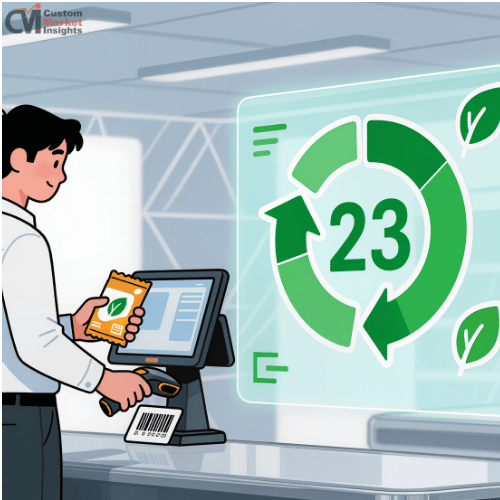
Why Visual Recognition is the Next Big Thing in Retail Packaging
In today’s highly competitive retail environment, shelf appeal is much more than simply looks or smart slogans. This conversation is mostly about how quickly your product can connect with, engage, and change people’s minds once they have seen it. Artificial intelligence (AI), and more especially image recognition technology, is changing the way companies design, evaluate, and utilize product packaging in stores.
Artificial intelligence makes it possible to create new packaging solutions that are based on data and are focused on the client. These solutions have a high conversion rate. These tactics take into account facial expressions and the regions where people first concentrate their attention.
The Market’s Demand: Retail Firms Need to Deploy AI Right Now
As artificial intelligence spreads to more and more areas, packaging is becoming an important place for retailers to come up with new concepts. The market for AI in packaging throughout the world is expected to be worth more than $6.2 billion by 2030, with an annual growth rate (CAGR) of more than 10%. CMI’s survey found that the number of searches for terms like “AI visual recognition packaging,” “smart shelf packaging,” and “AI in retail design” has gone up by 58% in the last year. Retailers may employ artificial intelligence (AI) to get real-time data that helps them figure out what works and what doesn’t, instead of depending on guesswork or focus groups. It is a milestone that shows the difference between guessing and being right.
From Item to Cart: AI Decides What Catches Your Eye:
Companies can carefully see how clients interact with their packaging at first glance, thanks to visual recognition technology. Artificial intelligence systems may employ data from eye-tracking and face analysis to find out which container layouts, color schemes, and brand placements get the most people to interact with them. For example, Nestlé has utilized AI to do A/B testing on a number of various packaging designs to see which one works better in certain places or with some groups of people. Before making a genuine prototype, marketers may use this information to make the product’s visuals better on their own. This lowers costs, speeds up the time it takes to go to market, and makes the shelf performance better.
Coca-Cola And Unilever in the US are Two Examples of Companies That Use Visual Intelligence:
To make their packaging better, many corporations, like Unilever and Coca-Cola, are putting a lot of money into visual testing that uses artificial intelligence. Coca-Cola uses artificial intelligence to look at how good and useful a lot of different packaging designs are in a lot of different stores and lighting scenarios. Unilever also employs machine vision to look at how items are arranged on shelves and how they interact with packaging in a variety of different retailers. This lets them make their things seem better, be easier to see, and be placed on shelves better. Big companies are using artificial intelligence visual recognition to its fullest extent, from coming up with the concept to putting it into practice in stores.
Highly Personalized Designs That Customers In The Area Will Like:
AI’s visual tools make it feasible to hyper-localize packaging, which is a trend that is becoming increasingly common in the fast-moving consumer products business. Brands may use different types of packaging that are tailored to certain towns, neighborhoods, or demographics by studying how people in such areas purchase things, what they like, and how they act. A personal care company could choose to use flowery packaging in one area and a more minimalist design in another based on what its clients want, thanks to the information that artificial intelligence gives them. This new kind of packaging, which is based on visual intelligence, lets marketers make products more personalized without spending a lot more on design.
When Businesses That Make Consumer Packaged Goods Employ Real-Time Feedback Systems, They Have An Advantage Over Their Competition:
Visuall recognition is revolutionary because it gives you ongoing feedback, which is what makes it so revolutionary. Artificial intelligence cameras or sensors in stores may be able to keep track of how long a customer looks at a product, whether or not they touch it, and whether or not they buy it. The systems can get this real-time behavioral data, which can then be utilized to come up with ideas for packaging and marketing. Procter & Gamble (P&G) is leading the way in the industry by adding smart labels to items and partnering with firms that specialize in visual analytics to make shelf communication better all the time. This feedback loop makes sure that any changes to the product meet the demands of the client.
Using Generative AI In Visual Design To Speed Up Entrance Into The Market:
Long creative cycles are no longer necessary. Retail organizations can quickly create several design options thanks to AI insights about what consumers enjoy. Adobe Firefly, Canva AI, and Designs.ai are examples of AI-powered apps that achieve this. These technologies combine information from past campaigns, social media trends, and consumer psychology to create package designs that look good and help meet sales targets. This cuts down on the time it takes to come up with and carry out concepts by a lot, which helps firms stay ahead of the competition with trend-based packaging.
AI Models Are Made To Last, Not To Become Outdated:
As sustainability becomes a key aspect of business, artificial intelligence makes sure that packaging solutions that are good for the environment stay looking good. Marketers can experience how recyclable materials or biodegradable inks appear and feel thanks to artificial intelligence technology. This makes it easy for individuals to choose options that are good for the environment without giving up style. Companies like Colgate-Palmolive and L’Oréal are using AI to find container designs that are both attractive and functional on store shelves and good for the environment. This brings together environmental sustainability with marketability, which is good for both consumers and businesses.
There Are A Lot Of Problems That Come Up, Such As Ethics, Privacy, And Making Data Clear:
There are many good things about using picture recognition in packaging, but there are also concerns about how it affects the privacy of client data and ethical considerations that come up with this practice. It must be apparent that facial recognition is being installed in stores to follow data protection requirements like the General Data Protection Regulation (GDPR). If AI systems are trained on data that isn’t diverse, they can keep preconceptions alive. Businesses need to make sure they work with AI businesses that are honest and ethical and that are upfront about how they collect data on visual engagement.
Starting New Businesses: Coming up with innovative ways to package artificial intelligence visually
Older companies are leading the way in this trend, while younger ones are coming up with fresh concepts. Retail enterprises of medium size may buy ready-to-use visual recognition technology from firms like Vue.ai, Sightcorp, Syte, and ViSenze. These technologies are helpful for online stores, point-of-sale systems, and kiosks in stores. They let even small enterprises exploit the newest breakthroughs in visual package intelligence.
Conclusion: Just a quick update:
Artificial intelligence-powered image identification isn’t simply a passing trend; it’s quickly becoming the standard for smart packaging in retail and other business environments. Some of the ways that visual intelligence is changing how businesses talk to consumers include making stores more visible, decreasing design deadlines, promoting more eco-friendly options, and letting customers make their own choices. CMI’s content performance data shows that there has been a huge increase in interest in this sector, which means that action has to be taken right now. Companies that combine art and arithmetic make interesting packaging, engage with customers, and can help sales.
Connect with our Experts