
Cartilage Repair/Regeneration Market Size, Trends and Insights By Treatment Modality (Cell-Based Cartilage Repair, Non-Cell-Based Cartilage Repair), By Application (Fibrocartilage, Hyaline Cartilage), By Treatment (Palliative, Intrinsic Repair Stimulus), By Site (Knee, Spine, Ankle, Hip, Others), and By Region - Global Industry Overview, Statistical Data, Competitive Analysis, Share, Outlook, and Forecast 2026 – 2035
Report Snapshot
CAGR: 5.4%
| Study Period: | 2026-2035 |
| Fastest Growing Market: | North America |
| Largest Market: | Asia Pacific |
Major Players
- MEDIPOST Co. Ltd.
- CONMED Corporation
- Braun SE
- BioTissue Inc.
- Others
Reports Description
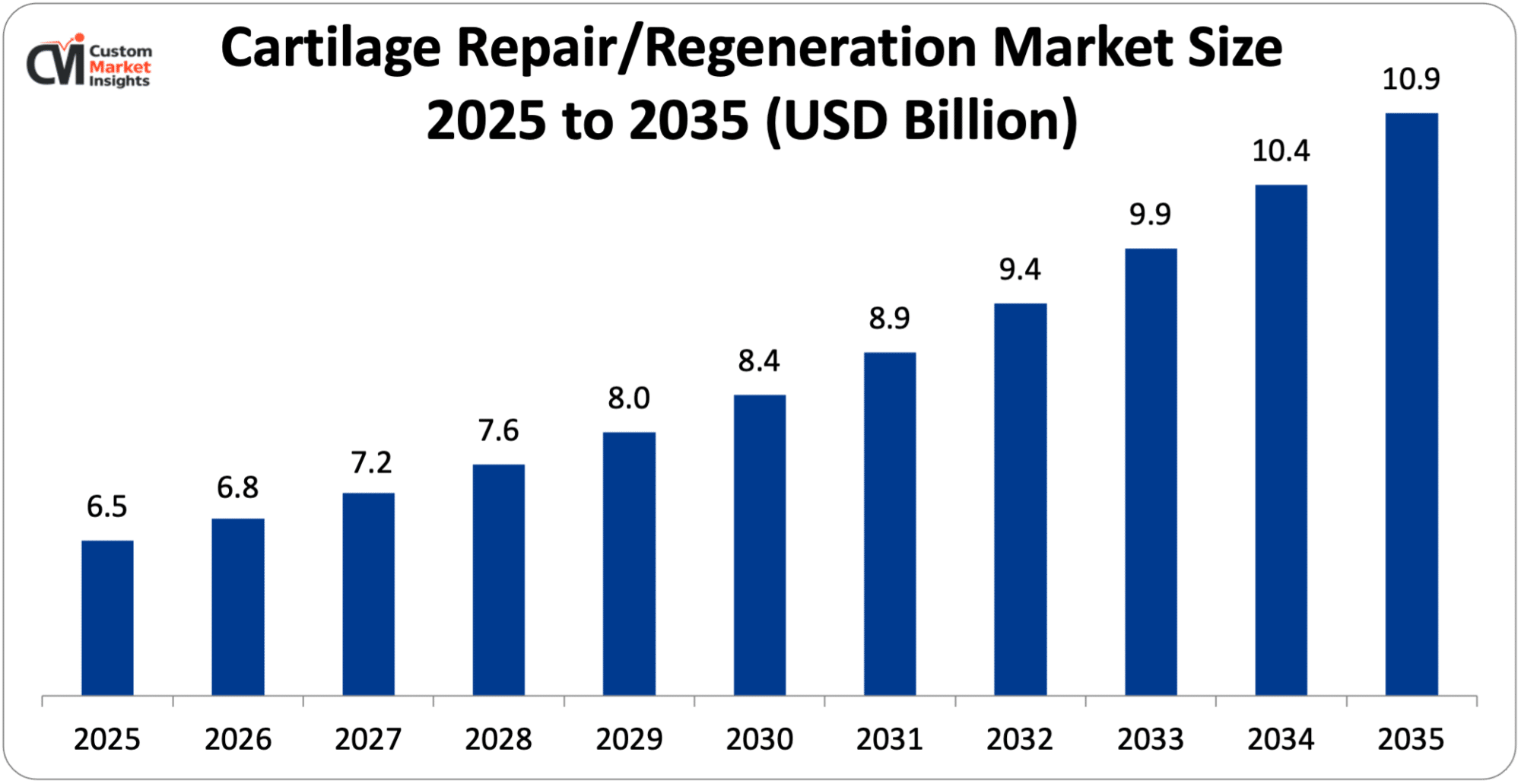
The market size of global cartilage repair/regeneration will be estimated at USD 6.5 billion in 2025 and is expected to grow to between USD 6.8 billion in 2026 and about USD 10.9 billion by 2035, with a current CAGR (compound annual growth rate) of 5.4% during the period of 2026 to 2035. Cartilage repair and regeneration is one area of the health care and biotech industries, comprising markets whose aim is to develop and supply solutions for damaged joint cartilage repair in various joints, such as the knee, the ankle, or the hip. Articular cartilage is a shock-absorbing tissue with elastic, high-gloss surfaces allowing frictionless joint motion.
Cartilage is very scarcely capable of biological self-repair. Damage occurs after insults, aging, or pathological conditions such as osteoarthritis. Once damaged, the tissue gradually depauperates and ultimately leads to still harsher conditions, with the need for medical approaches. The market spans a wide spectrum of approaches: surgical methods (microfracture and autologous chondrocyte implantation), tissue engineering, cartilage transplantation, and novel biomaterials. As technology in regenerative medicine approaches new grounds, focus swings onto solutions for biological regeneration rather than temporary repair.
Market Highlight
- In 2025, North America will dominate the global market with an estimated market share of 52%. The presence of major players and technological innovation drives the market growth.
- The Asia Pacific is growing at the highest rate over the analysis period. The increasing aging population drives the regional growth.
- By treatment modality, the cell-based cartilage repair segment dominated the industry in 2025 of over 60%.
- By application, the hyaline cartilage segment would have the highest share of the market in 2025.
- By treatment, the intrinsic repair stimulus segment would have the highest share of the market in 2025.
- By site, the knee cartilage segment would have the highest share of the market in 2025.
Significant Growth Factors
The cartilage repair/regeneration market trends present significant growth opportunities due to several factors:
- Rising Prevalence of Osteoarthritis & Joint Disorders:
The increasing prevalence of osteoarthritis (OA) and concomitant joint disorders has become one of the main drivers for global market expansion, according to recent government and international health bodies. The burden of OA according to the GBD (2021) study (updated in 2024-2025), is estimated to be 595 million for OA, which constitutes approximately 7.6% of the human population worldwide. This boom is largely caused by aging population trends and increasing prevalence of obesity, according to government statistics.
The WHO (2024) reports that 73% of OA individuals are over 55 years of age, and the CDC states that, in the US, the highest mean prevalence of arthritis is observed in those aged 75 years and over (53.9%). However, at the same time, the WHO (2024) reported that more than 2.5 billion adults are overweight, with BMI (high and obese) now constituting approximately 20.4% of the global OA load. The systemic effects of obesity can be clearly observed with regard to knee OA which constitutes the biggest platform in the market, accounting for 60% of all therapeutic revenues in 2025.
- Increasing Sports Injuries & Trauma Cases:
The increasing trend of sports injuries and trauma cases is contributing to the growth of the cartilage repair and regeneration market, as most of these injuries end up damaging the cartilages in the knee, ankle, and hip joints. The World Health Organization statistics indicate that there are approximately 1.71 billion people suffering from musculoskeletal disorders, and most of these disorders are the result of trauma and injuries, which are the highest contributors to health disorders. Analysis of the global injury statistics from the World Health Organization indicates that the global burden of trauma-related disorders is quite high, as injuries result in approximately 4.4 million deaths annually.
Analysis of sports-related injuries also indicates a high number of injuries, and for example, research studies indicate that over 40% of youth athletes suffer from at least one significant injury annually, and most of the injuries are in the knee and ankle joints, which are the most common sites of cartilage injuries. These are also the most common sites for cartilage injuries, as they are very susceptible to them. In addition, health records indicate that there are approximately 8.6 million sports-related injuries annually in the United States alone, and these injuries are among the athletes from all age groups. Other statistics indicate that sports injuries make up 15-20% of all accident and emergency cases, and most of these injuries are in the joints, ligaments, and cartilages. Lower extremity injuries, particularly in the knees and ankles, dominate the statistics. Most of the injuries in cartilages and other joint-related tissues have very limited self-repair mechanisms, and as such, they are likely to contribute to the growth of the cartilage repair and regeneration market, particularly as advancements in medical technology and treatment options continue to emerge. With the increasing number of sports, fitness, and other high-impact recreational activities, the number of people suffering from cartilage-related injuries is also increasing, and as such, the cartilage repair and regeneration market is likely to grow.
What are the Major Advances Changing the Cartilage Repair/Regeneration Market Today?
- Stem Cell–based Therapies:
Stem cell–based therapies represent, arguably, the greatest step forward in the cartilage repair and regeneration field, as they powerfully challenge the existing methods of cartilage repair and regeneration, which compromise with either symptomatic or mechanical corrections or with allograft or autograft restoration of surface damage. These stem cell therapies power themselves exclusively on a regenerative mode of mechanism of cartilage restoration, producing both primary tissue restoration as well as secondary production of bioactive molecules to effectively influence the inflammatory/immune milieu.
The use of mesenchymal stem cells from the tissues, ranging from bone marrow, adipose tissues, and umbilical cord, has been successfully demonstrated for the generation of cartilage tissues in vivo. Such cells, when injected into the cartilage lesions over a period of 4–8 weeks, have shown promise in influencing the local tissue target for scar formation, leading to regeneration, thus. Use of such local regenerative modalities, in conjunction with tissue engineering modalities, such as scaffold implantation, bioreactors, and czochralski pullers, is exponentially increasing the rates of success in producing regenerative tissues for re-introduction in sports, trauma, and degenerative disorders, such as osteoarthritis.
- Robotic-assisted & Image-guided Surgery:
Robotics, which help enable computer-aided surgery, and image-guided surgery are new technological advances that are currently making a paradigm shift in the cartilage repair and regeneration field by giving surgeons highly personalized surgical approaches and higher clinical outcomes. Robotics and image guides integrate computers and robotics into imaging and planning in order to precisely locate cartilage defects for precise surgical interventions. A great example of an innovative product in this area is the new robotic product offering by Stryker, launched in 2026: the Mako robotic power system (RPS), used for knee surgery.
The RPS comprised a handheld robotic-assisted device that provided intraoperative planning together with robotic guidance, thus allowing the operator to plan the instrument position and execute with a high degree of precision by maintaining control of the device. Knee system technology in a similar vein is the Mako SmartRobotics, which derives a 3-D CT scan for inverse planning and provides the arthroscopist with a robot arm to create a plan and guide the surgical intervention, resulting in a personalized plan relative to the patient‘s physiognomy, as well as providing haptic (feel) sensation and feedback to position the implant precisely during the procedure. This was a very useful step in preparation for any type of cartilage-related operation by reducing deviations that could lead to technical failure and joint deterioration. The use of robotic and image-guided systems allows very precise defect mapping and treatment, which offers several advantages such as an improved fit of replacement tissue, minimization of damage to surrounding tissue, and reduced uneven results.
Category Wise Insights
By Treatment Modality
Why Cell-Based Cartilage Repair Hold a Prominent Position in the Market?
The cell-based cartilage repair segment dominated the industry in 2025 of over 60%. This growth can be attributed to the rising attraction of autologous chondrocyte transplants as a form of surgical therapy for compromised articular cartilage comprising chondral lesions and osteochondral defects. It is likely to be one of the market‘s prime stimulants, as the increasing success rates and patient satisfaction associated with these transplants are driving demand for this innovative treatment.
The non-cell-based cartilage repair segment is growing at the highest CAGR during the forecast period. This area has seen considerable growth due to its widespread clinical use, low cost, and simplicity. The growing non-cell-based methods include microfracture, osteochondral autograft/allograft transplantations, and implantation of biomaterial scaffolds without cell expansion. This section continues to generate good revenue and makes up a large percentage of the market share because it is the more mature, less complicated, and quick alternative to cell-based transplants. The rising popularity of this type of treatment can be explained by the following: more sports injuries, trauma, and joint degenerative diseases such as osteoarthritis are being encountered and requiring fast treatment.
By Application
Why Hyaline Cartilage Capture the Highest Market Share in the Cartilage Repair/Regeneration Market?
The hyaline cartilage segment would have the highest share of the market in 2025. This may be explained by an increase in the worldwide prevalence of trauma that causes osteochondral and chondral defect formation in patients. Furthermore, urbanization is leading to an increasing population at risk of trauma from accidents or violence. In the USA, the number of nonfatal labor force injuries to muscles, tendons, ligaments, and joints is 286,190, according to the bureau of Labor Statistics. This highlights the growing clinical requirement for cartilage repair methods, especially for hyaline cartilage.
The fibrocartilage segment is growing at a rapid rate over the projected period. This segment is mainly being fueled by the trend of patients who want fewer invasive procedures of cartilage repair. These types of procedures have the advantage of relatively shorter recovery periods and fewer complications than conventional surgical procedures.
By Treatment
What Factor Causes Intrinsic Repair Stimulus to Have a Dominant Position in the Tank Container Market?
The intrinsic repair stimulus segment would have the highest share of the market in 2025. The increase in this form of treatment is the trend for more biologically positive remedies, in the form of stem cell stimulation via microfracture and drilling techniques, that can encourage tissue repair by calling mesenchymal stem cells to the area of cartilage damage. These techniques are showing promise as a more long-term treatment option to treat a form of osteoarthritis that may be capable of restoring normal joint function; it is this potential for longevity that makes the technique attractive to the younger population, sports injuries as well as degenerative osteoarthritic cases are likely to result in continued growth in this market.
The palliative segment is growing at a rapid rate over the projected period. This increase is attributed to the increasing search for non-invasive, symptom-treating therapies among the potentially large patient population. Palliative treatments (e.g., injections for pain relief, viscosupplementation (hyaluronic acid injections), and anti-inflammatory therapy) are utilized mainly to relieve pain, to restore the function of the joint, and to delay the need for surgery with respect to osteoarthritis patients, and this segment is growing at a relatively gentle rate as many patients, particularly the elderly and those with early cartilage damage, would prefer a conservative therapy.
By Site
Why the Knee Cartilage Site Capture the Highest Market Share in the Tank Container Market?
The knee cartilage segment would have the highest share of the market in 2025. This segment is expected to grow as a result of increasing demand for sophisticated, less invasive procedures for repair of cartilage lesions in the knee, such as arthroscopic chondroplasty, autologous chondrocyte implantation, transplant of osteochondral grafts, and microfractures. The increasing prevalence of osteoarthritis and sports injuries, along with growing use of newer technology such as 3D bioprinting and biologic scaffolds, is likely to represent important market growth factors.
The other segment is growing at a rapid rate over the projected period. Shoulder, elbow, ankle, and hip cartilage repairs are also covered, with techniques used to repair cartilage defects in individual joints other than the knee. These are used to treat pain and loss of mobility in joint structures damaged by trauma, overuse, or degenerative disease. The NIH states that there is a growing burden of musculoskeletal disease as the population ages and sports and physical activity increase, leading to a need for other broadening of indications to other joints and anatomical sites.
Report Scope
| Feature of the Report | Details |
| Market Size in 2026 | USD 6.8 billion |
| Projected Market Size in 2035 | USD 10.9 billion |
| Market Size in 2025 | USD 6.5 billion |
| CAGR Growth Rate | 5.4% CAGR |
| Base Year | 2025 |
| Forecast Period | 2026-2035 |
| Key Segment | By Treatment Modality, Application, Treatment, Site and Region |
| Report Coverage | Revenue Estimation and Forecast, Company Profile, Competitive Landscape, Growth Factors and Recent Trends |
| Regional Scope | North America, Europe, Asia Pacific, Middle East & Africa, and South & Central America |
| Buying Options | Request tailored purchasing options to fulfil your requirements for research. |
Regional Analysis
How Big is North America Cartilage Repair/Regeneration Market Size?
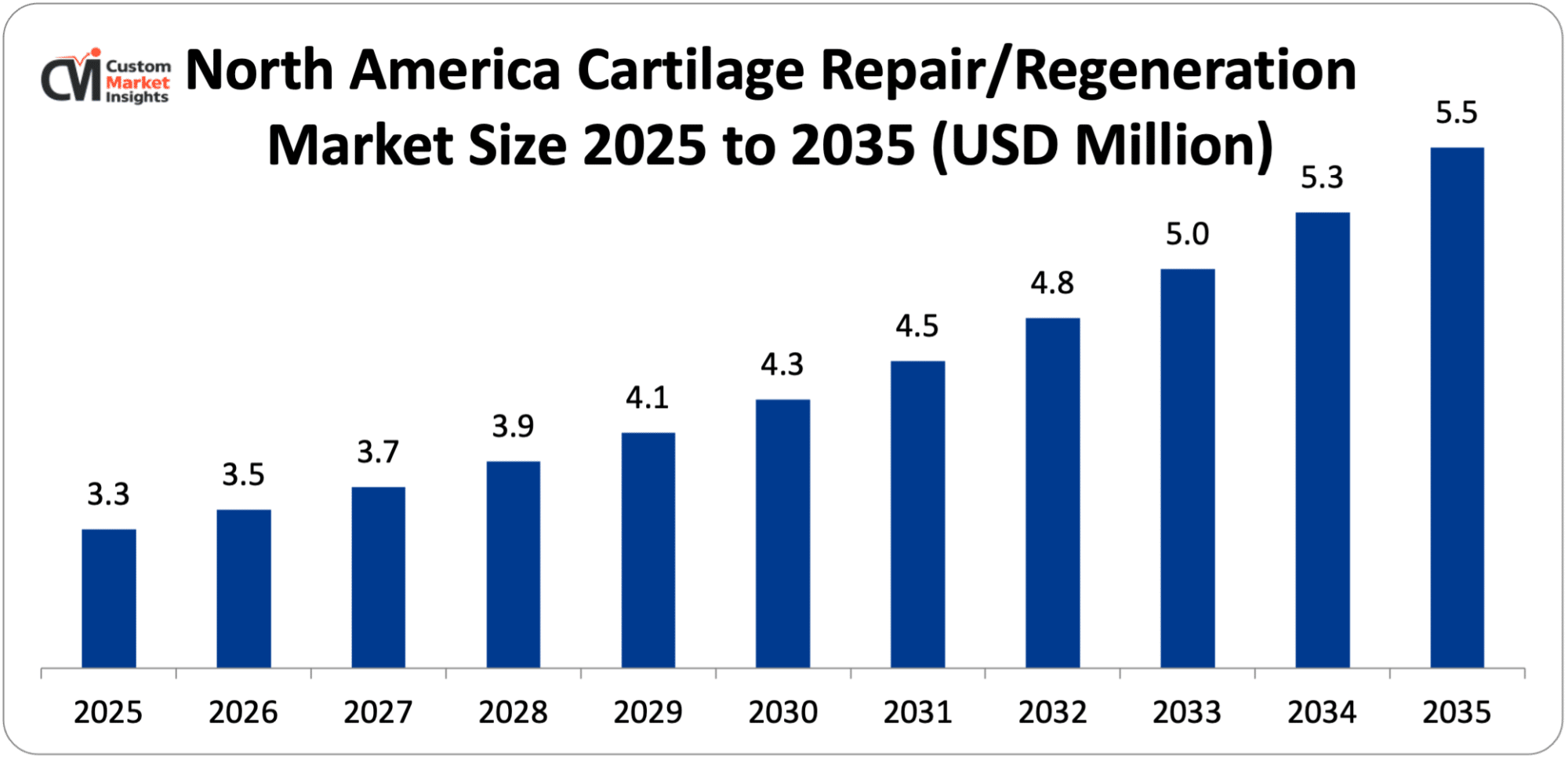
Its market size, in terms of North America cartilage repair/regeneration, is projected to be USD 3.3 billion in 2025 with a growth of about USD 5.5 billion in 2035 with a CAGR of 5.1% between 2026 and 2035.
Why did North America Dominate the Cartilage Repair/Regeneration Market in 2025?
In 2025, North America will dominate the global market with an estimated market share of 52%. This increase in demand can be attributed to the fact there is a rise in the number of musculoskeletal diseases occurring, a huge target market in the U.S. and Canada, and a change in lifestyle. NHS inform states, ‘every year 500,000 people are admitted to the hospital with fragility fractures. Fragility fractures are fractures that occur from a low-impact injury, such as falling from a standing height or lower. Such fractures often occur as a result of osteoporosis.
US Cartilage Repair/Regeneration Market Trends
In the North America region, the US leads the industry expansion over the projected period. The upward trend in sports injuries and trauma is boosting the volume of procedures, while major research and development investments, along with the presence of top players (e.g., Stryker, Zimmer Biomet, etc.), will continue to inspire and commercialize new innovations. Awareness and early diagnosis and treatment are further contributing to the market growth.
Why is Europe Experiencing a Significant Growth in the Cartilage Repair/Regeneration Market?
Europe holds a significant market share in 2025. The cartilage repair market is growing in Europe, as it is thought that a large percentage of the population has joint problems and problems with cartilage, particularly as they get older. One example of this is osteoarthritis, which causes joint pain and mobility problems that exert pressure on already overloaded cartilage repair therapies. Several new treatments have been approved by regulatory agencies in Europe, including autologous chondrocyte implantation and Spherox, where a person’s own cells are used to prepare a solution for the repairing of that individual’s joint; other innovative potential treatments such as the Agili-C also gained regulatory approval after using a scaffold to enable cells to grow to regenerate cartilage and bone. Due to EU sponsored funding for research and market access pathways being clear, these two soon-to-be-established therapies are now on the market.
UK Cartilage Repair/Regeneration Market Trends
UK held the dominant position in the market in 2025. Collaborations between research institutions and biotech companies are facilitating innovation and product development, strengthening the market landscape.
Why is the Asia Pacific Growing at a Highest CAGR in the Cartilage Repair/Regeneration Market?
The Asia Pacific is expected to grow at the highest CAGR over the projected period. Hip and knee replacements and surgeries are among the top-performed surgical procedures in the region. The knee section in the market is expected to advance due to increases in knee wanderings and the expanding aging population. Factors such as the expanding danger of osteoporotic broken bones and traumas also add to the expansion of the market. Also, the efforts to introduce trend-setting products in the region are further pushing market expansion. Osteoarthritis is the chief reason for these surgeries, as it is associated with the breakdown of the joint cartilage, in addition to the destruction of the articular cartilage. And also, more and more sports knee injuries are currently reported, and the indications for total knee replacements are increasing, both as a result of the preferential choice by patients and practitioners.
India Cartilage Repair/Regeneration Market Trends
India holds the prominent market share in the industry. The trend of expanding demand is driven by the increasing prevalence of osteoarthritis and other musculoskeletal conditions, as well as an aging population requiring a cartilage replacement.
Why is the Middle East & Africa Region is growing rapidly in the Cartilage Repair/Regeneration ?
The MEA region is growing at a steady rate over the projected period. The market is benefiting from steadily increasing investments in healthcare, the development of private hospital networks, and increased focus on the availability of advanced orthopedic treatments in MEA countries. The healthcare modernization programs being implemented in various MEA countries are leading to accessibility of new and minimally invasive surgical procedures and regenerative therapies. The increased utilization of various advanced technologies like orthobiologics and regenerative medicine therapies is further helping the market growth. Further, increased awareness levels about early diagnosis and treatment procedures will lead to further growth of this market.
UAE Cartilage Repair/Regeneration Market Trends
The UAE is growing at the highest CAGR during the forecast period. The growth is owing to the rising investment in healthcare infrastructure and growing technological advancements.
Top Players in the Cartilage Repair/Regeneration Market and Their Offerings
- MEDIPOST Co. Ltd.
- CONMED Corporation
- Braun SE
- BioTissue Inc.
- Bioventus
- Collagen Solutions Ltd.
- CollPlant Biotechnologies Ltd.
- Arthrex Inc.
- Episurf Medical AB
- Geistlich Pharma AG
- Integra LifeSciences Corporation
- Isto Biologics Inc
- Johnson & Johnson Services Inc.
- Kolon TissueGene Inc.
- Anika Therapeutics Inc.
- Mesoblast Limited
- Ocugen Inc.
- Zimmer Biomet Holdings Inc.
- Regrow Biosciences Pvt Ltd.
- RTI Surgical Inc.
- Smith & Nephew PLC
- Stryker Corporation
- Vericel Corporation
- Orthocell Ltd.
- Others
Key Developments
Cartilage repair/regeneration market has experienced considerable changes in the last two years as the market players are trying to diversify their technological aspects and develop product portfolios using strategic approaches.
- In January 2025, Zimmer Biomet announced plans to acquire Paragon 28 for approximately USD 1.1 billion to enhance its range of orthopedic surgical devices, particularly in foot and ankle treatments. This acquisition is expected to enhance Zimmer Biomet’s product portfolio, accelerating growth in the foot and ankle industry, and creating a dedicated sales channel leveraging Paragon 28’s specialized team to better serve patients worldwide. (https://investor.zimmerbiomet.com/news-and-events/news/2025/01-28-2025-225939148)
- In December 2025, ROKIT Healthcare, a company specializing in AI-driven hyper-personalized organ regeneration platforms, has announced the full-scale expansion of global clinical trials for ‘AI-driven cartilage regeneration’ targeting patients with knee osteoarthritis (degenerative arthritis). The company presented a blueprint to shift the existing market paradigm from ‘symptom relief-centered’ to ‘cartilage regeneration-centered.’ The core of ROKIT Healthcare lies in its AI-driven organ regeneration platform, which aims to directly prove the ‘quality of regeneration’ beyond simple ‘pain relief.’ The company previously confirmed an 85% recovery rate in the strength of regenerated cartilage—a key indicator of organ durability—in a large animal study conducted at Harvard. Furthermore, it has verified cartilage regeneration and the formation of hyaline-like cartilage through pilot clinical trials in Egypt and South Korea. (https://rokithealthcare.com/en/newsroom/news/rokithealthcaregoesfullthrottleonmultinationalcartilagetrialsprovingcartilageregeneration-2025-12-15?id=109)
These strategic measures have enabled the companies to reinforce their competitive positions, increase the product line, boost their technological competencies and also seize growth opportunities in the fast-growing cartilage repair/regeneration market.
The Cartilage Repair/Regeneration Market is segmented as follows:
By Treatment Modality
- Cell-Based Cartilage Repair
- Non-Cell-Based Cartilage Repair
By Application
- Fibrocartilage
- Hyaline Cartilage
By Treatment
- Palliative
- Intrinsic Repair Stimulus
By Site
- Knee
- Spine
- Ankle
- Hip
- Others
Regional Coverage:
North America
- U.S.
- Canada
- Mexico
- Rest of North America
Europe
- Germany
- France
- U.K.
- Russia
- Italy
- Spain
- Netherlands
- Rest of Europe
Asia Pacific
- China
- Japan
- India
- New Zealand
- Australia
- South Korea
- Taiwan
- Rest of Asia Pacific
The Middle East & Africa
- Saudi Arabia
- UAE
- Egypt
- Kuwait
- South Africa
- Rest of the Middle East & Africa
Latin America
- Brazil
- Argentina
- Rest of Latin America
Table of Contents
- Chapter 1. Report Introduction
- 1.1. Report Description
- 1.1.1. Purpose of the Report
- 1.1.2. USP & Key Offerings
- 1.2. Key Benefits For Stakeholders
- 1.3. Target Audience
- 1.4. Report Scope
- 1.1. Report Description
- Chapter 2. Market Overview
- 2.1. Report Scope (Segments And Key Players)
- 2.1.1. Cartilage Repair/Regeneration by Segments
- 2.1.2. Cartilage Repair/Regeneration by Region
- 2.2. Executive Summary
- 2.2.1. Market Size & Forecast
- 2.2.2. Cartilage Repair/Regeneration Market Attractiveness Analysis, By Treatment Modality
- 2.2.3. Cartilage Repair/Regeneration Market Attractiveness Analysis, By Application
- 2.2.4. Cartilage Repair/Regeneration Market Attractiveness Analysis, By Treatment
- 2.2.5. Cartilage Repair/Regeneration Market Attractiveness Analysis, By Site
- 2.1. Report Scope (Segments And Key Players)
- Chapter 3. Market Dynamics (DRO)
- 3.1. Market Drivers
- 3.1.1. Rising Prevalence of Osteoarthritis & Joint Disorders
- 3.1.2. Increasing Sports Injuries & Trauma Cases
- 3.2. Market Restraints
- 3.3. Market Opportunities
- 3.5. Pestle Analysis
- 3.6. Porter Forces Analysis
- 3.7. Technology Roadmap
- 3.8. Value Chain Analysis
- 3.9. Government Policy Impact Analysis
- 3.10. Pricing Analysis
- 3.1. Market Drivers
- Chapter 4. Cartilage Repair/Regeneration Market – By Treatment Modality
- 4.1. Treatment Modality Market Overview, By Treatment Modality Segment
- 4.1.1. Cartilage Repair/Regeneration Market Revenue Share, By Treatment Modality, 2025 & 2035
- 4.1.2. Cell-Based Cartilage Repair
- 4.1.3. Cartilage Repair/Regeneration Share Forecast, By Region (USD Billion)
- 4.1.4. Comparative Revenue Analysis, By Country, 2025 & 2035
- 4.1.5. Key Market Trends, Growth Factors, & Opportunities
- 4.1.6. Non-Cell-Based Cartilage Repair
- 4.1.7. Cartilage Repair/Regeneration Share Forecast, By Region (USD Billion)
- 4.1.8. Comparative Revenue Analysis, By Country, 2025 & 2035
- 4.1.9. Key Market Trends, Growth Factors, & Opportunities
- 4.1. Treatment Modality Market Overview, By Treatment Modality Segment
- Chapter 5. Cartilage Repair/Regeneration Market – By Application
- 5.1. Application Market Overview, By Application Segment
- 5.1.1. Cartilage Repair/Regeneration Market Revenue Share, By Application, 2025 & 2035
- 5.1.2. Fibrocartilage
- 5.1.3. Cartilage Repair/Regeneration Share Forecast, By Region (USD Billion)
- 5.1.4. Comparative Revenue Analysis, By Country, 2025 & 2035
- 5.1.5. Key Market Trends, Growth Factors, & Opportunities
- 5.1.6. Hyaline Cartilage
- 5.1.7. Cartilage Repair/Regeneration Share Forecast, By Region (USD Billion)
- 5.1.8. Comparative Revenue Analysis, By Country, 2025 & 2035
- 5.1.9. Key Market Trends, Growth Factors, & Opportunities
- 5.1. Application Market Overview, By Application Segment
- Chapter 6. Cartilage Repair/Regeneration Market – By Treatment
- 6.1. Treatment Market Overview, By Treatment Segment
- 6.1.1. Cartilage Repair/Regeneration Market Revenue Share, By Treatment, 2025 & 2035
- 6.1.2. Palliative
- 6.1.3. Cartilage Repair/Regeneration Share Forecast, By Region (USD Billion)
- 6.1.4. Comparative Revenue Analysis, By Country, 2025 & 2035
- 6.1.5. Key Market Trends, Growth Factors, & Opportunities
- 6.1.6. Intrinsic Repair Stimulus
- 6.1.7. Cartilage Repair/Regeneration Share Forecast, By Region (USD Billion)
- 6.1.8. Comparative Revenue Analysis, By Country, 2025 & 2035
- 6.1.9. Key Market Trends, Growth Factors, & Opportunities
- 6.1. Treatment Market Overview, By Treatment Segment
- Chapter 7. Cartilage Repair/Regeneration Market – By Site
- 7.1. Site Market Overview, By Site Segment
- 7.1.1. Cartilage Repair/Regeneration Market Revenue Share, By Site, 2025 & 2035
- 7.1.2. Knee
- 7.1.3. Cartilage Repair/Regeneration Share Forecast, By Region (USD Billion)
- 7.1.4. Comparative Revenue Analysis, By Country, 2025 & 2035
- 7.1.5. Key Market Trends, Growth Factors, & Opportunities
- 7.1.6. Spine
- 7.1.7. Cartilage Repair/Regeneration Share Forecast, By Region (USD Billion)
- 7.1.8. Comparative Revenue Analysis, By Country, 2025 & 2035
- 7.1.9. Key Market Trends, Growth Factors, & Opportunities
- 7.1.10. Ankle
- 7.1.11. Cartilage Repair/Regeneration Share Forecast, By Region (USD Billion)
- 7.1.12. Comparative Revenue Analysis, By Country, 2025 & 2035
- 7.1.13. Key Market Trends, Growth Factors, & Opportunities
- 7.1.14. Hip
- 7.1.15. Cartilage Repair/Regeneration Share Forecast, By Region (USD Billion)
- 7.1.16. Comparative Revenue Analysis, By Country, 2025 & 2035
- 7.1.17. Key Market Trends, Growth Factors, & Opportunities
- 7.1.18. Others
- 7.1.19. Cartilage Repair/Regeneration Share Forecast, By Region (USD Billion)
- 7.1.20. Comparative Revenue Analysis, By Country, 2025 & 2035
- 7.1.21. Key Market Trends, Growth Factors, & Opportunities
- 7.1. Site Market Overview, By Site Segment
- Chapter 8. Cartilage Repair/Regeneration Market – Regional Analysis
- 8.1. Cartilage Repair/Regeneration Market Overview, By Region Segment
- 8.1.1. Global Cartilage Repair/Regeneration Market Revenue Share, By Region, 2025 & 2035
- 8.1.2. Global Cartilage Repair/Regeneration Market Revenue, By Region, 2026 – 2035 (USD Billion)
- 8.1.3. Global Cartilage Repair/Regeneration Market Revenue, By Treatment Modality, 2026 – 2035
- 8.1.4. Global Cartilage Repair/Regeneration Market Revenue, By Application, 2026 – 2035
- 8.1.5. Global Cartilage Repair/Regeneration Market Revenue, By Treatment, 2026 – 2035
- 8.1.6. Global Cartilage Repair/Regeneration Market Revenue, By Site, 2026 – 2035
- 8.2. North America
- 8.2.1. North America Cartilage Repair/Regeneration Market Revenue, By Country, 2026 – 2035 (USD Billion)
- 8.2.2. North America Cartilage Repair/Regeneration Market Revenue, By Treatment Modality, 2026 – 2035
- 8.2.3. North America Cartilage Repair/Regeneration Market Revenue, By Application, 2026 – 2035
- 8.2.4. North America Cartilage Repair/Regeneration Market Revenue, By Treatment, 2026 – 2035
- 8.2.5. North America Cartilage Repair/Regeneration Market Revenue, By Site, 2026 – 2035
- 8.2.6. U.S. Cartilage Repair/Regeneration Market Revenue, 2026 – 2035 (USD Billion)
- 8.2.7. Canada Cartilage Repair/Regeneration Market Revenue, 2026 – 2035 (USD Billion)
- 8.2.8. Mexico Cartilage Repair/Regeneration Market Revenue, 2026 – 2035 (USD Billion)
- 8.2.9. Rest of North America Cartilage Repair/Regeneration Market Revenue, 2026 – 2035 (USD Billion)
- 8.3. Europe
- 8.3.1. Europe Cartilage Repair/Regeneration Market Revenue, By Country, 2026 – 2035 (USD Billion)
- 8.3.2. Europe Cartilage Repair/Regeneration Market Revenue, By Treatment Modality, 2026 – 2035
- 8.3.3. Europe Cartilage Repair/Regeneration Market Revenue, By Application, 2026 – 2035
- 8.3.4. Europe Cartilage Repair/Regeneration Market Revenue, By Treatment, 2026 – 2035
- 8.3.5. Europe Cartilage Repair/Regeneration Market Revenue, By Site, 2026 – 2035
- 8.3.6. Germany Cartilage Repair/Regeneration Market Revenue, 2026 – 2035 (USD Billion)
- 8.3.7. France Cartilage Repair/Regeneration Market Revenue, 2026 – 2035 (USD Billion)
- 8.3.8. U.K. Cartilage Repair/Regeneration Market Revenue, 2026 – 2035 (USD Billion)
- 8.3.9. Russia Cartilage Repair/Regeneration Market Revenue, 2026 – 2035 (USD Billion)
- 8.3.10. Italy Cartilage Repair/Regeneration Market Revenue, 2026 – 2035 (USD Billion)
- 8.3.11. Spain Cartilage Repair/Regeneration Market Revenue, 2026 – 2035 (USD Billion)
- 8.3.12. Netherlands Cartilage Repair/Regeneration Market Revenue, 2026 – 2035 (USD Billion)
- 8.3.13. Rest of Europe Cartilage Repair/Regeneration Market Revenue, 2026 – 2035 (USD Billion)
- 8.4. Asia Pacific
- 8.4.1. Asia Pacific Cartilage Repair/Regeneration Market Revenue, By Country, 2026 – 2035 (USD Billion)
- 8.4.2. Asia Pacific Cartilage Repair/Regeneration Market Revenue, By Treatment Modality, 2026 – 2035
- 8.4.3. Asia Pacific Cartilage Repair/Regeneration Market Revenue, By Application, 2026 – 2035
- 8.4.4. Asia Pacific Cartilage Repair/Regeneration Market Revenue, By Treatment, 2026 – 2035
- 8.4.5. Asia Pacific Cartilage Repair/Regeneration Market Revenue, By Site, 2026 – 2035
- 8.4.6. China Cartilage Repair/Regeneration Market Revenue, 2026 – 2035 (USD Billion)
- 8.4.7. Japan Cartilage Repair/Regeneration Market Revenue, 2026 – 2035 (USD Billion)
- 8.4.8. India Cartilage Repair/Regeneration Market Revenue, 2026 – 2035 (USD Billion)
- 8.4.9. New Zealand Cartilage Repair/Regeneration Market Revenue, 2026 – 2035 (USD Billion)
- 8.4.10. Australia Cartilage Repair/Regeneration Market Revenue, 2026 – 2035 (USD Billion)
- 8.4.11. South Korea Cartilage Repair/Regeneration Market Revenue, 2026 – 2035 (USD Billion)
- 8.4.12. Taiwan Cartilage Repair/Regeneration Market Revenue, 2026 – 2035 (USD Billion)
- 8.4.13. Rest of Asia Pacific Cartilage Repair/Regeneration Market Revenue, 2026 – 2035 (USD Billion)
- 8.5. The Middle-East and Africa
- 8.5.1. The Middle-East and Africa Cartilage Repair/Regeneration Market Revenue, By Country, 2026 – 2035 (USD Billion)
- 8.5.2. The Middle-East and Africa Cartilage Repair/Regeneration Market Revenue, By Treatment Modality, 2026 – 2035
- 8.5.3. The Middle-East and Africa Cartilage Repair/Regeneration Market Revenue, By Application, 2026 – 2035
- 8.5.4. The Middle-East and Africa Cartilage Repair/Regeneration Market Revenue, By Treatment, 2026 – 2035
- 8.5.5. The Middle-East and Africa Cartilage Repair/Regeneration Market Revenue, By Site, 2026 – 2035
- 8.5.6. Saudi Arabia Cartilage Repair/Regeneration Market Revenue, 2026 – 2035 (USD Billion)
- 8.5.7. UAE Cartilage Repair/Regeneration Market Revenue, 2026 – 2035 (USD Billion)
- 8.5.8. Egypt Cartilage Repair/Regeneration Market Revenue, 2026 – 2035 (USD Billion)
- 8.5.9. Kuwait Cartilage Repair/Regeneration Market Revenue, 2026 – 2035 (USD Billion)
- 8.5.10. South Africa Cartilage Repair/Regeneration Market Revenue, 2026 – 2035 (USD Billion)
- 8.5.11. Rest of the Middle East & Africa Cartilage Repair/Regeneration Market Revenue, 2026 – 2035 (USD Billion)
- 8.6. Latin America
- 8.6.1. Latin America Cartilage Repair/Regeneration Market Revenue, By Country, 2026 – 2035 (USD Billion)
- 8.6.2. Latin America Cartilage Repair/Regeneration Market Revenue, By Treatment Modality, 2026 – 2035
- 8.6.3. Latin America Cartilage Repair/Regeneration Market Revenue, By Application, 2026 – 2035
- 8.6.4. Latin America Cartilage Repair/Regeneration Market Revenue, By Treatment, 2026 – 2035
- 8.6.5. Latin America Cartilage Repair/Regeneration Market Revenue, By Site, 2026 – 2035
- 8.6.6. Brazil Cartilage Repair/Regeneration Market Revenue, 2026 – 2035 (USD Billion)
- 8.6.7. Argentina Cartilage Repair/Regeneration Market Revenue, 2026 – 2035 (USD Billion)
- 8.6.8. Rest of Latin America Cartilage Repair/Regeneration Market Revenue, 2026 – 2035 (USD Billion)
- 8.1. Cartilage Repair/Regeneration Market Overview, By Region Segment
- Chapter 9. Competitive Landscape
- 9.1. Company Market Share Analysis – 2025
- 9.1.1. Global Cartilage Repair/Regeneration Market: Company Market Share, 2025
- 9.2. Global Cartilage Repair/Regeneration Market Company Market Share, 2024
- 9.1. Company Market Share Analysis – 2025
- Chapter 10. Company Profiles
- 10.1. MEDIPOST Co. Ltd.
- 10.1.1. Company Overview
- 10.1.2. Key Executives
- 10.1.3. Product Portfolio
- 10.1.4. Financial Overview
- 10.1.5. Operating Business Segments
- 10.1.6. Business Performance
- 10.1.7. Recent Developments
- 10.2. CONMED Corporation
- 10.3. B. Braun SE
- 10.4. BioTissue Inc.
- 10.5. Bioventus
- 10.6. Collagen Solutions Ltd.
- 10.7. CollPlant Biotechnologies Ltd.
- 10.8. Arthrex Inc.
- 10.9. Episurf Medical AB
- 10.10. Geistlich Pharma AG
- 10.11. Integra LifeSciences Corporation
- 10.12. Isto Biologics Inc
- 10.13. Johnson & Johnson Services Inc.
- 10.14. Kolon TissueGene Inc.
- 10.15. Anika Therapeutics Inc.
- 10.16. Mesoblast Limited
- 10.17. Ocugen Inc.
- 10.18. Zimmer Biomet Holdings Inc.
- 10.19. Regrow Biosciences Pvt Ltd.
- 10.20. RTI Surgical Inc.
- 10.21. Smith & Nephew PLC
- 10.22. Stryker Corporation
- 10.23. Vericel Corporation
- 10.24. Orthocell Ltd.
- 10.25. Others.
- 10.1. MEDIPOST Co. Ltd.
- Chapter 11. Research Methodology
- 11.1. Research Methodology
- 11.2. Secondary Research
- 11.3. Primary Research
- 11.3.1. Analyst Tools and Models
- 11.4. Research Limitations
- 11.5. Assumptions
- 11.6. Insights From Primary Respondents
- 11.7. Why Custom Market Insights
- Chapter 12. Standard Report Commercials & Add-Ons
- 12.1. Customization Options
- 12.2. Subscription Module For Market Research Reports
- 12.3. Client Testimonials
List Of Figures
Figures No 1 to 29
List Of Tables
Tables No 1 to 51
Prominent Players
- MEDIPOST Co. Ltd.
- CONMED Corporation
- Braun SE
- BioTissue Inc.
- Bioventus
- Collagen Solutions Ltd.
- CollPlant Biotechnologies Ltd.
- Arthrex Inc.
- Episurf Medical AB
- Geistlich Pharma AG
- Integra LifeSciences Corporation
- Isto Biologics Inc
- Johnson & Johnson Services Inc.
- Kolon TissueGene Inc.
- Anika Therapeutics Inc.
- Mesoblast Limited
- Ocugen Inc.
- Zimmer Biomet Holdings Inc.
- Regrow Biosciences Pvt Ltd.
- RTI Surgical Inc.
- Smith & Nephew PLC
- Stryker Corporation
- Vericel Corporation
- Orthocell Ltd.
- Others
FAQs
The key players in the market are MEDIPOST Co. Ltd., CONMED Corporation, B. Braun SE, BioTissue Inc., Bioventus, Collagen Solutions Ltd., CollPlant Biotechnologies Ltd., Arthrex Inc., Episurf Medical AB, Geistlich Pharma AG, Integra Life Sciences Corporation, Isto Biologics Inc., Johnson & Johnson Services Inc., Kolon TissueGene Inc., Anika Therapeutics Inc., Mesoblast Limited, Ocugen Inc., Zimmer Biomet Holdings Inc., Regrow Biosciences Pvt. Ltd., RTI Surgical Inc., Smith & Nephew PLC, Stryker Corporation, Vericel Corporation, Orthocell Ltd., and Others.
Government regulations play a crucial role in shaping the development of the cartilage repair and regeneration market, as they determine the approval, commercialization, and adoption of new therapies—particularly advanced solutions like stem cell treatments and tissue-engineered products. Regulatory bodies such as the U.S. Food and Drug Administration and the European Medicines Agency enforce strict guidelines on clinical trials, product safety, efficacy, and manufacturing standards. While these regulations ensure patient safety and treatment reliability, they also increase development timelines and costs, which can delay product launches. At the same time, supportive policies, fast-track approvals, and government funding for regenerative medicine research can accelerate innovation and market growth.
The price point plays a critical role in shaping market growth and adoption in the cartilage repair and regeneration market, as higher treatment costs—particularly for advanced procedures like stem cell therapies and surgical interventions—can limit accessibility and slow adoption, especially in price-sensitive and emerging markets, whereas more affordable, non-invasive, or non-cell-based options tend to see wider acceptance and faster uptake due to their cost-effectiveness and broader patient reach.
According to the present analysis and forecast modeling, the market of cartilage repair/regeneration will witness a significant growth of about USD 10.9 billion in the year 2035 with the growing innovative product launch, increasing collaboration, growing aging population, and increasing government initiatives with a CAGR of 5.4% between the years 2026 and 2035.
It is projected that North America will hold the largest market share in the cartilage repair/regeneration market in the forecast period, with a share of about 52% of the global market share, which is attributed to the presence of major players and the strong healthcare infrastructure.
The Asia Pacific is expected to grow at the highest rate during the forecast period. The growth in the aging population drives the market growth.
The key factors are driving the market: The rising incidences of bone & joint disorders like osteoarthritis, the growing number of sports injuries, and technological advancements in cartilage regeneration are expected to drive the Cartilage Repair-Cartilage Regeneration Market over the predicted years.