India Pan Masala Market Size, Trends and Insights By Type (Pan Masala with Tobacco, Plain Pan Masala, Flavored Pan Masala), By Packaging (Sachets, Tin Boxes), By State (Maharashtra, Rajasthan, Uttar Pradesh, Bihar, Delhi, Gujrat, Haryana, Jharkhand, Madhya Pradesh, Others States), and By Region - Industry Overview, Sta…
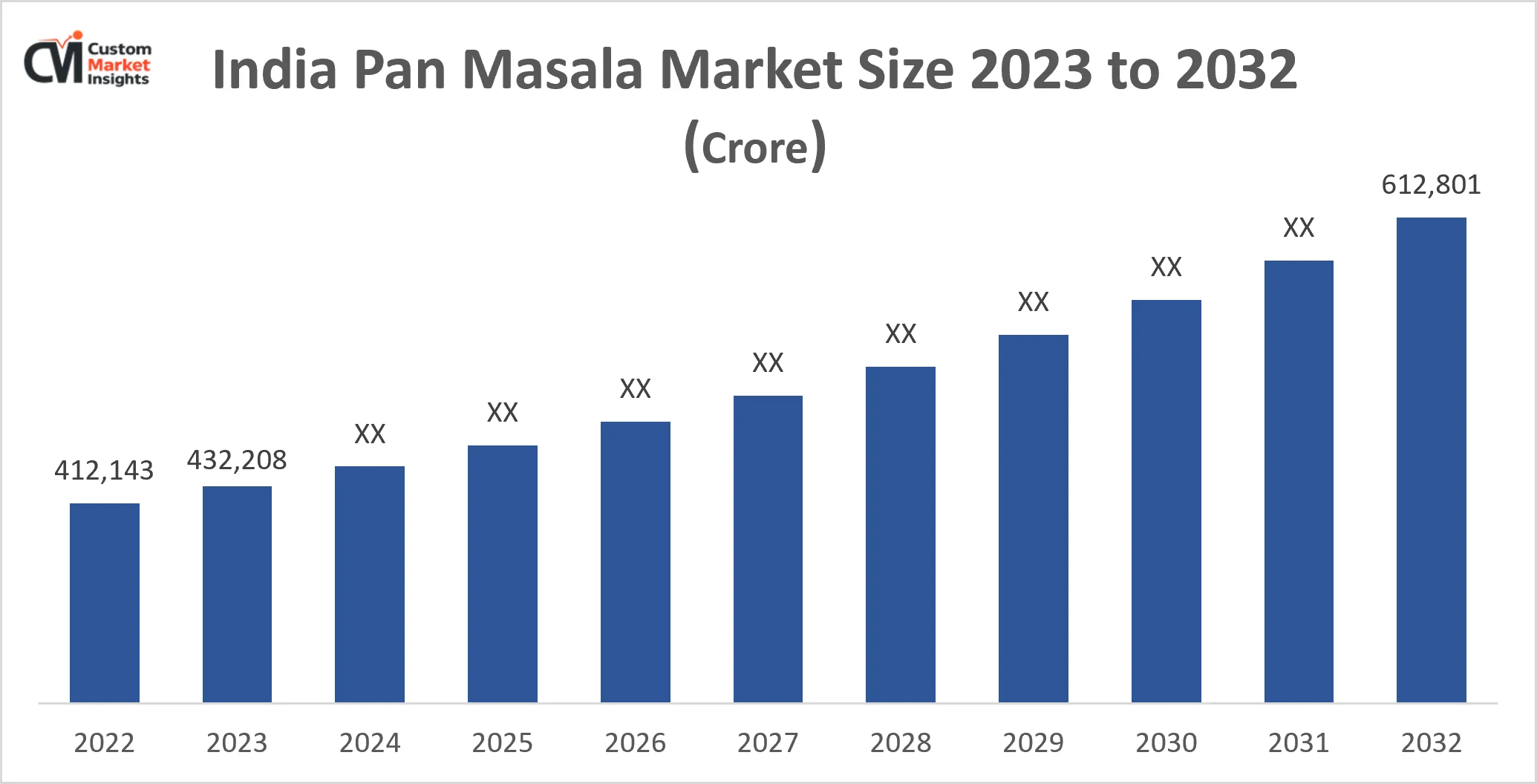
As per the current market research conducted by CMI Team, the India Pan Masala market is expected to record a CAGR of 5% from 2023 to 2032. In 2022, the market size is projected to reach a valuation of INR 412,143 crore. By 2032, the valuation is anticipated to reach INR 612,801 crore.
Pan masala is often regarded as a post-meal digestive aid or a refreshing option to combat the effects of consuming spicy foods. It primarily consists of fennel seeds and sugar-coated seeds like sesame, fennel, and coriander. Additional components can include flavourings such as catechu, betel nuts, areca nuts, cardamom, powdered lime, mint leaves, and pure menthol. When consumed after a meal, these ingredients release flavors that can revive the taste buds and aid in digestion.
However, there have been concerns regarding certain pan masala blends that contain tobacco products. It is important to note that not all pan masala varieties include tobacco, and in some regions, the use of tobacco-containing mixes has been prohibited due to potential health risks, including an increased risk of cancer as highlighted by medical professionals.
The main ingredients in pan masala typically include supari (betel nut), catechu, cardamom, lime, areca nuts, tobacco (in some blends), various flavourings, and specific naturally fragrant components. These essential components are usually readily available from local vendors and are commonly found.
However, the cost of production and final product prices can be significantly influenced by the fluctuating prices of raw materials in different geographical regions. Nevertheless, the presence of numerous raw material suppliers in the market can benefit businesses as these suppliers tend to focus on providing high-quality ingredients at affordable prices.
India Pan Masala Market - Significant Growth Factors
Pan masala consists of catechu, flavourings, areca nut, lime, cardamom, and various organic ingredients that produce fragrances. Its primary usage is to combat bad breath and eliminate mouth odor, while also being commonly employed as a digestive aid. In urban areas, there has been a growing trend of pan masala consumption among adults.
This increased demand in the market can be attributed to factors such as rising disposable income, a young population, attractive packaging of pan masala products, extensive advertising campaigns, and a shift from tobacco products to pan masala.
Additionally, the demographic dividend in India, characterized by a large working-age population, is also contributing to the upward trajectory of pan masala consumption. A research study conducted by the National Institute of Health revealed that the majority of tobacco users in India fell within the age range of 20 to 35 for men and 35 to 39 for women. However, both males and females between the ages of 15 and 19 frequently consumed non-tobacco products like pan masala.
As a result, the consumption of pan masala by younger individuals and adults is expected to contribute to the further expansion of the market. In rural areas, where sociocultural beliefs regarding the perceived health benefits of pan masala are prevalent, habitual chewing is widespread regardless of whether it contains tobacco or not. It is common for daily wage laborers in rural regions to consume pan masala along with cigarettes.
Thus, the increasing number of individuals earning a daily wage is another factor driving the growth of the pan masala industry. Advertisers employ strategies to position pan masala as a healthier alternative to tobacco products containing high levels of nicotine. They effectively associate pan masala products with tobacco, serving as surrogate advertisements for brands that cannot be directly promoted in the media.
An example of this is the use of popular catchphrases like "Daane Daane me Kesar ka dum" by Vimal mouth freshener, which indirectly advertises Vimal's tobacco-based pan masala through the endorsement of Bollywood actors. Leveraging the popularity of well-known individuals in advertisements increases the likelihood of acceptance among consumers, indirectly boosting sales of pan masala and creating higher demand for both aromatic pan masala and pan masala with tobacco.
India Pan Masala Market - Mergers and Acquisitions
The pan masala market in India has witnessed several mergers and acquisitions in recent years. These strategic moves have been undertaken by companies to expand their market presence, diversify their product portfolios, and gain a competitive edge. Here are a few notable mergers and acquisitions in the Indian pan masala market:
Dharampal Satyapal Group (DS Group) Acquisition: In 2018, DS Group, a leading Indian conglomerate, acquired Baba Global Limited, a pan masala company based in Kolkata. This acquisition helped DS Group strengthen its position in the pan masala segment and expand its product offerings.
Manikchand Group and Dhariwal Group Merger: In 2020, Manikchand Group and Dhariwal Group, two prominent players in the pan masala industry, announced their merger. The merger aimed to consolidate their market presence and leverage their combined resources for further growth.
Cremica Group Acquisition: In 2021, Cremica Group, a diversified food products company, acquired the pan masala brand "Pan Bahar" from Dinesh Foods. This acquisition allowed Cremica Group to enter the pan masala market and diversify its product portfolio.
Rajnigandha and Tulsi Merger: In 2022, the owners of Rajnigandha and Tulsi, two popular pan masala brands, announced their merger. The merger aimed to create synergies between the two brands and enhance their market position in the competitive pan masala industry.
The networking equipment market faces several significant threats that impact the industry and its players. These threats include:
Cybersecurity Risks: With the increasing connectivity of devices and networks, cybersecurity threats pose a significant challenge to the networking equipment market. Network infrastructure vulnerabilities, data breaches, and hacking attempts can lead to substantial financial losses and damage to the reputation of networking equipment companies.
Rapid Technological Advancements: The networking equipment market is characterized by rapid technological advancements. While this presents opportunities for innovation and growth, it also poses a threat to companies that fail to keep up with the pace of change. Companies must continually invest in research and development to stay competitive and offer cutting-edge products and solutions.
Intense Competition: The networking equipment market is highly competitive, with numerous players vying for market share. Established companies, as well as new entrants and startups, compete to offer superior products, features, and pricing. This intense competition can put pressure on profit margins and market position.
Trade and Tariff Restrictions: Global trade tensions and the imposition of tariffs and trade restrictions can disrupt the networking equipment market. Import/export regulations, trade disputes, and geopolitical factors can impact the supply chain, increase costs, and limit market access, affecting the profitability of companies operating in the industry.
Economic Downturns: Economic downturns and recessions can have a significant impact on the networking equipment market. During periods of economic uncertainty, organizations may reduce their IT budgets, leading to a slowdown in infrastructure investments. This can result in decreased demand for networking equipment and a challenging business environment for industry players.
Supply Chain Disruptions: Disruptions in the global supply chain, such as natural disasters, political instability, or pandemics, can severely impact the networking equipment market. Supply shortages, delays in product delivery, and increased costs can hamper operations and customer satisfaction.
Report Scope
Feature of the Report
Details
Market Size in 2023
432,208 crore
Projected Market Size in 2032
612,801 crore
Market Size in 2022
412,143 crore
CAGR Growth Rate
5% CAGR
Base Year
2023
Forecast Period
2024-2033
Key Segment
By Type, Packaging, State and Region
Report Coverage
Revenue Estimation and Forecast, Company Profile, Competitive Landscape, Growth Factors and Recent Trends
Country Scope
India
Buying Options
Request tailored purchasing options to fulfil your requirements for research.
Category-Wise Insights
Based on Type:
The largest market share is held by the Plain Pan Masala segment, which is expected to grow at a CAGR of 5.1%. Plain pan masala does not contain artificial sugars or flavors and is commonly consumed by lower-income groups. It is also favored by individuals who are looking to switch from pan masala with tobacco to a safer option.
However, the consumption of plain pan masala is anticipated to decline due to state government restrictions on tobacco and pan masala usage. The Pan Masala with Tobacco segment occupies the second-largest market share. This variety of pan masala, flavored with tobacco, is highly popular, particularly in rural areas across the country. Northern states witness the highest consumption of pan masala with tobacco. The primary reasons for consuming this type of pan masala are increased alertness and satiation of hunger.
Based on Packaging:
The sachets segment is expected to exhibit a Compound Annual Growth Rate (CAGR) of 5.98% and dominate the market share in the pan masala industry. Manufacturers are actively investing in modern manufacturing processes to create visually appealing and innovative sachet packaging, aiming to attract a larger customer base.
Leveraging the well-established consumer response to visual stimuli, manufacturers focus on making their packaging as attractive as possible. Sachets are the preferred packaging option for most pan masala products, particularly those targeted towards lower- and middle-class consumers. These sachets are predominantly sold in pan shops, which constitute approximately 2.9 million stores across India.
The demand for pan masala packaged in sachets is expected to rise in correlation with the increased employment opportunities for daily wage workers, driven by the higher allocation of funds for unskilled labor under schemes like MGNREGA (Mahatma Gandhi National Rural Employment Guarantee Act).
India Pan Masala Market - Regional Analysis
The pan masala market in India exhibits regional variations in terms of consumption patterns, preferences, and market dynamics. Here is a regional analysis of the pan masala market in India:
Northern India: The northern region of India, including states like Uttar Pradesh, Punjab, Haryana, and Delhi, accounts for a significant share of the pan masala market. Pan masala with tobacco is highly popular in this region, and the consumption of pan masala is deeply ingrained in the culture. The demand is driven by factors such as local preferences, widespread availability of pan shops, and historical consumption habits.
Western India: States like Maharashtra, Gujarat, and Rajasthan contribute to the pan masala market in Western India. This region witnesses a substantial consumption of pan masala, with a preference for flavored varieties. The market is driven by urban areas and the presence of a large consumer base, including the middle class and upper-middle-class populations.
Southern India: Southern states like Tamil Nadu, Karnataka, and Andhra Pradesh have comparatively lower consumption of pan masala. The market in this region is primarily driven by urban areas and migrants from other parts of the country. Plain and flavored pan masala varieties are consumed, but the market share is relatively smaller compared to other regions.
Eastern India: Eastern states like West Bengal, Bihar, and Odisha have a moderate consumption of pan masala. The market is driven by a mix of rural and urban areas, with a preference for plain and flavored varieties. However, the consumption levels in this region are relatively lower compared to the northern and western parts of India.
Northeast India: The pan masala market in Northeast India, comprising states like Assam, Manipur, and Meghalaya, is relatively small. Consumption patterns vary across different states, with some areas showing a preference for plain pan masala, while others favor flavoured varieties.
List of the prominent players in the India Pan Masala Market:
DS Group
Ashok & Company – Pan Bahar Ltd.
Dinesh Pouches Private Limited
KP Group
Manikchand Group
Godfrey Phillips India Ltd
Red Rose Group
Shikhar Group
Others
CMI.Market Research Report2023-2032
Get the full report
Updated: September 2026 · Formats: PDF, Excel, PPT
Which are the driving factors of the India Pan Masala Market?
The key factors driving the Market is Increasing number of individuals earning a daily wage.
Which type led the India Pan Masala market?
The "Type" category dominated the market in 2022
Who are the key players in the India Pan Masala market?
The key players in the market are DS Group, Ashok & Company – Pan Bahar Ltd., Dinesh Pouches Private Limited, KP Group, Manikchand Group, Godfrey Phillips India Ltd, Red Rose Group, Shikhar Group, Others.
What is the growth rate of the India Pan Masala market?
The market is projected to grow at a CAGR of 5% during the forecast period, 2023-2032.
How much is the India Pan Masala market?
The India Pan Masala Market size was valued at 412,143 crore in 2022.
Ayush Kadam is a Senior Market Research Analyst at Custom Market Insights, with over seven years of experience in syndicated and custom market research. He specializes in market sizing, competitive intelligence, industry trends, forecasting, and strategic insights, helping clients turn complex data into actionable business decisions.