
Pain Relief Devices: Transforming the Future of Pain Management
Pain relief devices are expanding beyond conventional medication, with neurostimulation, TENS, ablation, infusion pumps, and virtual reality offering new approaches to chronic pain management. As technology advances, AI-driven and personalized solutions could further reshape the future of pain care.
Pain is a genuinely complicated thing to pin down. It can stem from neurophysiological causes, biochemical processes, psychological factors, cognitive patterns, or even environmental triggers, and different specialists tend to see it through very different lenses. A neurosurgeon might approach pain as a neuroanatomical event, something happening in the nervous system that can be mapped and treated directly. A psychologist is more likely to view it as something woven together from physical, psychological, and social threads all at once. That difference in perspective can genuinely lead two qualified experts to assess the same patient's pain quite differently.
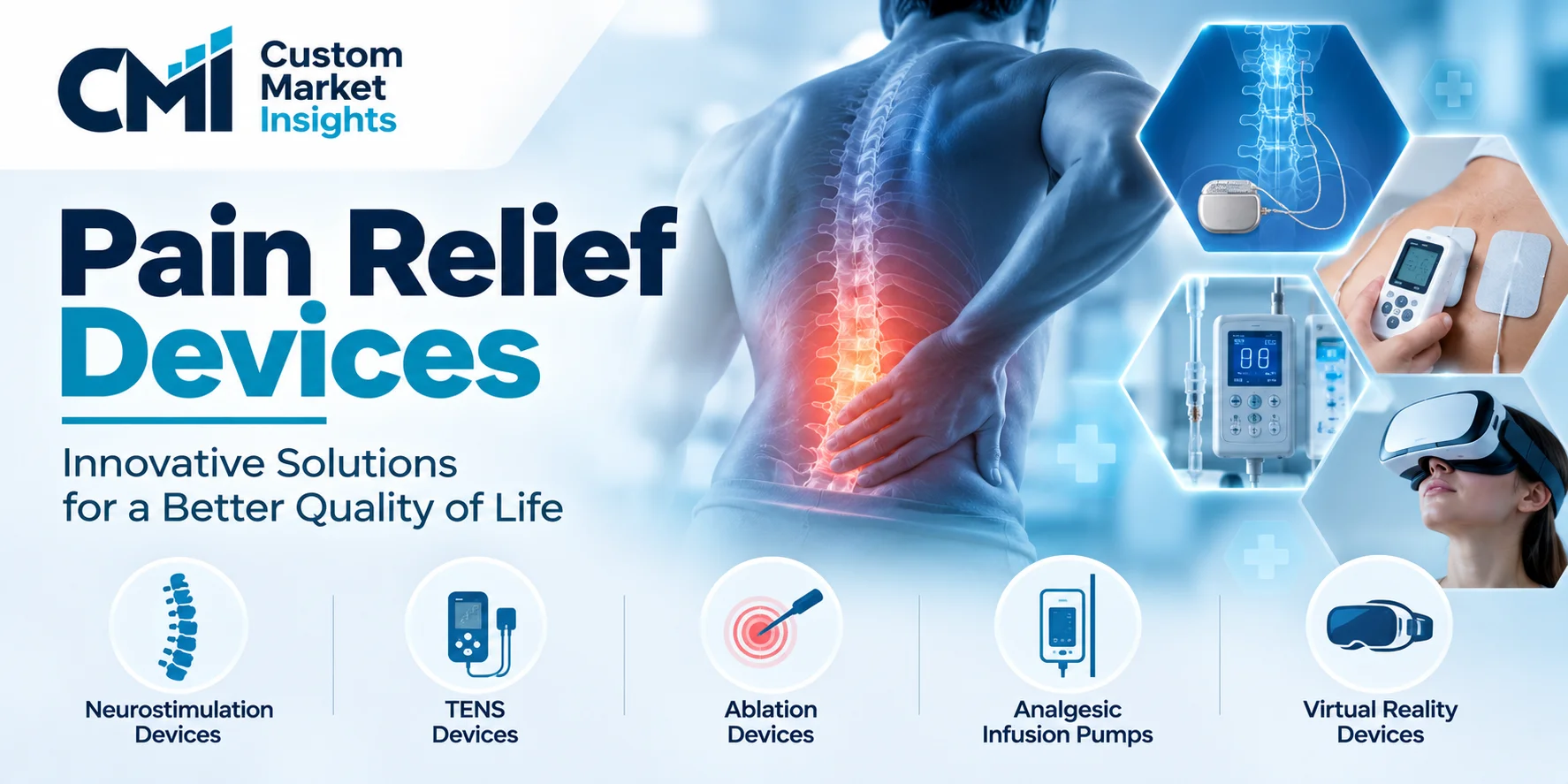
The scale of the problem is hard to overstate. According to the American Academy of Pain Medicine, pain affects more Americans than diabetes, heart disease, and cancer combined. Chronic pain alone touches more than 50 million people in the US, and the annual cost tied to it runs to roughly $635 billion. Pain relief devices have emerged as a real response to that scale, offering something beyond medication alone.
How Pain Actually Gets Managed
Pain management pulls from multiple disciplines at once, all aimed at the same goal: improving quality of life for people dealing with musculoskeletal pain, neuropathic pain, cancer pain, and various other chronic conditions. That toolkit includes devices like neurostimulators, analgesic infusion pumps, peripheral nerve stimulators, radiofrequency ablation tools, and virtual reality systems, alongside more conventional therapies aimed at preventing, reducing, or eliminating pain.
Where Medication Still Fits In
Pain therapeutics typically remain the first line of treatment for both acute and chronic pain, and there's a genuinely wide range of medications physicians can draw on. The tricky part is that pain responds differently from patient to patient, even among people dealing with what looks like the same underlying condition, which means doctors often end up adjusting drug combinations and dosages fairly individually. Given the ongoing concern around opioid misuse, a lot of companies have shifted focus specifically toward non-opioid treatment options for chronic pain in recent years.
Where Devices Come In
Pain relief devices usually enter the picture as a second-line treatment, stepping in when medication alone isn't cutting it, and they've shown real effectiveness treating muscular and joint pain while also improving circulation. A growing number of these devices are actually used at home now, though typically only after a healthcare provider signs off first. One of their more notable benefits is how much they can reduce or eliminate the need for opioid medication altogether. It's worth noting these are distinct from devices marketed for menstrual cramps or autoimmune-related pain, which fall into their own category entirely.
Neurostimulation Devices
Neurostimulation, put simply, is an electromagnetic approach to changing how neurons behave, using targeted electrical or magnetic stimulation to activate or modulate nerve activity for therapeutic effect. Implantable systems tend to be genuinely sophisticated, involving stimulating leads, an internalized pulse generator, and electrode extenders that connect everything subcutaneously, all packaged inside a hermetically sealed titanium case.
Spinal cord stimulators work by implanting electrodes in the epidural space, connected to an implantable pulse generator placed in the lower abdomen or gluteal region. These are commonly used for pain that hasn't responded to medication and isn't cancer-related.
Deep brain stimulators deliver electrical stimulation to specific brain regions through implanted electrodes, powered by a generator placed below the clavicle or in the abdomen. Originally developed for epilepsy, these devices are now used more commonly for Parkinson's disease, pain management, and other movement disorders.
Peripheral nerve stimulators involve surgically placing a small, wire-like electrode next to a peripheral nerve, delivering rapid electrical pulses that patients typically perceive as mild tingling. This approach shows up in treating back pain, occipital nerve stimulation for migraines, and even investigational use for urinary bladder incontinence through pudendal nerve stimulation.
TENS devices, transcutaneous electrical nerve stimulators, deliver electrical impulses through electrodes placed right at the pain site. This non-invasive approach uses low-voltage current to interfere with pain signals heading to the brain and spinal cord, and it may also boost the body's own endorphin production. TENS gets used for a genuinely broad range of conditions, joint pain, fibromyalgia, post-surgical pain, and acute sports injuries among them.
Ablation Devices
Ablation devices take a different approach entirely, using energy, radiofrequency or cryogenic, to destroy or remove the specific tissue or nerve causing pain.
Radiofrequency ablation uses heat generated by radio waves to target specific nerves, interrupting pain signal transmission for genuinely long-lasting relief. This approach commonly treats chronic lower back pain, arthritis, and even certain cardiac arrhythmias.
Cryoablation works through the opposite mechanism, using the Joule-Thomson effect, where a high-pressure gas, typically argon, expands rapidly and causes intense cooling at the tip of a cryoprobe, freezing and destroying the targeted tissue. This technique gets applied across pain management, tumor ablation, and cardiac arrhythmia treatment alike.
Analgesic Infusion Pumps
These devices deliver pain medication directly into the body, whether intravenously, subcutaneously, or through the epidural space, and they're generally reserved for severe pain that oral medication just can't control effectively.
Intrathecal pumps, sometimes called pain pumps, deliver medication directly into the fluid surrounding the spinal cord. Surgically implanted under the skin, usually in the abdomen, and connected via catheter, these pumps bypass the digestive system entirely, which means they can achieve effective relief using smaller doses and with a lower risk of the side effects associated with oral medication.
External pumps deliver fluids, medications and nutrients alike in a controlled, programmable way. Many are battery-operated and portable, letting patients carry them around during daily life. They come in several forms, large volume pumps, patient-controlled analgesia systems, syringe pumps, enteral pumps, and insulin pumps.
Virtual Reality Devices
VR represents one of the more genuinely novel directions this field has taken recently. Using immersive environments delivered through head-mounted displays and interactive controls, these systems aim to distract patients from pain by fully engaging their senses and attention elsewhere. VR has found real use treating both acute and chronic pain, including cases that haven't responded well to medication. AppliedVR's RelieVRx is a notable example here, an FDA-approved prescription digital therapeutic specifically designed to treat chronic lower back pain in adults 18 and older.
Why These Devices Matter
Pain relief devices offer real, targeted benefits for people dealing with chronic or acute pain. TENS units, infusion pumps, and VR systems can all provide sustained relief for conditions like neuropathic pain, musculoskeletal pain, and arthritis, helping patients stay active and genuinely improve their quality of life. They also cut down on opioid addiction risk and the broader side effects tied to long-term medication use, which makes them a safer, more sustainable option for a lot of patients over the long run.
Where This Field Is Headed
Pain relief devices have shown real promise evolving into genuinely patient-centered solutions, offering relief while cutting dependence on opioid medication. Companies working in this space keep integrating new technology into existing devices, aiming to address cost and comfort, two factors that have historically limited broader adoption.
At CMI Consulting, we expect these devices to keep moving from a second-line option toward something closer to a first-line treatment preferred by both patients and physicians. AI and machine learning integration in particular stands out as a genuine growth area here, opening the door to more personalized, adaptive treatment approaches rather than one-size-fits-all devices. As this field keeps maturing, we think the combination of smarter technology and a more patient-centered design philosophy is going to make effective pain treatment genuinely more accessible for people living with chronic pain.

Ayush Kadam
Sr. Research AnalystAyush Kadam is a Senior Market Research Analyst at Custom Market Insights, with over seven years of experience in syndicated and custom market research. He specializes in market sizing, competitive intelligence, industry trends, forecasting, and strategic insights, helping client
View profile and reports